
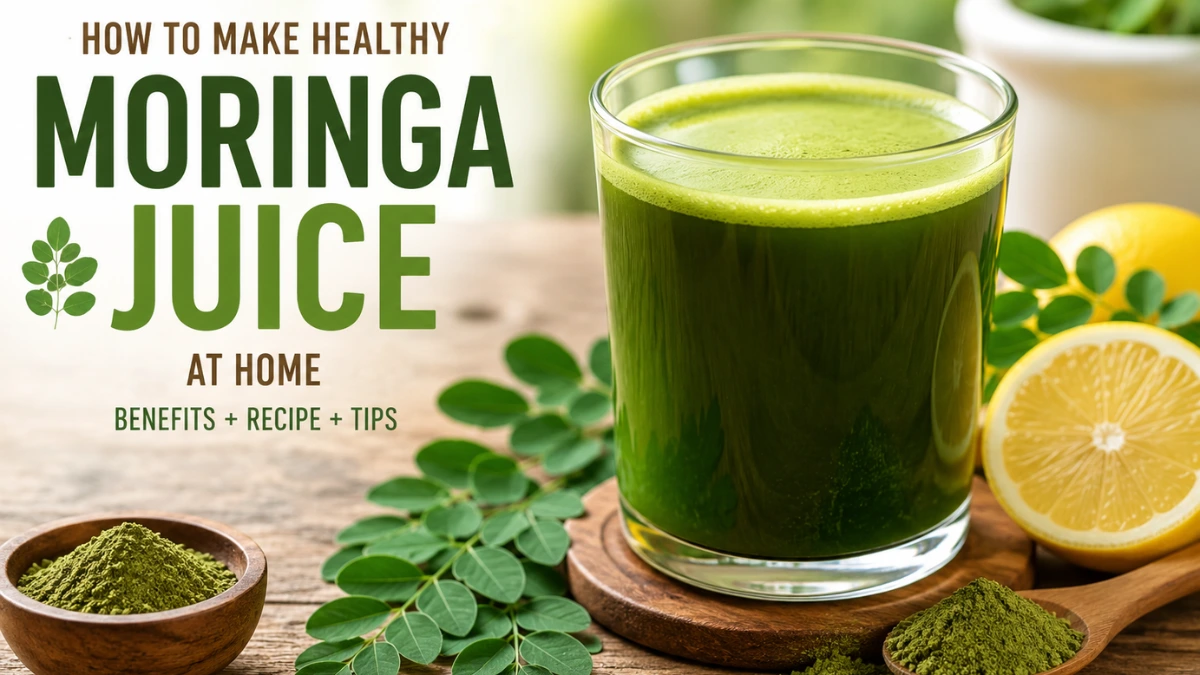
Moringa juice is a simple way to add moringa leaves or moringa powder to your diet. But when making it at home, should you use fresh moringa leaves or moringa powder? And does the way you prepare it affect what you get from the drink?
In this guide, you’ll learn how to make moringa juice at home using both fresh leaves and moringa powder. We’ll also look at its potential nutritional benefits, how much powder to start with, whether adding lemon makes sense, the best way to prepare and store it, and important safety considerations to keep in mind.
In This Article
Quick Facts About Moringa Juice
| Factor | Details |
|---|---|
| Type | Plant-based herbal drink |
| Main Ingredients | Fresh moringa leaves or moringa leaf powder |
| Preparation Time | About 5 minutes |
| Best Time | No scientifically established best time |
| Difficulty | Easy |
| Preparation Methods | Fresh leaves or moringa powder |
| Key Nutritional Feature | Provides plant compounds and nutrients |
What Is Moringa Juice?
Moringa juice is a simple drink made by blending fresh moringa leaves with water or mixing moringa leaf powder with water. Depending on the preparation, the drink may be strained or consumed with the blended leaf material.
Moringa powder is made from dried moringa leaves that are ground into a fine powder. It offers a convenient alternative when fresh leaves are unavailable and can be mixed into water or other drinks.
People may include moringa juice in their diet as a way to add plant-based nutrients and bioactive compounds to their meals. However, research on moringa leaves or powder does not necessarily mean that the same benefits have been established specifically for homemade moringa juice.
How to Make Moringa Juice at Home
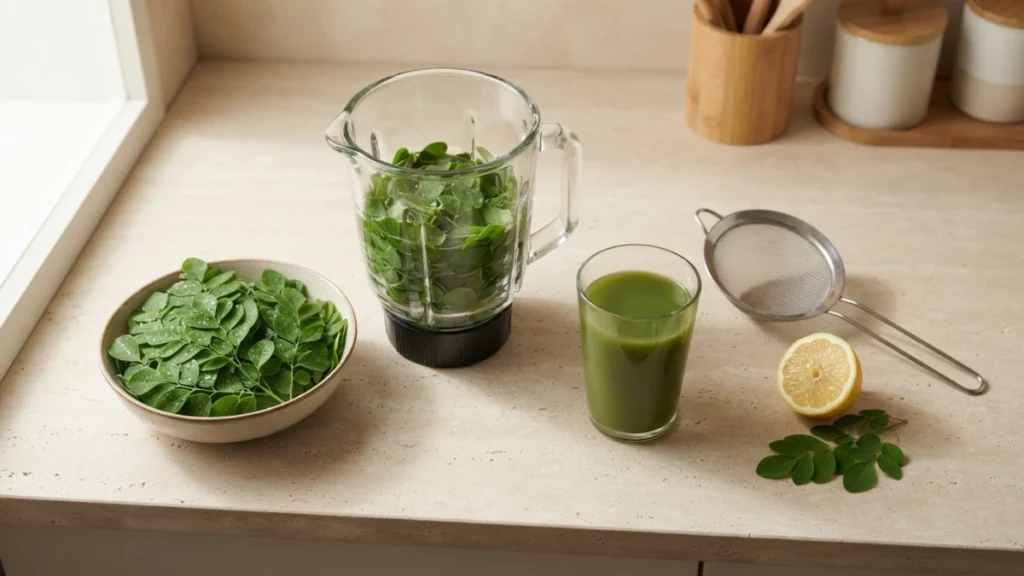
Moringa juice can be prepared using either fresh moringa leaves or moringa leaf powder. Fresh leaves provide a more traditional option, while powder is convenient when fresh moringa is difficult to find.
Moringa Juice From Fresh Leaves
Ingredients
- 1 handful fresh moringa leaves
- 1 glass (250–300 ml) drinking water
- Juice of ½ lemon (optional)
- 1 teaspoon honey (optional)
Steps
- Wash the moringa leaves thoroughly under clean running water to remove dirt and debris.
- Remove any tough stems and use the leaves.
- Add the leaves and water to a blender.
- Blend until the leaves are finely broken down.
- Strain the mixture if you prefer a smoother, lighter juice.
- Add lemon juice for a fresh, slightly tangy flavor.
- Add a small amount of honey if you want to reduce the natural bitterness.
- Drink the juice fresh rather than storing it for a long time.
Tip: Moringa leaves can have a naturally strong, slightly bitter taste. Starting with a smaller amount of leaves and adjusting the quantity to your taste can make the juice easier to drink.
Moringa Juice From Moringa Powder
Ingredients
- 1 glass (250–300 ml) drinking water
- 1 teaspoon moringa leaf powder
- Juice of ½ lemon (optional)
- 1 teaspoon honey (optional)
Steps
- Add water to a clean glass.
- Add the moringa powder.
- Stir or whisk thoroughly until the powder is evenly dispersed.
- Add lemon juice if desired.
- Add honey if you prefer a sweeter taste.
- Drink soon after preparing, as the powder may settle at the bottom.
Tip: Moringa powder can vary in concentration and serving size depending on the product. If you’re using packaged powder, check the product label for its serving instructions rather than assuming that more is better.
Which Method Is Better?
Both methods can be used to prepare moringa juice. Fresh moringa leaves are a good option when they are readily available and properly washed, while moringa powder is more convenient for everyday use. Choose the form that fits your availability, taste preferences, and routine.
Potential Benefits of Moringa Juice
Moringa leaves contain a variety of nutrients and plant compounds. However, the nutritional value of a homemade moringa drink depends on whether you use fresh leaves or powder, how much you use, and how the drink is prepared. Also, research on moringa leaves or powder does not necessarily establish the same effects specifically for homemade moringa juice.
1. Provides Plant-Based Nutrients
Moringa leaves contain nutrients including vitamin A, vitamin C, calcium, potassium, and iron, although the amount you get from a glass of homemade juice can vary considerably depending on the preparation.
These nutrients have important roles in normal functions such as immune function, bone health, blood formation, and energy metabolism.
2. Contains Antioxidant Plant Compounds
Moringa leaves contain several bioactive compounds, including polyphenols and flavonoids, that have antioxidant activity.
Laboratory and preclinical research has identified antioxidant properties in moringa, but these findings should not be interpreted as proof that drinking homemade moringa juice prevents or treats disease.
3. Adds More Plant Foods to Your Diet
If you don’t regularly eat leafy greens, moringa leaves or leaf powder can be another way to include a plant-based ingredient in your diet.
However, moringa juice shouldn’t replace a varied intake of vegetables, fruits, legumes, whole grains, nuts, and seeds.
4. May Have Potential Metabolic Benefits
Some human studies have investigated moringa preparations for outcomes related to blood glucose, cholesterol, and other metabolic markers. However, the evidence is still limited and inconsistent, and studies have used different forms and amounts of moringa.
So, moringa juice should not be considered a treatment for diabetes, high cholesterol, or other medical conditions.
5. Easy and Quick to Prepare
One practical advantage of moringa juice is its simplicity. Moringa powder can be mixed with water in a few minutes, while fresh leaves can be blended with water to make a simple homemade drink.
This makes it a convenient addition to a balanced diet—not a replacement for one.
Moringa Juice With Lemon: Is It Useful?
Yes, adding lemon can make moringa juice more enjoyable by giving it a fresh, tangy flavor that balances moringa’s natural bitterness.
Lemon also provides vitamin C, while moringa leaves themselves contain vitamin C and other antioxidant compounds.
However, lemon does not make moringa juice a detox drink or significantly increase its health benefits. Think of it mainly as a simple way to improve the taste and add some vitamin C.
Tip: Add the juice of about ½ lemon to one glass of moringa juice, or adjust it according to your taste.
When Is the Best Time to Drink Moringa Juice?
There is no well-established scientific evidence that moringa juice must be consumed at a specific time of day. You can drink it at a time that fits your routine. If it causes stomach discomfort, try having it with or after a meal rather than on an empty stomach.
Does Moringa Juice Help With Weight Loss?
Moringa juice is not a proven weight-loss drink. While moringa contains nutrients and plant compounds being studied for potential metabolic effects, there is not enough strong human evidence to show that drinking moringa juice directly causes weight loss. A balanced diet and regular physical activity remain more important.
Common Mistakes to Avoid
When preparing moringa juice at home, avoid these common mistakes:
- Using too much moringa powder: More powder does not necessarily mean more benefits and may make the drink harder to tolerate.
- Not washing fresh leaves properly: Always wash fresh moringa leaves thoroughly before blending them.
- Adding too much honey or sweetener: Excessive added sugar can turn a nutrient-rich drink into a high-sugar beverage.
- Using moringa juice as a meal replacement: Moringa juice should complement a balanced diet, not replace nutritious meals.
- Assuming more is better: Stick to a reasonable amount and follow the serving instructions if you’re using packaged moringa powder.
Is Moringa Juice Safe?
Moringa leaves and moringa leaf powder are commonly consumed as food, and available human studies have generally not reported serious adverse effects. However, research on long-term or high-dose use of moringa is still limited. Safety review of Moringa oleifera
Some people may experience digestive discomfort, especially when consuming larger amounts. If you are pregnant or breastfeeding, taking medications, or managing a medical condition, consult a healthcare professional before using concentrated moringa products regularly.
Tip: Use a reputable moringa powder and follow the serving instructions on the package rather than assuming more is better.
Frequently Asked Questions
Can I Make Moringa Juice With Powder?
Yes. Moringa leaf powder is a convenient way to prepare moringa juice, especially when fresh moringa leaves are not readily available. Simply mix the powder with water and adjust the amount according to the product’s serving instructions.
Is Moringa Juice Good for Daily Use?
Moringa juice can be included as part of a balanced diet, but there is no need to drink large amounts to get its potential nutritional benefits. If you consume it regularly, use a moderate amount and pay attention to how your body responds.
What Does Moringa Juice Taste Like?
Moringa juice has an earthy, green, slightly bitter taste. Lemon can add a refreshing tang, while a small amount of honey can help balance the bitterness if needed.
Can I Add Lemon to Moringa Juice?
Yes. Lemon can be added to moringa juice to improve its flavor and provide vitamin C. However, lemon does not turn moringa juice into a detox drink or guarantee additional health benefits.
Which Is Better: Fresh Moringa Leaves or Powder?
Both can be convenient options. Fresh leaves work well when they are available and properly washed, while moringa powder is easier to store and use regularly. The choice mainly depends on availability, convenience, and personal preference.
Final Thoughts
Moringa juice is a simple way to include moringa leaves or moringa leaf powder in your diet. You can prepare it with fresh leaves when available or use moringa powder for a more convenient option.
Although moringa juice is not a miracle health drink, it can provide plant-based nutrients and antioxidant compounds as part of an overall balanced diet. Focus on reasonable portions, simple preparation, and a varied diet rather than relying on any single food or drink for better health.
