
Quick Guide
Quick Facts Details Calories Around 354 kcal per 100 g of fresh coconut flesh; fresh coconut water provides about 19 kcal per 100 ml Rich In Healthy fats, dietary fiber, manganese, copper, potassium, and natural electrolytes Good Source Of Magnesium, iron, phosphorus, selenium, and vitamin C (mainly from coconut water) Best For Healthy snacks, smoothies, yogurt bowls, oatmeal, curries, desserts, and natural hydration Recommended Portion Around 30–50 g fresh coconut flesh with 1 cup (200–250 ml) coconut water as part of a balanced diet Suitable For Vegetarian, vegan, gluten-free, and dairy-free diets
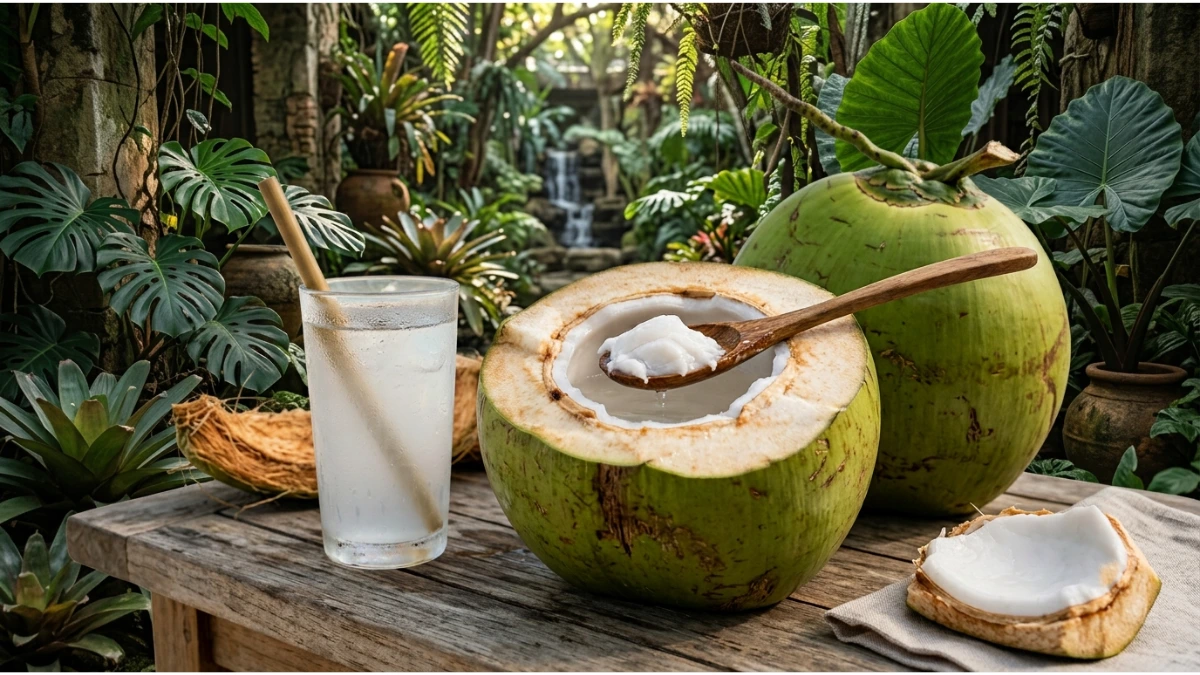
Fresh coconut is more than just a tropical treat—it is a nutrient-rich food that provides both refreshing coconut water and fiber-rich coconut flesh. Together, they offer healthy fats, dietary fiber, essential minerals, and natural electrolytes that support hydration and overall wellness.
Loved for its delicious taste and versatility, fresh coconut can be a valuable addition to a balanced diet. In this article, you’ll discover its nutrition facts, key health benefits, and simple ways to enjoy it every day.
Table of Contents
Fresh Coconut Nutrition Facts
Fresh coconut is a nutritious tropical fruit that provides benefits from both its white flesh and naturally refreshing coconut water. The flesh is rich in healthy fats, dietary fiber, and essential minerals, while coconut water supplies natural electrolytes that support hydration.
The nutritional values below are based on 100 grams of fresh coconut flesh, according to USDA FoodData Central.
| Nutrient | Amount (per 100 g) |
|---|---|
| Calories | 354 kcal |
| Water | 46.9 g |
| Carbohydrates | 15.2 g |
| Dietary Fiber | 9.0 g |
| Protein | 3.3 g |
| Total Fat | 33.5 g |
| Potassium | 356 mg |
| Magnesium | 32 mg |
| Iron | 2.4 mg |
| Copper | 0.44 mg |
| Manganese | 1.5 mg |
| Vitamin C | 3.3 mg |
Coconut Water Nutrition (per 100 ml)
| Nutrient | Amount |
|---|---|
| Calories | ~19 kcal |
| Carbohydrates | ~3.7 g |
| Protein | ~0.7 g |
| Fat | ~0.2 g |
| Potassium | ~250 mg |
| Sodium | ~105 mg |
| Magnesium | ~25 mg |
| Vitamin C | ~2.4 mg |
Fresh coconut flesh is especially rich in fiber, manganese, and copper, while coconut water provides potassium, magnesium, and other electrolytes that help support hydration. Together, they make fresh coconut a nutrient-rich addition to a balanced diet.
Although fresh coconut is naturally gluten-free and cholesterol-free, the flesh is relatively high in calories an
Fresh Coconut Benefits
1. Supports Healthy Digestion with Natural Fiber
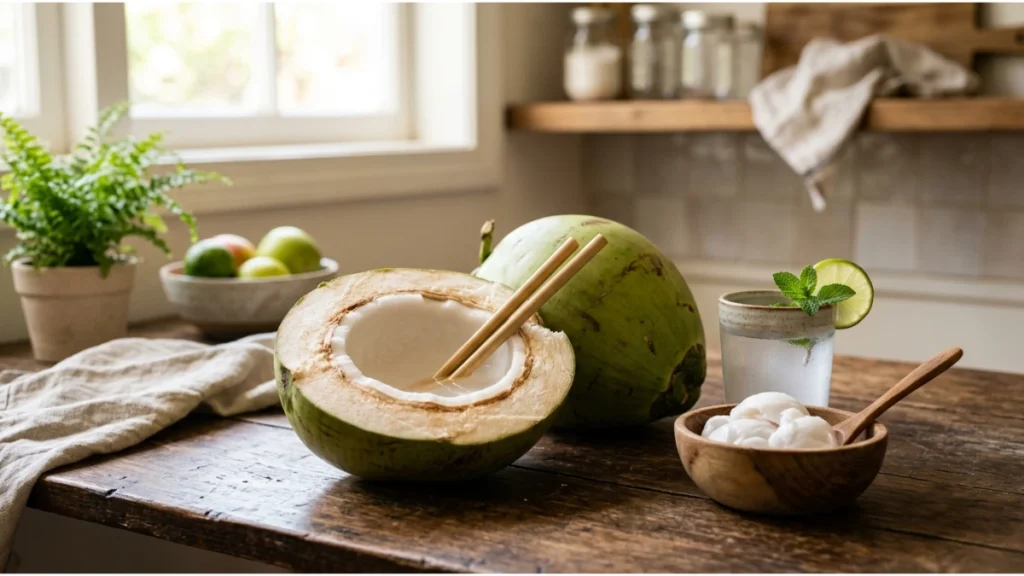
One of the biggest benefits of fresh coconut is its impressive fiber content. Fresh coconut flesh provides around 9 grams of dietary fiber per 100 grams, making it a satisfying addition to a balanced diet.
Fiber helps support normal digestion by adding bulk to stool, promoting regular bowel movements, and helping you feel full for longer. Since coconut water also provides hydration and natural electrolytes, enjoying both coconut flesh and coconut water together can be a refreshing choice for digestive wellness.
Simple way to enjoy it:
Add fresh coconut pieces to your breakfast bowl, smoothie, or enjoy them with a glass of coconut water for a naturally refreshing snack.
2. Provides Healthy Fats for Energy and Fullness
Fresh coconut is naturally rich in fats, including medium-chain triglycerides (MCTs) and other saturated fats. Along with fiber, these fats help make coconut a satisfying food that can keep you feeling full between meals.
Unlike sugary snacks that may provide quick energy followed by hunger, fresh coconut offers a combination of fats and fiber that provides more lasting satisfaction. However, because coconut flesh is calorie-dense, enjoying moderate portions is the best approach.
Simple way to enjoy it:
Add a few coconut pieces to oatmeal, yogurt, smoothies, or fruit bowls for extra flavor and nutrition.
3. Provides Important Minerals for Overall Wellness
Fresh coconut is a good source of essential minerals, especially manganese, copper, magnesium, and potassium. Manganese plays an important role in energy metabolism and normal bone health, while copper supports various body functions.
Coconut water adds more minerals and electrolytes, including potassium and magnesium, which help maintain normal fluid balance in the body.
Simple way to enjoy it:
Pair fresh coconut with fruits, nuts, or seeds for a nutrient-rich snack that provides a variety of essential nutrients.
4. Helps Support Energy and Hydration
Fresh coconut offers a unique combination of nutrient-rich flesh and refreshing coconut water. The healthy fats in coconut flesh provide a steady source of energy, while coconut water contains natural carbohydrates and electrolytes that help support hydration.
This makes fresh coconut a useful option during hot weather, after physical activity, or whenever you need a refreshing snack.
Simple way to enjoy it:
Enjoy a small serving of fresh coconut with chilled coconut water after a walk, workout, or busy day.
5. Supports Heart Health When Enjoyed in Moderation
Fresh coconut contains fiber, potassium, and plant compounds that can be part of a heart-friendly eating pattern. Coconut water is naturally low in fat and provides potassium, an important mineral involved in normal heart and muscle function.
Since coconut flesh is higher in saturated fat compared to many fruits, portion size matters. It is best enjoyed alongside other healthy foods like fruits, vegetables, nuts, seeds, and whole grains.
Simple way to enjoy it:
Use fresh coconut as a nutritious addition to meals rather than relying on it as your main source of fat.
6. Supports Skin Health and Antioxidant Protection
Fresh coconut provides nutrients such as healthy fats, copper, manganese, and antioxidant compounds that help support normal skin health and protect cells from oxidative stress.
While eating coconut alone cannot replace a complete skincare routine, including nutrient-rich foods like fresh coconut as part of a balanced diet can help nourish your body from within.
Simple way to enjoy it:
Combine fresh coconut with vitamin C-rich fruits like oranges, guava, kiwi, or berries for a more nutrient-packed snack.
7. Naturally Gluten-Free and Easy to Add to Your Diet
Fresh coconut is naturally gluten-free and minimally processed, making it a versatile choice for many different eating patterns. Both coconut flesh and coconut water can be enjoyed in a variety of ways without complicated preparation.
You can add fresh coconut to smoothies, oatmeal, yogurt bowls, fruit salads, curries, chutneys, or simply enjoy it on its own.
Simple way to enjoy it:
Keep fresh coconut pieces ready in the refrigerator for a quick snack option instead of reaching for processed foods.
Potential Downsides of Fresh Coconut
Fresh coconut is a nutritious food, but like any calorie-dense food, it is best enjoyed in moderation. Understanding its potential downsides can help you include it in your diet in a balanced way.
High in Calories
Fresh coconut flesh is naturally high in calories because it contains a significant amount of fat. Eating large portions regularly may add extra calories to your diet, especially if you are trying to manage your weight.
Higher in Saturated Fat
Coconut contains saturated fat, which is why portion size matters. Instead of using coconut as your main source of fat, enjoy it alongside other healthy foods such as fruits, vegetables, nuts, seeds, and whole grains.
Packaged Coconut Products May Contain Added Ingredients
Fresh coconut is a minimally processed food, but some packaged coconut products may contain added sugar, flavors, or preservatives. Choosing fresh coconut or unsweetened options is usually a better choice.
May Not Suit Everyone
Some people may experience digestive discomfort when eating large amounts of high-fiber or high-fat foods. If you are new to eating fresh coconut, start with a small portion and see how your body responds.
Bottom line: Fresh coconut can be part of a healthy diet when enjoyed in reasonable portions along with a variety of nutrient-rich foods.
Frequently Asked Questions
Can you eat fresh coconut every day?
Yes. A small serving of fresh coconut daily can be part of a balanced diet. Since it is high in calories and fat, moderation is important.
Is fresh coconut good for weight loss?
Fresh coconut may help you feel full because it contains fiber and healthy fats. However, portion control is important due to its calorie content.
Is fresh coconut better than coconut water?
Both are beneficial. Fresh coconut provides fiber and healthy fats, while coconut water provides hydration and electrolytes.
Can people with diabetes eat fresh coconut?
Yes, in moderation. Fresh coconut is low in sugar and contains fiber, but portion size should be considered.
Is fresh coconut good to eat at night?
Yes. A small portion can be enjoyed at night, but avoid large servings because coconut flesh is calorie-dense.
Final Thoughts
Fresh coconut is a simple yet nutritious tropical food that offers the benefits of both fiber-rich coconut flesh and refreshing coconut water. With healthy fats, dietary fiber, essential minerals, and natural electrolytes, it can be a valuable addition to a balanced diet.
Like any nutrient-dense food, fresh coconut is best enjoyed in moderation. A small serving combined with a variety of fruits, vegetables, whole grains, and protein-rich foods can help create a well-rounded eating pattern.
Whether you enjoy it as a snack, add it to your meals, or drink fresh coconut water for hydration, this versatile tropical fruit can be a delicious and nourishing part of a healthy lifestyle.
You May Also Like
