
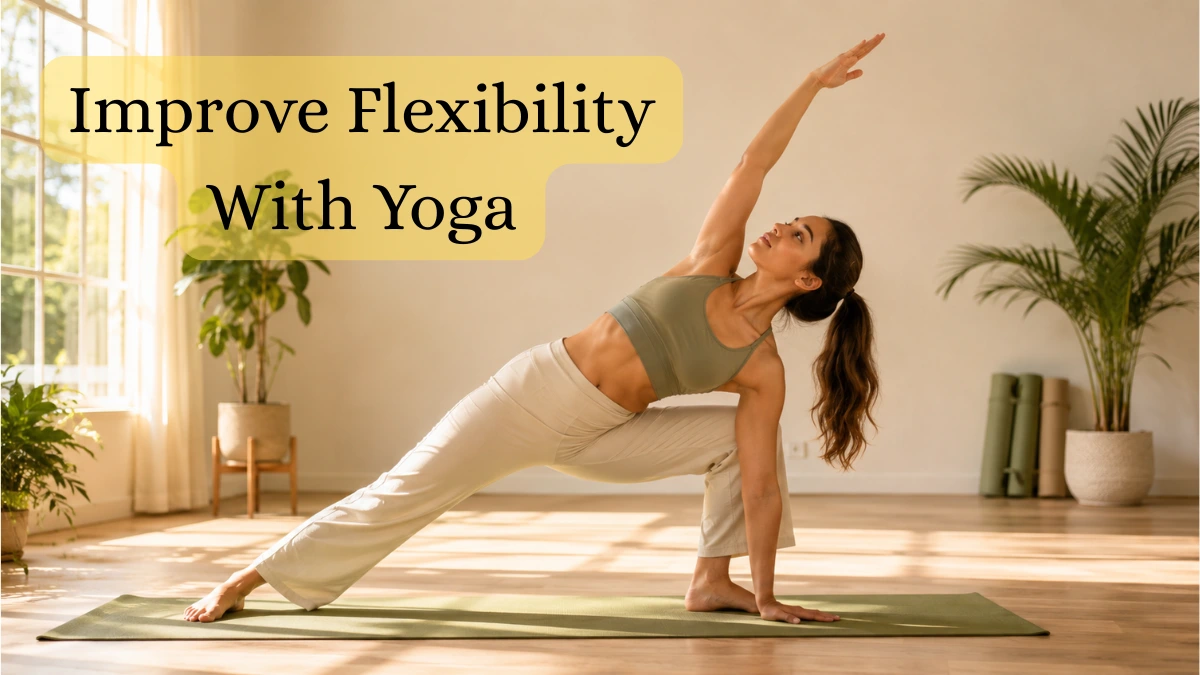
Can a few simple yoga poses really make your body more flexible? Yes—but consistency matters more than how far you can stretch today.
Regular yoga practice can help improve flexibility and range of motion over time, while also supporting better mobility and body awareness.
So, which poses are actually worth adding to your routine? Here are 7 beginner-friendly yoga poses for full-body flexibility, targeting your hips, hamstrings, shoulders, spine, and more.
In This Article
Can Yoga Improve Flexibility?
Yes. Regular yoga practice can help improve flexibility and range of motion over time. Yoga combines stretching with controlled movements and mindful breathing, allowing you to gradually work through a comfortable range of motion.
A 20-week study published in the Journal of Physical Therapy Science found that regular Hatha yoga practice improved spinal mobility and hamstring flexibility.
However, flexibility develops gradually, so practicing consistently is more important than forcing a deeper stretch. For beginners, the goal should be simple: move comfortably, breathe steadily, and allow your range of motion to improve with practice.
7 Best Yoga Poses for Flexibility
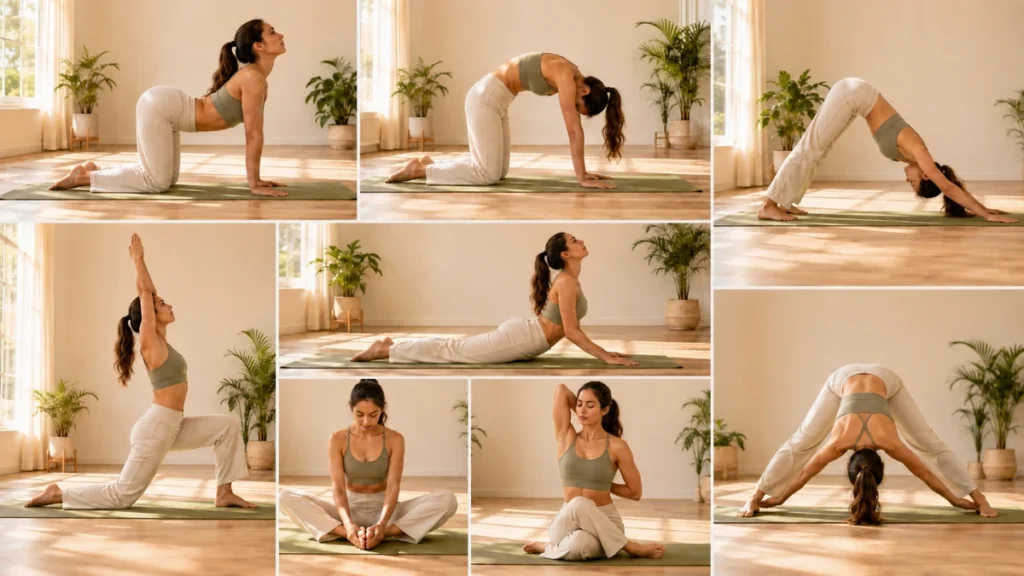
1. Cat-Cow Pose (Marjaryasana-Bitilasana)
Cat-Cow is a gentle movement that helps improve spinal mobility while stretching the back, neck, and shoulders. It’s especially useful for beginners because the movement is controlled and easy to adjust to your comfort level.
How to do it:
- Start on your hands and knees, with your hands under your shoulders and knees under your hips.
- Inhale as you gently arch your back, lift your chest, and look slightly forward.
- Exhale as you round your spine, gently tucking your chin toward your chest.
- Continue moving slowly between the two positions for 5–10 breaths.
Beginner tip: Focus on moving your spine smoothly rather than trying to create a deep stretch. Keep your movements comfortable and coordinated with your breathing.
Main areas targeted: Spine, neck, shoulders, and back.
2. Downward-Facing Dog (Adho Mukha Svanasana)
Downward-Facing Dog is one of the most useful yoga poses for full-body flexibility. It creates a gentle stretch through the hamstrings and calves while also working the shoulders, back, and hips.
How to do it:
- Start on your hands and knees with your hands slightly in front of your shoulders.
- Tuck your toes under and lift your hips upward and back.
- Straighten your legs as much as comfortable, but keep a slight bend in your knees if your hamstrings feel tight.
- Keep your spine long and press your hands firmly into the floor.
- Hold for 20–30 seconds, breathing slowly and steadily.
Beginner tip: Don’t worry about getting your heels to the floor. A long, comfortable spine is more important than straight legs.
Main areas targeted: Hamstrings, calves, shoulders, back, and hips.
3. Low Lunge (Anjaneyasana)
Low Lunge is especially helpful for improving flexibility in the hips and hip flexors, which can become tight from prolonged sitting. It also provides a gentle stretch through the thighs while encouraging greater hip mobility.
How to do it:
- Start in a tabletop position and step your right foot forward between your hands.
- Lower your left knee to the floor and keep your right knee positioned over your ankle.
- Gently shift your hips forward until you feel a comfortable stretch in the front of your left hip.
- Keep your chest lifted and avoid arching your lower back.
- Hold for 20–30 seconds, then switch sides.
Beginner tip: Place your hands on yoga blocks or the floor for support. Keep the stretch gentle rather than pushing your hips as far forward as possible.
Main areas targeted: Hip flexors, hips, thighs, and ankles.
4. Cobra Pose (Bhujangasana)
Cobra Pose gently opens the chest and shoulders while encouraging extension through the spine. It can be a useful addition to a flexibility routine, especially if you spend a lot of time sitting.
How to do it:
- Lie on your stomach with your legs extended behind you.
- Place your palms beside your chest, close to your ribs.
- Press gently into your hands and lift your chest while keeping your pelvis grounded.
- Keep your shoulders relaxed and avoid forcing your upper body higher than feels comfortable.
- Hold for 15–30 seconds, breathing slowly.
Beginner tip: Start with a low lift rather than trying to straighten your arms completely. Keep your elbows slightly bent and stop if you feel discomfort in your lower back.
Main areas targeted: Spine, chest, shoulders, and hip flexors.
5. Butterfly Pose (Baddha Konasana)
Butterfly Pose is a simple seated stretch that focuses on the inner thighs, hips, and groin. It can be particularly helpful for beginners who want to gradually improve lower-body flexibility without using a complicated posture.
How to do it:
- Sit upright with your legs extended in front of you.
- Bend your knees and bring the soles of your feet together.
- Hold your feet or ankles and let your knees gently move toward the floor.
- Keep your spine comfortably upright and avoid pressing your knees down.
- Hold for 20–30 seconds, breathing slowly.
Beginner tip: If your hips feel tight, place a cushion or folded blanket under your hips for extra support. Let your knees relax naturally rather than forcing them toward the floor.
Main areas targeted: Inner thighs, hips, groin, and lower back.
6. Cow Face Pose (Gomukhasana)
Cow Face Pose works on both the upper and lower body, making it a useful addition to a full-body flexibility routine. The arm position stretches the shoulders and upper arms, while the leg position works the hips and outer thighs.
How to do it:
- Sit comfortably with your legs extended in front of you.
- Bend your knees and bring your left leg over your right, stacking your knees as comfortably as possible.
- Extend your right arm overhead and bend the elbow, reaching your hand down your back.
- Bring your left arm behind your back and try to clasp your hands.
- Keep your spine upright and hold for 20–30 seconds, then switch sides.
Beginner tip: Don’t force your hands to touch. Use a yoga strap or towel between your hands if your shoulders are tight, and keep your legs in a comfortable position.
Main areas targeted: Shoulders, upper arms, hips, and outer thighs.
7. Wide-Legged Forward Fold (Prasarita Padottanasana)
Wide-Legged Forward Fold gives the hamstrings, inner thighs, hips, and back a deep but controlled stretch. It’s a useful pose for improving lower-body flexibility while also encouraging gentle movement through the spine.
How to do it:
- Stand with your feet wider than hip-width apart and toes pointing slightly forward.
- Keep your legs active and slowly hinge forward from your hips.
- Place your hands on the floor, blocks, or your legs for support.
- Let your head and neck relax while keeping the movement comfortable.
- Hold for 20–30 seconds, breathing slowly and steadily.
Beginner tip: Keep a slight bend in your knees if your hamstrings feel tight. Focus on lengthening your spine as you fold rather than trying to bring your head close to the floor.
Main areas targeted: Hamstrings, inner thighs, hips, and back.
A Simple 10-Minute Yoga Routine for Flexibility
You don’t need a long yoga session to work on flexibility. Try this simple 10-minute routine and move slowly through each pose:
- Cat-Cow Pose: 1 minute
- Downward-Facing Dog: 1 minute
- Low Lunge: 1 minute on each side
- Cobra Pose: 1 minute
- Butterfly Pose: 1 minute
- Cow Face Pose: 1 minute, switching sides halfway
- Wide-Legged Forward Fold: 2 minutes
Focus on steady breathing and comfortable movements rather than trying to stretch as deeply as possible. If a pose feels too intense, reduce the range of motion or use a support such as a yoga block.
How Often Should You Practice Yoga for Flexibility?
For noticeable improvements, consistency matters more than long or intense sessions. Aim to practice your flexibility-focused yoga routine around 3–5 times a week, allowing your body enough time to recover.
Even a short 10-minute session can be a practical way to stay consistent. As your flexibility improves, you can gradually increase the duration or explore a wider range of movement without forcing your body into uncomfortable positions.
Tips for Practicing Yoga Safely
Yoga should feel challenging but comfortable, not painful. Keep these simple tips in mind while practicing:
- Start with gentle movements and gradually increase your range of motion.
- Never force a stretch or bounce to go deeper.
- Keep breathing slowly and naturally throughout each pose.
- Use a yoga block, strap, or folded blanket when you need extra support.
- If you feel sharp pain, numbness, dizziness, or unusual discomfort, stop the pose.
- Beginners should focus on proper form and controlled movements rather than how deeply they can stretch.
Remember: Flexibility takes time. Consistent, comfortable practice is more beneficial than pushing your body beyond its limits.
Frequently Asked Questions
Can yoga really improve flexibility?
Yes. Regular yoga practice can help improve flexibility and range of motion over time. The key is consistent practice rather than trying to achieve a deep stretch quickly.
Which yoga is best for flexibility?
There isn’t one single type of yoga that is best for everyone. Practices that include gentle stretching, controlled movements, and poses held comfortably can all support flexibility.
Can beginners do yoga for flexibility?
Absolutely. Beginners can start with simple poses such as Cat-Cow, Butterfly Pose, and Low Lunge. Focus on comfortable movement and gradually increase your range of motion as your body adapts.
How often should I do yoga to improve flexibility?
Practicing 3–5 times a week can be a practical routine for working on flexibility. Even short sessions can be useful when you practice consistently.
How long does it take to become more flexible with yoga?
It varies from person to person. You may notice changes in mobility gradually over several weeks, but factors such as your starting flexibility, consistency, age, and activity level can affect your progress.
Final Thoughts
Improving flexibility doesn’t require complicated workouts or intense stretching. These 7 yoga poses for flexibility offer a simple way to gently work through different areas of the body and build better mobility over time.
Start with the poses that feel comfortable, practice consistently, and give your body time to adapt. The goal isn’t to become flexible overnight—it’s to move a little more freely with each practice.
You May Also Like
7 Best Exercises to Reduce Belly Fat Naturally at Home
Yoga for Better Sleep: A Simple Bedtime Routine to Help You Relax Naturally
