

Dark chocolate is more than just a sweet treat. It contains cocoa solids and plant compounds called flavanols, which researchers have studied for their potential health effects. Research has particularly explored cocoa and flavanols in relation to heart and blood-vessel health, although the strength of evidence varies across different outcomes.
If you’re wondering about the benefits of eating dark chocolate, remember that not all chocolate is the same. Dark chocolate generally contains more cocoa solids than milk chocolate, while higher-cocoa varieties often contain less sugar. However, the amount of flavanols can vary depending on the cocoa content and how the chocolate is processed. In this guide, we’ll look at the potential benefits of dark chocolate, how much to eat, what cocoa percentage to choose, and what to consider before making it a regular part of your diet.
In This Article
What Is Dark Chocolate?
Dark chocolate is made primarily from cocoa solids, cocoa butter, and sugar, although the exact ingredients vary by product. Compared with milk chocolate, it generally contains a higher proportion of cocoa solids.
Cocoa naturally contains polyphenols, including flavanols, which are among the plant compounds researchers study for their potential health effects. However, processing can affect how much of these compounds remains in the finished chocolate. For example, alkalization, sometimes called Dutch processing, can reduce flavanol content.
So, the word “dark” alone doesn’t tell you everything about a chocolate’s nutritional value. Cocoa percentage, added sugar, ingredients, and serving size are all worth considering when choosing a product.
7 Potential Benefits of Eating Dark Chocolate
The potential benefits of eating dark chocolate are mainly linked to cocoa and its naturally occurring flavanols. Research has particularly examined cocoa and flavanols in relation to blood-vessel function, blood pressure, and cardiovascular health, although the strength of evidence varies across outcomes. Many studies have also used cocoa or flavanol-rich products rather than ordinary chocolate bars, so the findings should not automatically be applied to every dark chocolate product. A 2025 systematic review and meta-analysis provides an overview of the evidence on flavan-3-ol-rich foods and cardiometabolic health.
1. May Support Heart Health
One of the most studied dark chocolate benefits is its potential role in cardiovascular health. Cocoa flavanols may support endothelial function, which helps blood vessels widen in response to increased blood flow. A systematic review of randomized trials found improvements in measures of endothelial function after chocolate, cocoa, or flavanol consumption, although the quality of evidence varied.
This does not mean dark chocolate prevents heart disease. Rather, a small portion of higher-cocoa dark chocolate can fit into an overall heart-conscious eating pattern.
2. May Help Maintain Healthy Blood Pressure
Blood pressure is another area where cocoa has been studied extensively. A systematic review and meta-analysis found that cocoa consumption was associated with modest reductions in systolic and diastolic blood pressure, although the researchers noted that more research is needed to determine the most effective dose.
Dark chocolate should not be used as a treatment for high blood pressure. Medication, regular physical activity, and an overall balanced diet remain much more important for blood-pressure management.
3. Provides Cocoa Flavanols and Other Plant Compounds
Cocoa naturally contains polyphenols, including flavanols such as epicatechin. These compounds are one reason cocoa has attracted attention in nutrition research.
However, the amount of flavanols can vary depending on the cocoa product and how it is processed. As Harvard’s Nutrition Source explains, cocoa processing can affect the amount of flavanols that remains in the finished product.
4. May Support Brain and Cognitive Health
Researchers have investigated cocoa flavanols for their potential effects on brain blood flow and cognitive function. A systematic review of human studies found some promising effects on areas such as memory and executive function, but the studies varied considerably in their methods, doses, and participants.
More research is needed before dark chocolate can be considered a reliable way to improve long-term cognitive health.
5. May Support Metabolic Health
Cocoa and chocolate have also been studied for their potential effects on cardiometabolic markers, including insulin function and blood glucose regulation. Some findings are encouraging, but results have not been consistent enough to consider dark chocolate a treatment for diabetes or other metabolic conditions.
Dark chocolate can still fit into a balanced eating pattern when enjoyed in moderation.
6. Provides Several Essential Minerals
Dark chocolate can provide minerals such as magnesium, iron, copper, manganese, and phosphorus. The exact amounts vary by cocoa content and product, as noted in Harvard’s overview of dark chocolate.
These minerals support normal functions throughout the body, but dark chocolate is still best viewed as a treat rather than a primary source of essential nutrients.
7. Contains Polyphenols With Antioxidant Activity
Cocoa contains polyphenolic compounds with antioxidant activity. These compounds are one reason cocoa has been studied for its potential health effects.
However, antioxidant activity does not mean dark chocolate “detoxes” the body or prevents disease. The actual health effects depend on evidence from human studies, not simply on a food’s antioxidant content.
The takeaway: The strongest evidence around cocoa and dark chocolate relates to blood-vessel function and cardiovascular health, while research into blood pressure, cognition, and metabolic health remains more variable. A small portion of higher-cocoa dark chocolate can be enjoyed as part of an overall balanced diet—more isn’t necessarily better.
How Much Dark Chocolate Should You Eat?
There is no fixed amount of dark chocolate that everyone needs to eat for better health. Since it is relatively calorie-dense, portion size matters when adding it to your diet.
A small portion of around 20–30 grams (about 1 ounce) can be a practical amount to enjoy as part of a balanced diet. If you enjoy dark chocolate regularly, keep the portion in line with your overall calorie and nutrition needs. Harvard’s Nutrition Source also recommends limiting dark chocolate to about one ounce a day to enjoy its potential benefits while keeping calorie intake in check. Harvard’s dark chocolate guide provides more detail on portions and serving ideas.
Simple ways to enjoy it include:
- 1–2 small squares after a meal
- A small piece with nuts or fruit
- A little grated over oatmeal or yogurt
- Unsweetened cocoa powder in smoothies or recipes
Rather than focusing on eating dark chocolate every day, think of it as an occasional or moderate treat that can fit comfortably into your overall eating pattern.
What Percentage of Dark Chocolate Is Healthy? How to Choose
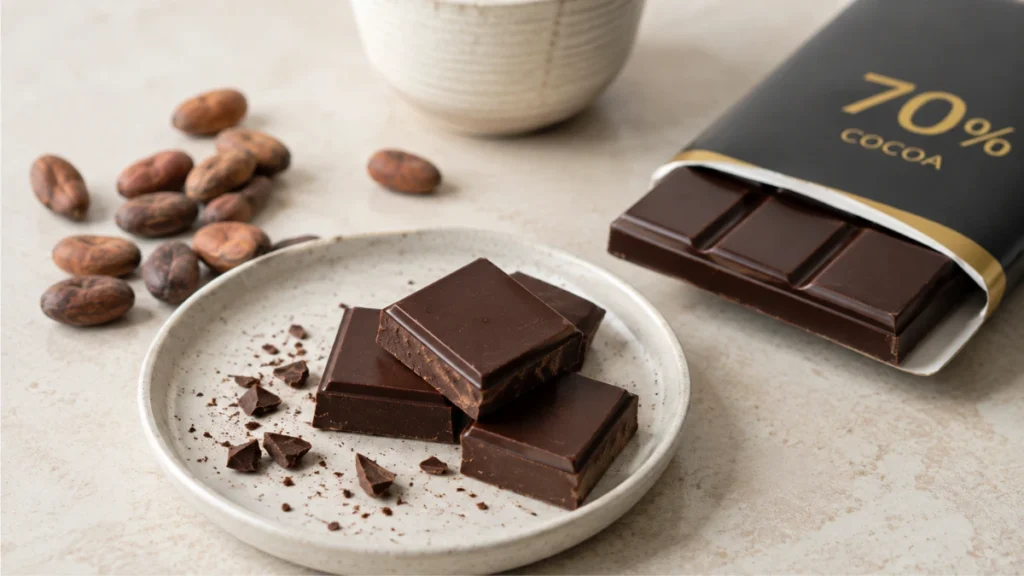
If you’re choosing dark chocolate for its potential health benefits, 70% cocoa or higher is a practical starting point. Higher-cocoa chocolate generally contains more cocoa solids and may contain less sugar than lower-cocoa varieties. Harvard’s Nutrition Source recommends choosing chocolate with at least 70% cocoa.
However, cocoa percentage isn’t the only thing that matters. Processing can affect how many flavanols remain in the finished product, so a 90% bar isn’t automatically healthier than a 70% bar. It’s also worth checking the nutrition label and ingredient list.
When choosing dark chocolate, look for:
- 70% cocoa or higher if you enjoy the taste.
- Less added sugar when comparing similar products.
- A simple ingredient list, without sugary fillings or unnecessary additions.
- A product you can enjoy in a small portion without feeling the need to eat more because of its bitterness.
A simple rule: Choose a higher-cocoa dark chocolate with reasonable added sugar, then enjoy a modest portion. You don’t need to choose the highest cocoa percentage possible—the best option is one that gives you more cocoa while still fitting comfortably into your overall diet.
Dark Chocolate vs. Milk Chocolate
Dark and milk chocolate are made from similar basic ingredients, but they differ mainly in their cocoa, milk, and sugar content. Dark chocolate generally contains more cocoa solids, while milk chocolate contains more milk and is usually sweeter.
| Feature | Dark Chocolate | Milk Chocolate |
|---|---|---|
| Cocoa content | Generally higher | Generally lower |
| Taste | More intense and bitter | Sweeter and creamier |
| Cocoa-derived compounds | Generally more | Generally less |
| Added sugar | Varies by product | Often higher |
| Milk ingredients | Little or none | Usually present |
If you’re looking for more cocoa-derived compounds, a higher-cocoa dark chocolate is generally the more suitable choice. However, not every dark chocolate bar is automatically a healthier option. The ingredients, added sugar, cocoa percentage, and portion size still matter.
Simple rule: Choose the type you enjoy, compare nutrition labels when possible, and keep your portion moderate.
Are There Any Side Effects of Dark Chocolate?
Dark chocolate can fit into a healthy diet, but eating large amounts may cause unwanted effects because it can be relatively high in calories, fat, sugar, caffeine, and theobromine.
- May affect sleep: Caffeine and theobromine are stimulants that may make some people feel more alert, particularly if chocolate is eaten close to bedtime.
- May cause digestive discomfort: Larger portions can cause stomach discomfort in some people, especially those who are sensitive to cocoa or other ingredients in chocolate.
- Can add calories quickly: Dark chocolate is energy-dense, so eating large portions regularly can increase overall calorie intake.
Individual tolerance varies, so if dark chocolate seems to affect your sleep or digestion, reducing the portion or avoiding it close to bedtime may help.
The takeaway: Dark chocolate can generally be enjoyed in moderation, but eating more doesn’t necessarily provide greater health benefits.
Frequently Asked Questions About Dark Chocolate
1. What are the main benefits of eating dark chocolate?
Dark chocolate provides cocoa flavanols, polyphenols, and minerals. Research has particularly explored cocoa and flavanols for their potential effects on blood-vessel function, blood pressure, and cardiovascular health, although evidence varies across outcomes.
2. How much dark chocolate should I eat a day?
There is no fixed amount everyone needs. A portion of around 20–30 grams (about 1 ounce) can be a practical amount to enjoy as part of a balanced diet.
3. What percentage of dark chocolate is best?
70% cocoa or higher is a practical starting point if you want more cocoa. However, cocoa percentage isn’t the only factor, so also check the ingredients and added sugar.
4. Is 90% dark chocolate healthy?
90% dark chocolate can fit into a healthy diet and generally contains less sugar than lower-cocoa varieties. However, you don’t need to choose 90% to enjoy the potential benefits of cocoa.
5. Can I eat dark chocolate every day?
Yes, a small portion can fit into a balanced diet, but eating it every day isn’t necessary. What matters more is your overall eating pattern and portion size.
6. Is dark chocolate good for weight loss?
Dark chocolate can be included in a weight-loss diet, but it doesn’t directly burn fat or cause weight loss. Keeping the portion moderate can make it easier to enjoy while managing overall calorie intake.
Final Thoughts
Dark chocolate can be a tasty way to enjoy cocoa flavanols and other plant compounds as part of a balanced diet. The strongest evidence relates to blood-vessel and cardiovascular health, while research into other potential benefits is still developing.
If you enjoy dark chocolate, choose a higher-cocoa option, pay attention to added sugar, and keep your portion moderate. You don’t need to eat it every day—or eat large amounts—to include it as part of a healthy lifestyle.
