
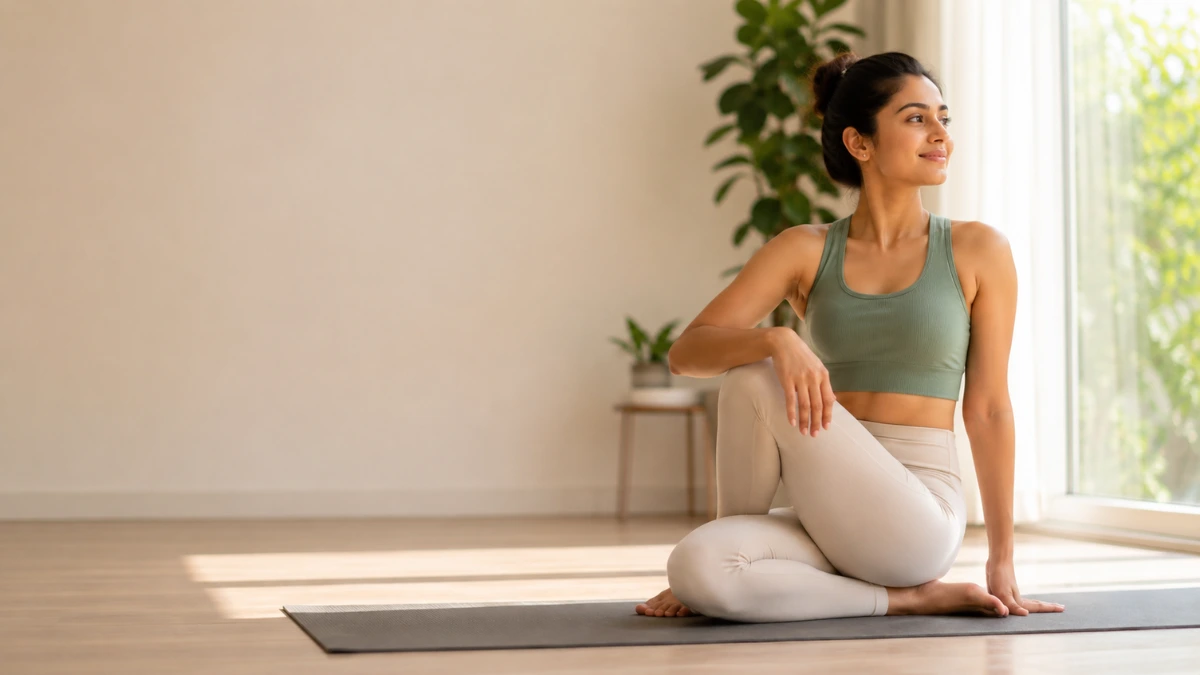
Waking up with a stiff back, tight shoulders, or a body that feels slow to get moving? You don’t always need a long workout to feel more comfortable in the morning. A few minutes of gentle yoga can be a simple way to wake up your body and ease into your day.
This 10-minute morning yoga routine for beginners combines gentle stretches, easy yoga poses, mindful breathing, and simple movements that don’t require advanced flexibility. You can follow the sequence at home with just a little floor space—no complicated equipment needed.
Whether you’re completely new to yoga or simply looking for a short morning yoga routine you can stick with, this sequence gives you a practical place to start. Follow each movement at a comfortable pace, breathe steadily, and focus on how your body feels rather than trying to make every pose perfect.
In This Article
Why Try a 10-Minute Morning Yoga Routine?
A morning yoga routine doesn’t have to be long or intense to be worthwhile. Starting with just 10 minutes can make it easier to build a consistent movement habit, especially if you’re new to yoga or have a busy schedule.
Gentle yoga combines movement, controlled breathing, and mindful attention. Regular practice may support flexibility, balance, mobility, and overall physical well-being. A short session can also help you gradually move your body after several hours of sleep. [Read more about the research on yoga and health → NCCIH: Yoga — Effectiveness and Safety]
The goal isn’t to complete an intense workout before breakfast. It’s simply to give your body a few minutes of gentle, purposeful movement and build a routine you can realistically maintain.
Before You Start: A Few Simple Tips
Before starting, choose a comfortable space where you can move freely. A yoga mat is helpful for grip and cushioning, but it’s not essential.
Since your body may feel stiff after sleeping, begin slowly and avoid forcing any stretch. Keep your movements gentle and stay within a comfortable range.
Wear comfortable clothing and focus on steady, relaxed breathing throughout the routine. You don’t need perfect flexibility or advanced yoga skills—just move at your own pace.
If you feel sharp pain or discomfort, stop the movement and return to a comfortable position.
10-Minute Morning Yoga Routine for Beginners
You don’t need to rush through these movements. Follow the sequence in order, keep your breathing steady, and adjust the duration if a movement feels uncomfortable.
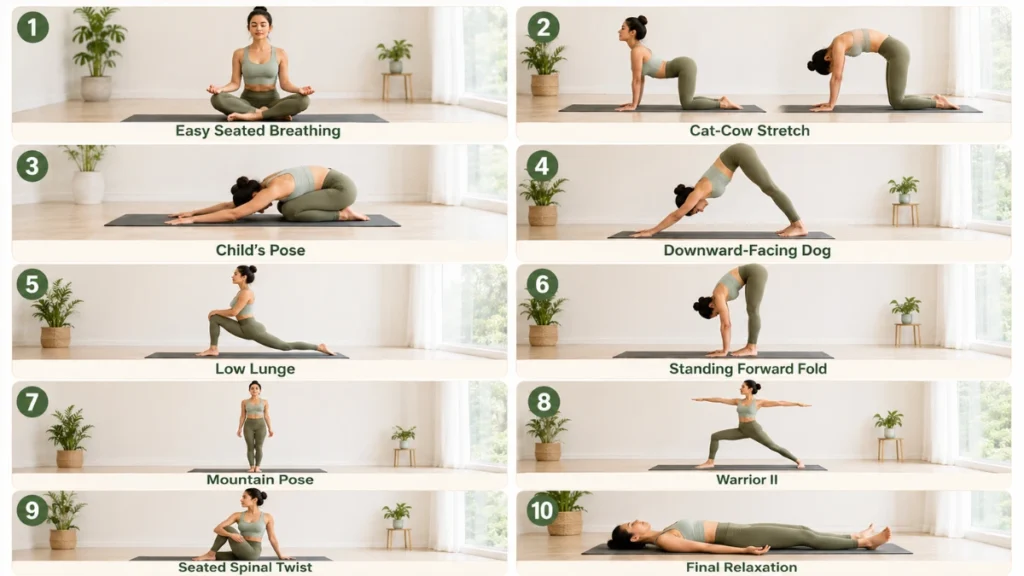
1. Easy Seated Breathing — 1 Minute
Start by sitting comfortably on the floor with your legs crossed, or sit on a cushion if that feels better. Keep your spine naturally upright and rest your hands on your thighs.
Close your eyes if comfortable and take slow, relaxed breaths. Inhale gently through your nose, then exhale without forcing the breath.
Use this first minute to become aware of your breathing and gradually shift your focus toward your body.
Beginner tip: Don’t worry about taking very deep breaths. Keep your breathing natural and comfortable.
2. Cat-Cow Stretch — 1 Minute
Come onto your hands and knees, placing your hands under your shoulders and knees under your hips.
As you inhale, gently lift your chest and tailbone while allowing your belly to move toward the floor. Then, as you exhale, round your spine gently and bring your chin slightly toward your chest.
Continue moving slowly between these two positions, following the rhythm of your breath.
This gentle movement helps you explore spinal mobility and can be a comfortable way to start moving your back after sleeping.
Beginner tip: Keep the movement small if your back feels stiff. There’s no need to force your spine into a deep curve.
3. Child’s Pose — 1 Minute
From your hands and knees, slowly move your hips back toward your heels. Extend your arms forward and allow your forehead to rest gently toward the floor. If reaching the floor is uncomfortable, place a cushion or folded towel underneath your head.
Take slow, comfortable breaths and let your shoulders relax as you hold the position.
Stay here for about one minute, or less if the position doesn’t feel comfortable.
Beginner tip: You don’t need to sit completely on your heels. Keep your hips slightly higher or place a cushion between your hips and heels for extra support.
3. Child’s Pose — 1 Minute
From your hands and knees, slowly move your hips back toward your heels. Extend your arms forward and allow your forehead to rest gently toward the floor. If reaching the floor is uncomfortable, place a cushion or folded towel underneath your head.
Take slow, comfortable breaths and let your shoulders relax as you hold the position.
Stay here for about one minute, or less if the position doesn’t feel comfortable.
Beginner tip: You don’t need to sit completely on your heels. Keep your hips slightly higher or place a cushion between your hips and heels for extra support.
5. Low Lunge — 1 Minute
From Downward-Facing Dog, bring your right foot forward between your hands. Lower your left knee gently to the floor and keep your hands on either side of your front foot.
Keep your chest lifted comfortably and allow your hips to move forward slightly until you feel a gentle stretch through the front of your left hip. Don’t force the movement.
Hold for about 30 seconds, breathing slowly, then switch sides and repeat.
Beginner tip: Place a folded towel or cushion under your back knee if the floor feels uncomfortable.
6. Standing Forward Fold — 1 Minute
Stand with your feet about hip-width apart and keep your knees slightly bent. Slowly hinge forward from your hips, allowing your upper body to relax toward your legs.
Let your arms hang down or rest your hands on your thighs or shins, depending on what feels comfortable. Keep your knees bent as much as needed and avoid pulling yourself deeper into the stretch.
Take slow, steady breaths while holding the position.
Beginner tip: Don’t worry if your hands can’t reach the floor. The aim is a comfortable stretch, not touching your toes.
7. Mountain Pose — 1 Minute
Slowly rise from the forward fold and stand tall with your feet about hip-width apart. Let your arms rest naturally by your sides, or bring your hands together in front of your chest.
Keep your shoulders relaxed, your chest open, and your spine in a comfortable neutral position. Look straight ahead and take slow, steady breaths.
Use this minute to pause, notice how your body feels, and settle into a calm standing position.
Beginner tip: Don’t stiffen your knees or pull your shoulders back forcefully. Simply stand comfortably and maintain relaxed breathing.
8. Warrior II — 1 Minute
From Mountain Pose, step your feet wide apart. Turn your right foot outward and bend your right knee while keeping it comfortably aligned over your ankle. Extend your arms out to the sides at shoulder height.
Keep your shoulders relaxed and your gaze over your right hand. Take slow, steady breaths and hold for about 30 seconds. Then straighten your leg, switch sides, and repeat.
Beginner tip: Keep a smaller bend in your front knee if the pose feels tiring. Focus on steady breathing and comfortable alignment.
9. Seated Spinal Twist — 1 Minute
Sit comfortably on the floor with your legs extended or crossed. Keep your spine naturally upright and place your hands beside your hips.
Bend your right knee and place your right foot outside your left leg. Gently turn your upper body toward the right, placing your left hand on your right knee for support.
Hold for about 30 seconds while breathing slowly, then release and repeat on the other side.
Beginner tip: Twist only as far as feels comfortable. Keep the movement gentle rather than forcing your body to turn farther.
10. Final Relaxation — 1 Minute
Finish your routine by lying comfortably on your back with your legs relaxed and your arms resting by your sides. Close your eyes if comfortable and allow your whole body to settle.
Take a few slow, natural breaths. Notice how your body feels after the movement without trying to change anything.
Stay here for about one minute, then slowly turn to one side and sit up when you’re ready.
Beginner tip: If lying on the floor isn’t comfortable, you can finish the routine seated in a relaxed position instead.
How to Make This Morning Yoga Routine a Daily Habit
The biggest benefit of a short morning yoga routine is that it can be easy to fit into your schedule. You don’t need to wait for a completely free morning—10 minutes is enough to get started.
Try practicing at the same time each day, such as after waking up or before breakfast. Keeping your yoga mat ready can also make it easier to begin without spending time preparing.
If 10 minutes feels difficult at first, start with a shorter session and gradually work your way up. You can also repeat your favorite movements on days when you have less time.
Remember that consistency matters more than doing a perfect routine every morning. The goal is to create a simple movement habit that feels comfortable enough to maintain.
Safety Tips for Beginners
Yoga should feel comfortable, not painful. Move slowly and avoid forcing your body into any position, especially if you’re new to yoga or feel stiff in the morning.
A few simple precautions can make your practice more comfortable:
- Stop if you experience sharp pain, dizziness, or unusual discomfort.
- Modify a pose or skip it if it doesn’t feel right for your body.
- Use a cushion, folded towel, or other support when needed.
- Don’t compare your flexibility with others.
- If you have an injury, ongoing pain, or a medical condition, consider speaking with a healthcare professional before starting a new exercise routine.
The aim of this 10-minute sequence is gentle movement—not pushing your body to its limits.
Frequently Asked Questions
Is 10 minutes of morning yoga enough for beginners?
Yes. Ten minutes can be a practical starting point for beginners. A short routine can help you build consistency without requiring a large time commitment. As you become more comfortable, you can gradually increase your practice time if you wish.
Can I do this morning yoga routine every day?
You can practice gentle yoga regularly if the movements feel comfortable for your body. Pay attention to how you feel and allow yourself time to rest when needed.
Should I do morning yoga before or after breakfast?
You may find it more comfortable to practice before breakfast, particularly for movements that involve bending or twisting. If you prefer practicing after eating, give yourself enough time to digest and avoid exercising immediately after a large meal.
What if I’m not flexible enough to do these poses?
You don’t need advanced flexibility to begin. Modify the poses, use supportive props, and keep your range of motion comfortable. Flexibility can vary from person to person, so focus on gradual progress rather than trying to force a deeper stretch.
Can I do this routine without a yoga mat?
Yes. A yoga mat is useful for grip and cushioning, but you can practice on a stable, non-slippery surface if you don’t have one.
Final Thoughts
A 10-minute morning yoga routine can be a simple way to add gentle movement to the start of your day. You don’t need advanced flexibility, expensive equipment, or a long workout to begin.
Focus on moving slowly, breathing comfortably, and choosing variations that feel right for your body. With regular practice, these few minutes can become an easy habit that fits into even a busy morning.
Start where you are, keep your expectations realistic, and let consistency matter more than perfection. Even a short session is a positive step toward making mindful movement part of your daily routine.
