
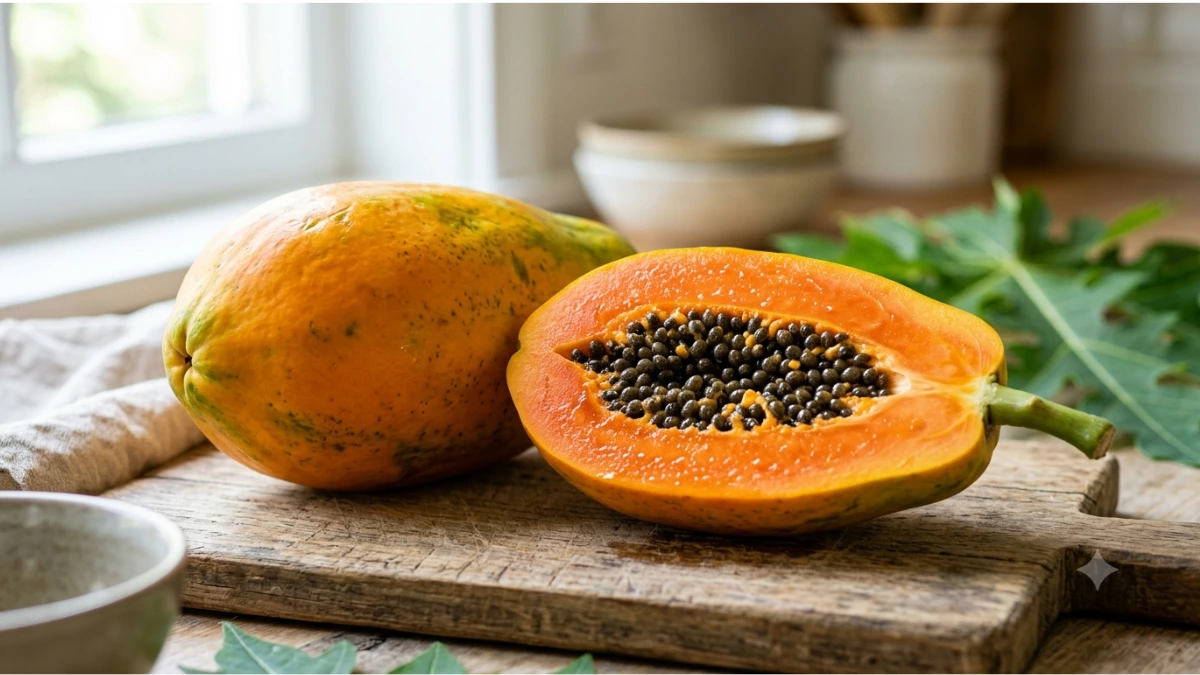
The bright orange flesh of papaya may look simple, but this tropical fruit is packed with nutrients that can support digestion, immunity, skin health, and overall wellness. From its vitamin C content to its natural enzymes, papaya offers benefits that go far beyond its sweet taste.
Many people eat papaya to support digestion, but its benefits go far beyond that. From supporting your immune system and heart health to helping you meet your daily nutrient needs, this vibrant fruit can be a valuable part of a healthy lifestyle.
In this article, you’ll discover the science-backed papaya benefits, its nutritional value, and what happens when you eat this fruit regularly.
In This Article
Quick Guide: Papaya Benefits at a Glance
Best known for: Supporting digestion and providing essential nutrients
Key nutrients: Vitamin C, vitamin A, folate, fiber, potassium, and antioxidants
Potential health benefits:
- Healthy digestion
- Immune function
- Heart health
- Skin health
- Overall nutrition
Best way to enjoy: Eat ripe papaya as a fresh fruit, add it to smoothies, or include it as part of a balanced meal.
Remember: Papaya is a nutritious fruit, but it is not a replacement for medical treatment or a balanced diet.
Papaya Nutrition Facts: What Makes This Fruit So Healthy?
Papaya is a nutrient-rich fruit that provides a good combination of vitamins, minerals, fiber, and antioxidants while being naturally low in calories. Its high vitamin C content is one of the reasons it stands out among many fruits.
According to USDA FoodData Central, one cup (about 145 grams) of raw papaya provides approximately:
| Nutrient | Amount |
|---|---|
| Calories | 62 kcal |
| Carbohydrates | 16 g |
| Dietary Fiber | 2.5 g |
| Protein | 0.7 g |
| Fat | 0.4 g |
| Vitamin C | 88 mg |
| Vitamin A | 68 mcg RAE |
| Folate | 53 mcg |
| Potassium | 264 mg |
Papaya is especially rich in vitamin C, which supports normal immune function and helps protect cells from oxidative stress. It also provides fiber, which supports digestive health, along with plant compounds like carotenoids that contribute to its antioxidant properties.
Adding papaya to your diet is a simple way to increase your intake of important nutrients while enjoying a naturally sweet and refreshing fruit.
8 Science-Backed Benefits of Eating Papaya Regularly
Papaya is a nutrient-rich tropical fruit packed with vitamin C, vitamin A, fiber, folate, and antioxidants. According to USDA FoodData Central, papaya provides essential nutrients that support overall wellness. Research from Harvard T.H. Chan School of Public Health also highlights the importance of including fruits like papaya as part of a balanced diet.
Here are the science-backed benefits of eating papaya regularly.
1. Supports Healthy Digestion Naturally
Papaya is well known for its digestive benefits, mainly because it contains dietary fiber and a natural enzyme called papain. Fiber helps support normal bowel movements and contributes to a healthy digestive system, while papain helps break down proteins during digestion.
Including fiber-rich fruits like papaya in your diet can be a simple way to support digestive health. However, papaya should be viewed as part of an overall healthy eating pattern rather than a solution for digestive problems.
Enjoying ripe papaya as a snack or alongside breakfast can help you add more fiber and nutrients to your daily routine.
2. Rich in Antioxidants That Help Protect Your Cells
Papaya is naturally rich in antioxidants, including vitamin C, carotenoids, and other plant compounds that help protect the body’s cells from oxidative stress.
Oxidative stress occurs when there is an imbalance between free radicals and antioxidants in the body. Over time, high levels of oxidative stress may contribute to cellular damage, which is why including antioxidant-rich foods in your diet is important for overall wellness.
The bright orange color of ripe papaya comes from carotenoids such as beta-carotene and lycopene, which are plant compounds associated with protective health benefits. Adding colorful fruits like papaya to your meals is a simple way to increase your intake of beneficial nutrients.
Rather than focusing on a single “superfood,” papaya works best as part of a varied diet rich in different fruits and vegetables.
3. Helps Support Immune Function
Papaya is an excellent source of vitamin C, a nutrient that plays an important role in supporting normal immune function. Vitamin C helps support the activity of immune cells and also works as an antioxidant that helps protect cells from oxidative stress.
One serving of ripe papaya can provide a significant amount of your daily vitamin C needs, making it an easy way to include this essential nutrient in your diet.
However, eating papaya does not prevent infections on its own. A strong immune system depends on many factors, including a balanced diet, quality sleep, regular physical activity, and healthy lifestyle habits.
Adding vitamin C-rich foods like papaya, citrus fruits, and berries can be a simple step toward meeting your daily nutrient needs.
4. May Support Heart Health
Papaya contains several nutrients that are linked with heart-friendly eating patterns, including fiber, potassium, vitamin C, and antioxidants.
Dietary fiber can support healthy cholesterol levels as part of a balanced diet, while potassium plays an important role in maintaining normal blood pressure. The antioxidants found in papaya, such as carotenoids and vitamin C, also help protect cells from oxidative stress.
Research from organizations like the Harvard T.H. Chan School of Public Health highlights that diets rich in fruits and vegetables are associated with better heart health outcomes.
While no single food can protect against heart disease, regularly including nutrient-rich fruits like papaya can contribute to an overall heart-healthy lifestyle.
5. May Support Healthy Skin
Papaya contains nutrients that support healthy skin from within, especially vitamin C, vitamin A, and antioxidants. Vitamin C plays an important role in collagen production, a protein that helps maintain skin structure and elasticity.
The carotenoids found in papaya, including beta-carotene, also act as plant antioxidants that help protect cells from oxidative stress. Including a variety of colorful fruits and vegetables in your diet can provide nutrients that support overall skin health.
While eating papaya cannot replace skincare habits or treatments, adding nutrient-rich fruits like papaya to a balanced diet can be a simple way to support your body’s natural processes.
6. Supports Eye Health with Vitamin A and Carotenoids
Papaya contains nutrients that are important for maintaining healthy vision, especially vitamin A and carotenoids such as beta-carotene. These plant compounds help support normal eye function and are involved in maintaining the health of the eyes.
Vitamin A is essential for normal vision, and getting enough of it through a balanced diet helps support the eyes’ ability to function properly. The colorful pigments found in fruits and vegetables, including papaya, are part of a diet pattern associated with better overall eye health.
Adding papaya along with other colorful fruits and vegetables can be a simple way to increase your intake of important eye-supporting nutrients.
7. Provides Important Nutrients for Overall Wellness
Papaya is a nutrient-dense fruit that provides several essential vitamins and minerals the body needs for everyday functions. Along with vitamin C and vitamin A, it contains folate, potassium, and dietary fiber, which contribute to a balanced diet.
Folate plays an important role in cell growth and normal body processes, while potassium helps support normal muscle and nerve function. The fiber content in papaya also makes it a satisfying and nourishing choice compared with many processed snack options.
Including fruits like papaya regularly can help increase your intake of important nutrients while adding natural sweetness and variety to your meals.
8. A Low-Calorie Fruit That Fits a Healthy Diet
Papaya is naturally low in calories while providing important nutrients, making it a refreshing option for people looking to add more whole foods to their diet.
Its combination of water content, fiber, and natural sweetness can make it a satisfying choice compared with many highly processed snacks. The fiber in papaya may also help you feel fuller for longer when included as part of a balanced meal pattern.
However, no single fruit can cause weight loss on its own. Maintaining a healthy weight depends on overall eating habits, physical activity, sleep, and lifestyle factors.
Enjoying papaya as part of a varied diet is a simple way to add more nutrients and flavor to your everyday meals.
Is It Good to Eat Papaya Every Day?
For most healthy adults, eating ripe papaya regularly can be a healthy choice when included as part of a balanced diet. Its combination of fiber, vitamins, minerals, and antioxidants makes it a nutritious fruit for everyday meals.
A moderate portion of papaya can be a good addition to breakfast, a mid-day snack, or a smoothie. The right amount depends on your overall diet, nutritional needs, and individual health goals.
While papaya offers many beneficial nutrients, variety is important. Eating different types of fruits ensures that your body receives a wider range of vitamins, minerals, and plant compounds.
Choose ripe papaya that has a pleasant aroma and soft texture. Fresh fruit is usually the best option, as it provides natural nutrients without added sugar or unnecessary ingredients.
Best Time to Eat Papaya and How to Include It in Your Diet
There is no single “perfect” time to eat papaya. The best time depends on your routine, preferences, and how your body responds. What matters most is including it as part of a balanced eating pattern.
Many people enjoy papaya in the morning with breakfast because it is light, refreshing, and provides fiber and essential nutrients to start the day. It can also be a healthy snack option between meals when you want something naturally sweet.
Here are some simple ways to enjoy papaya:
- Add fresh papaya pieces to a fruit bowl.
- Blend it into a smoothie with yogurt or other fruits.
- Pair it with nuts or seeds for a more filling snack.
- Enjoy it as a refreshing dessert alternative.
While papaya is a nutritious fruit, there is no strong evidence that it must be eaten at a specific time to provide health benefits. The most important factor is consistency and choosing a variety of nutrient-rich foods.
Who Should Be Careful With Papaya?
Papaya is a healthy fruit for most people, but some individuals may need to be more careful depending on their health situation.
People with latex allergy:
Some people who are sensitive to latex may also experience reactions to certain fruits, including papaya. If you have a known latex allergy, it is best to be aware of possible food sensitivities.
During pregnancy:
Ripe papaya eaten in normal food amounts is generally different from unripe or semi-ripe papaya. Unripe papaya contains higher amounts of latex, which is why pregnant women are often advised to avoid unripe papaya and discuss dietary choices with their healthcare provider.
People with specific health concerns:
If you have digestive issues, food allergies, or any medical condition requiring dietary restrictions, it is always better to follow advice from a qualified healthcare professional.
For most healthy adults, ripe papaya can be enjoyed as part of a balanced and varied diet.
My Personal Experience: Adding Papaya to My Diet
I have always found papaya to be one of the easiest fruits to include in my daily routine. Its soft texture, natural sweetness, and refreshing taste make it a simple choice for breakfast or a light snack.
What I like most about papaya is that it feels nourishing without being heavy. Adding fruits like papaya reminds me that healthy eating does not always need to be complicated — sometimes small, consistent choices can make a difference in how we build our daily habits.
While papaya is not a magical solution for health problems, including nutrient-rich fruits as part of a balanced diet can be a simple step toward supporting overall wellness.
Frequently Asked Questions
Does papaya help with constipation?
Yes, papaya may help support bowel regularity because it contains dietary fiber, which adds bulk to stool and supports healthy digestion. However, persistent constipation should be discussed with a healthcare professional.
How much papaya should you eat in a day?
A moderate serving of papaya can be a healthy addition to your daily diet. The ideal amount depends on your overall eating pattern, nutritional needs, and individual health goals.
Can papaya be eaten at night?
Yes, ripe papaya can be eaten at night if it suits your digestion and routine. There is no strong scientific evidence that papaya must only be eaten at a specific time of day.
Does papaya contain sugar?
Yes, papaya contains natural sugars, but it also provides fiber, vitamins, minerals, and antioxidants. Eating whole fruits like papaya is different from consuming foods with added sugars.
Can papaya cause allergies?
Although uncommon, some people may experience allergic reactions to papaya, especially those with sensitivities to latex or certain fruits. If you notice allergy symptoms, consult a healthcare professional.
Is green papaya healthier than ripe papaya?
Green and ripe papaya have different uses and nutritional profiles. Ripe papaya is commonly enjoyed as a fruit, while green papaya is often used in cooked dishes.
Final Thoughts
Papaya is a simple fruit that offers much more than just a sweet taste. With its combination of vitamins, minerals, fiber, and antioxidants, it can be a valuable addition to a balanced and healthy eating pattern.
From supporting digestion and providing essential nutrients to adding more variety to your daily meals, papaya is an easy fruit to enjoy regularly. However, good health does not come from one food alone — it comes from consistent habits, a varied diet, and a healthy lifestyle.
Whether you enjoy papaya in the morning, as a snack, or in a smoothie, this colorful fruit can be a delicious way to nourish your body naturally.
You May Also Like
Greek Yogurt Benefits: Why It’s One of the Healthiest Foods You Can Eat
