
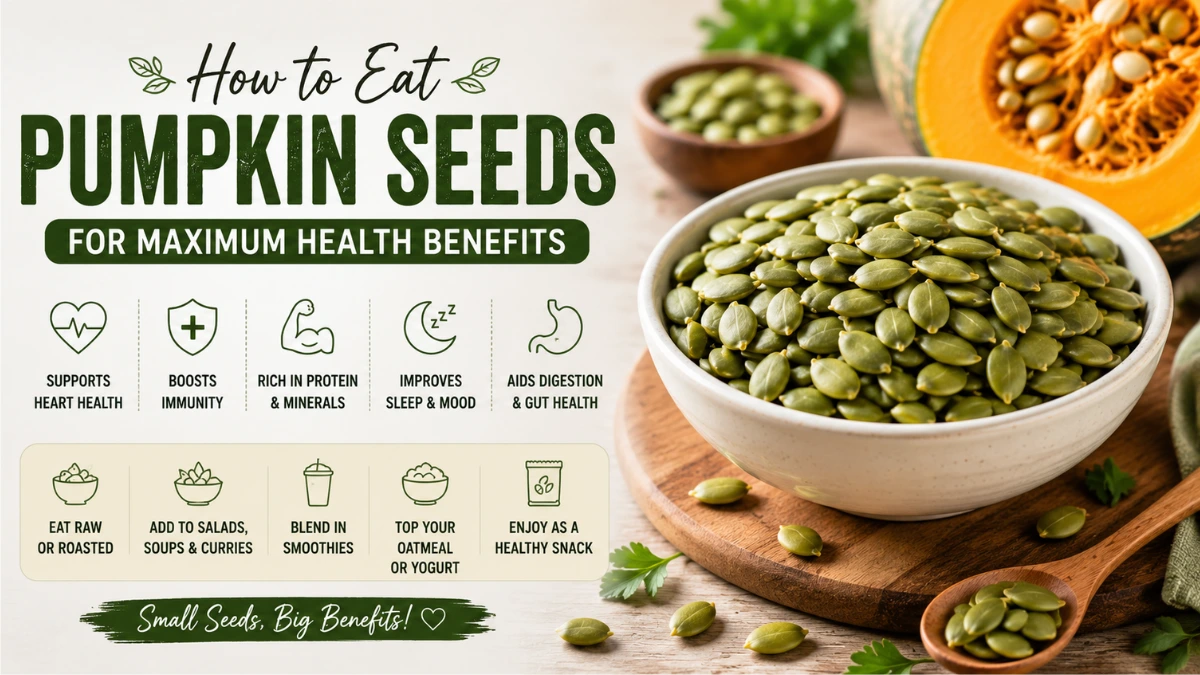
Pumpkin seeds benefits come from their impressive mix of protein, healthy unsaturated fats, fiber, magnesium, zinc, iron, and other nutrients. These small, crunchy seeds are an easy way to add more nutrition to everyday meals and snacks.
Pumpkin seeds can be eaten raw or roasted, sprinkled over oatmeal and salads, added to yogurt or smoothies, or enjoyed on their own. Their versatility makes them a convenient addition to a balanced diet.
In this guide, you’ll learn about the benefits of pumpkin seeds, their nutritional value, healthy ways to eat them, how much you may want to include in your diet, and whether raw or roasted pumpkin seeds are a better choice.
Quick Guide
Pumpkin seeds are rich in protein, healthy fats, fiber, magnesium, and antioxidants. Eating them in moderation as part of a balanced diet may support heart health, provide important nutrients, and help keep you feeling satisfied between meals.
In This Article
What Are Pumpkin Seeds?
Pumpkin seeds, also known as pepitas, are the edible seeds found inside pumpkins.
They have a mild, nutty flavor and can be eaten raw, roasted, or added to various dishes. Pumpkin seeds are naturally rich in nutrients, making them a popular choice for healthy snacking.
Why Do People Eat Pumpkin Seeds?
People often include pumpkin seeds in their diet because they want:
- More plant-based protein
- Healthy fats
- Additional fiber
- Important minerals such as magnesium and zinc
- Nutritious snack options
- Easy ways to improve meal nutrition
Nutrition in Pumpkin Seeds
Pumpkin seeds contain several important nutrients, including:
- Protein
- Healthy unsaturated fats
- Fiber
- Magnesium
- Zinc
- Iron
- Phosphorus
- Antioxidants
These nutrients help support normal body functions and contribute to overall health.
Top Benefits of Pumpkin Seeds
1. Rich in Magnesium
Pumpkin seeds are one of the best natural sources of magnesium.
Magnesium is involved in hundreds of processes in the body, including muscle function, nerve function, and energy production.
2. Provide Plant-Based Protein
Protein helps build and repair tissues throughout the body.
Adding pumpkin seeds to meals can help increase your daily protein intake, especially for people following plant-based diets.
3. Support Heart Health
Pumpkin seeds contain healthy fats, fiber, and magnesium.
Research suggests that diets rich in these nutrients may support heart health when combined with an overall healthy lifestyle.
4. May Help Keep You Full Longer
Because pumpkin seeds contain both protein and healthy fats, they can be a satisfying snack option.
Many people find they help reduce the urge to snack on highly processed foods.
5. Contain Antioxidants
Pumpkin seeds naturally contain antioxidant compounds that help protect cells from oxidative stress.
A diet rich in antioxidant-containing foods may support long-term health.
How to Eat Pumpkin Seeds for Maximum Health Benefits
1. Eat Them Raw
Raw pumpkin seeds retain all of their natural nutrients.
Choose unsalted varieties whenever possible.
2. Lightly Roast Them
Roasting can enhance flavor and crunch.
Use moderate heat and avoid excessive oil or salt.
3. Add Them to Breakfast
Try adding pumpkin seeds to:
- Oatmeal
- Yogurt
- Smoothie bowls
- Overnight oats
This can increase the protein and nutrient content of your breakfast.
4. Sprinkle Them on Salads
Pumpkin seeds add texture, flavor, and nutrition to vegetable salads.
A small handful is usually enough.
5. Blend Into Smoothies
A tablespoon of pumpkin seeds can be blended into smoothies for extra nutrients without significantly changing the taste.
6. Use Them as a Healthy Snack
One of the easiest ways to enjoy pumpkin seeds is simply eating a small handful between meals.
Best Time to Eat Pumpkin Seeds
The best time depends on your routine and preferences.
Many people enjoy pumpkin seeds:
- With breakfast
- As a mid-morning snack
- Before workouts
- As an afternoon snack
- Added to dinner meals
Consistency matters more than timing.
How Much Pumpkin Seeds Should You Eat Daily?
A moderate serving is generally sufficient for most people.
| Serving Size | Approximate Amount |
|---|---|
| Small Serving | 1 tablespoon |
| Standard Serving | 1 ounce (28 grams) |
| Daily Practical Amount | 1–2 tablespoons |
Pumpkin seeds are nutrient-dense, so a small amount can go a long way.
Tips for Better Results
To get the most from pumpkin seeds:
- Choose unsalted varieties when possible.
- Store them in an airtight container.
- Pair them with other nutritious foods.
- Enjoy them regularly rather than occasionally.
- Focus on overall diet quality.
Common Mistakes
Eating Too Many at Once
More isn’t always better. Pumpkin seeds are calorie-dense and are best enjoyed in moderation.
Choosing Heavily Salted Versions
Excess sodium can reduce some of the health advantages.
Ignoring Portion Sizes
A small serving is often enough to enjoy their benefits.
Things to Watch Out For
Although pumpkin seeds are nutritious, they may not be suitable for everyone.
Some people may experience digestive discomfort if they suddenly consume large amounts of high-fiber foods.
People with seed allergies should avoid them and consult a healthcare professional.
My Personal Experience
One thing I appreciate about pumpkin seeds is how easy they are to use.
Unlike some health foods that require special recipes, pumpkin seeds can be added to everyday meals without much effort. I often recommend starting with a small amount on oatmeal or yogurt because it’s one of the simplest ways to make a meal more nutritious.
For me, the biggest advantage is convenience. Healthy habits tend to last longer when they’re easy to follow.
Frequently Asked Questions
Is it okay to eat pumpkin seeds every day?
For many people, pumpkin seeds can be part of a healthy daily diet when consumed in moderation.
Should pumpkin seeds be eaten raw or roasted?
Both options can be nutritious. Light roasting may improve flavor, while raw seeds retain their natural state.
Can pumpkin seeds help with weight management?
Their protein and healthy fat content may help increase feelings of fullness as part of a balanced diet.
What is the best time to eat pumpkin seeds?
There is no single best time. They can be enjoyed whenever they fit naturally into your routine.
How many pumpkin seeds should I eat daily?
A serving of about 1–2 tablespoons is a practical amount for many people.
Final Thoughts
Pumpkin seeds are a simple, nutrient-rich food that can easily fit into a healthy lifestyle. Whether you eat them raw, roasted, or added to meals, they provide protein, healthy fats, minerals, and antioxidants that support overall nutrition.
The key is to keep portions reasonable, choose minimally processed options, and make them part of a balanced diet rather than relying on any single food for health benefits.
Small habits, practiced consistently, often make the biggest difference over time.
You May Also Like
Sources & References
- National Institutes of Health (NIH) – Magnesium Fact Sheet
- Academy of Nutrition and Dietetics – Nutrition & Healthy Eating Resources
https://www.eatright.org/ - Cleveland Clinic – The Health Benefits of Pumpkin Seeds
https://health.clevelandclinic.org/pumpkin-seeds-7-ways
