
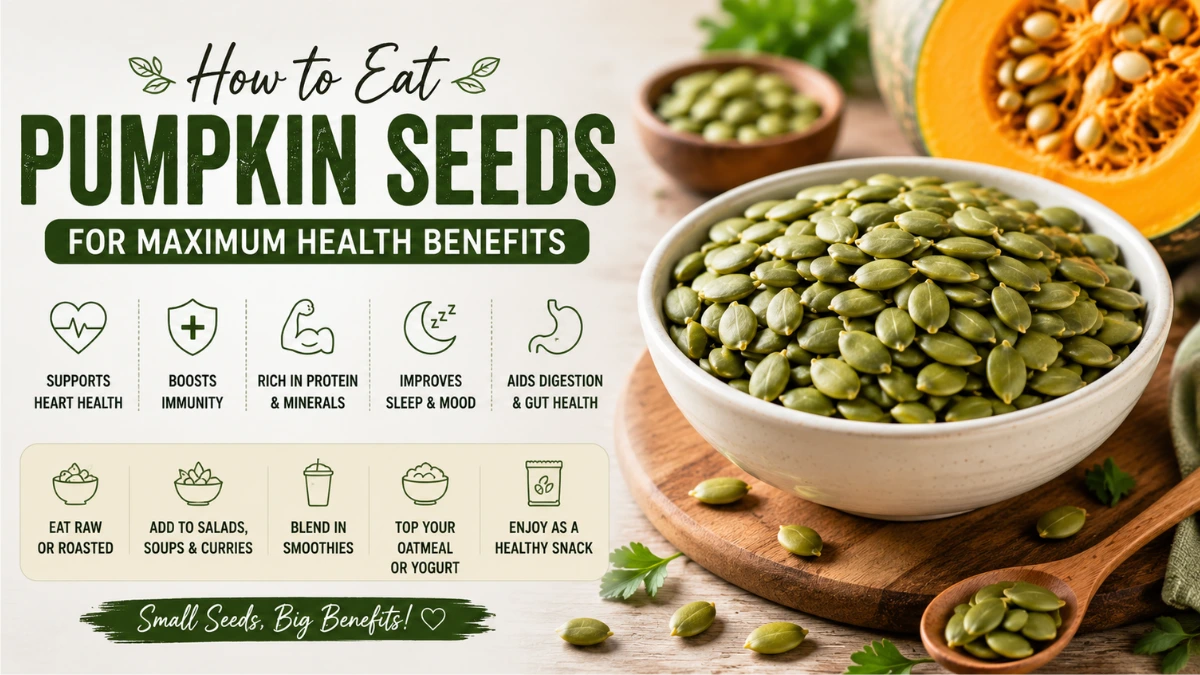
How to eat pumpkin seeds can be as simple as enjoying them raw, lightly roasted, sprinkled over oatmeal and salads, or added to yogurt and smoothies. These small, crunchy seeds provide protein, unsaturated fats, fiber, magnesium, zinc, iron, and other nutrients that can contribute to a balanced diet.
In this guide, you’ll learn how to eat pumpkin seeds in practical ways, along with their nutritional value, potential health benefits, how much you may want to include, and what to know about raw, roasted, and other preparation methods.
Quick Guide
Pumpkin seeds provide protein, unsaturated fats, fiber, magnesium, zinc, iron, and other nutrients. You can eat them raw or roasted, add them to meals and snacks, or enjoy them on their own. Eating a moderate amount as part of a balanced diet can help you add these nutrients to your daily diet.
In This Article
What Are Pumpkin Seeds?
Pumpkin seeds are the edible seeds found inside pumpkins. They are also commonly called pepitas, although the term usually refers to pumpkin seeds with the outer shell removed.
They have a mild, nutty flavor and can be eaten raw or roasted, added to meals and snacks, or used in recipes. Pumpkin seeds are naturally rich in nutrients, including protein, unsaturated fats, fiber, magnesium, zinc, and iron.
Nutrition in Pumpkin Seeds
Pumpkin seeds provide a variety of nutrients, including:
- Protein
- Unsaturated fats
- Fiber
- Magnesium
- Zinc
- Iron
- Phosphorus
- Antioxidant compounds
The amount of each nutrient can vary depending on the type and serving size of the pumpkin seeds. Together, these nutrients contribute to normal body functions and make pumpkin seeds a nutrient-dense addition to a balanced diet.
Top Benefits of Pumpkin Seeds
1. Provides Magnesium and Other Minerals
Pumpkin seeds are a good source of magnesium, along with minerals such as zinc, iron, and phosphorus. Magnesium is involved in normal muscle and nerve function, energy production, and many other processes in the body.
2. Adds Plant-Based Protein
Pumpkin seeds provide plant-based protein, which contributes to maintaining and repairing body tissues. Adding them to meals can be a simple way to increase protein intake, particularly in plant-forward diets.
3. Provides Unsaturated Fats and Fiber
Pumpkin seeds contain unsaturated fats and fiber, two components that can contribute to a balanced eating pattern. Fiber can also contribute to feelings of fullness, while unsaturated fats are an important part of a heart-healthy dietary pattern.
4. Contains Antioxidant Compounds
Pumpkin seeds contain antioxidant compounds, including carotenoids and vitamin E-related compounds. Antioxidants help protect cells from oxidative damage, although no single food can provide all the nutrients needed for overall health.
How to Eat Pumpkin Seeds for Maximum Health Benefits
There is no single preparation method that everyone needs to follow. Pumpkin seeds can be eaten raw, roasted, soaked, or added to everyday meals depending on your preference.
1. Eat Them Raw
Raw pumpkin seeds can be eaten directly as a snack or added to meals. Choose unsalted varieties when possible, especially if you are trying to limit added sodium.
2. Lightly Roast Them
Roasting can give pumpkin seeds a crispier texture and deeper flavor. Dry-roast them or use a small amount of oil, and avoid heavily salted versions if you want to keep added sodium lower.
3. Try Soaked Pumpkin Seeds
Some people soak pumpkin seeds in water before eating them. Soaking softens the seeds and may reduce some of their phytic acid, but it is not necessary for everyone to eat pumpkin seeds.
If you prefer soaked seeds, rinse them after soaking and eat them fresh or use them in meals.
4. Add Them to Breakfast
Try adding pumpkin seeds to:
- Oatmeal
- Yogurt
- Smoothie bowls
- Overnight oats
This is an easy way to add their protein, unsaturated fats, and minerals to a meal.
5. Sprinkle Them on Salads
Pumpkin seeds add crunch and flavor to vegetable and grain-based salads. A small serving can provide additional nutrients without needing to change the rest of the meal.
6. Blend Them Into Smoothies
A small amount of pumpkin seeds can be blended into smoothies for an easy way to include them in your diet. They can also be ground first if you prefer a smoother texture.
7. Enjoy Them as a Snack
Pumpkin seeds can be eaten on their own between meals. Because they are nutrient-dense, keeping the portion moderate can help you enjoy them without adding a large amount of calories to your diet.
Best Time to Eat Pumpkin Seeds
There is no established best time of day to eat pumpkin seeds. You can enjoy them with breakfast, as a snack, before or after a workout, or as part of a meal, depending on what fits your routine.
Rather than focusing on a specific time, choose a portion that fits your overall diet and enjoy pumpkin seeds in a way that is practical and sustainable for you.
How Much Pumpkin Seeds Should You Eat Daily?
There is no specific daily amount of pumpkin seeds that everyone needs to eat. The right portion depends on your overall diet, energy needs, and how you include them in your meals.
| Serving Size | Approximate Amount |
|---|---|
| Small serving | 1 tablespoon |
| Standard serving | 1 ounce (28 grams) |
A small handful or a tablespoon can be an easy starting portion, while around 1 ounce (28 grams) is a commonly used serving size for pumpkin seeds. Since they are nutrient-dense, keeping portions moderate can make them easier to fit into a balanced diet without adding excessive calories.
Tips for Better Results
A few simple habits can make pumpkin seeds easier to include in your diet:
- Choose unsalted or lightly salted varieties if you want to limit sodium.
- Store pumpkin seeds in an airtight container to help maintain their freshness.
- Add them to meals or snacks you already enjoy rather than treating them as a separate food.
- Keep your overall diet varied instead of relying on pumpkin seeds for any single nutrient or health benefit.
Common Mistakes
Eating Too Much at Once
Pumpkin seeds are nutrient-dense and relatively high in calories, so eating large amounts can add substantial calories to your diet. A moderate portion is easier to fit into your overall eating pattern.
Choosing Heavily Salted Versions
Some packaged pumpkin seeds contain added sodium. If you are trying to limit your sodium intake, check the nutrition label and compare unsalted or lightly salted options.
Treating Pumpkin Seeds as a Substitute for a Balanced Diet
Pumpkin seeds can provide protein, healthy fats, fiber, and several minerals, but they cannot provide every nutrient your body needs. Include them as one part of a varied diet rather than relying on them for a specific health benefit.
Things to Watch Out For
Although pumpkin seeds are nutritious, they may not be suitable for everyone.
Seed allergies: People with a known allergy to pumpkin seeds should avoid them. If you experience symptoms of an allergic reaction after eating them, seek appropriate medical advice.
Digestive discomfort: Eating a large amount at once may cause digestive discomfort in some people, particularly if their usual diet is low in fiber. Increasing portions gradually can make it easier to see how your body responds.
Frequently Asked Questions
Can I Eat Pumpkin Seeds Directly?
Yes. Pumpkin seeds can be eaten directly as a snack or added to foods such as oatmeal, yogurt, salads, and smoothies. Choose a portion that fits your overall diet.
Should Pumpkin Seeds Be Eaten Raw or Roasted?
Both raw and roasted pumpkin seeds can be included in a balanced diet. Roasting changes their texture and flavor, while raw seeds require no cooking. If buying packaged seeds, check the label for added salt or oil.
Do Pumpkin Seeds Need to Be Soaked?
No. Soaking is not required before eating pumpkin seeds. Some people soak them to soften their texture or as part of their preferred preparation method.
Is It Okay to Eat Pumpkin Seeds Every Day?
For many people, pumpkin seeds can be included in the daily diet when eaten in a moderate portion and as part of a varied eating pattern.
How Many Pumpkin Seeds Should I Eat Daily?
There is no universal daily amount specifically recommended for pumpkin seeds. A small serving, such as 1 tablespoon, can be a practical starting point, while about 1 ounce (28 grams) is a commonly used serving size.
Final Thoughts
Pumpkin seeds are an easy way to add protein, unsaturated fats, fiber, and minerals to your diet. You can enjoy them raw, roasted, soaked, or added to everyday meals such as oatmeal, yogurt, salads, and smoothies.
There is no single preparation method or best time that everyone needs to follow. Choose a form and portion that fits your routine, and enjoy pumpkin seeds as part of a varied, balanced diet rather than relying on them for any single health benefit.
You May Also Like
11 Surprising Health Benefits of Makhana You Should Know Before Your Next Snack
References
- Kassa MG, Teferi DA. Phytochemical Composition, Health Benefits, Functional Properties, and Food Applications of Pumpkin Seeds. Food Science & Nutrition. 2026.
Read on PubMed - Alasalvar C, et al. Specialty seeds: Nutrients, bioactives, bioavailability, and health benefits: A comprehensive review. Comprehensive Reviews in Food Science and Food Safety.
Read on PubMed - Naseer S, et al. Nutritional Value, Phytochemical Potential, and Therapeutic Benefits of Pumpkin (Cucurbita sp.). Plants. 2022.
Read on PubMed
