
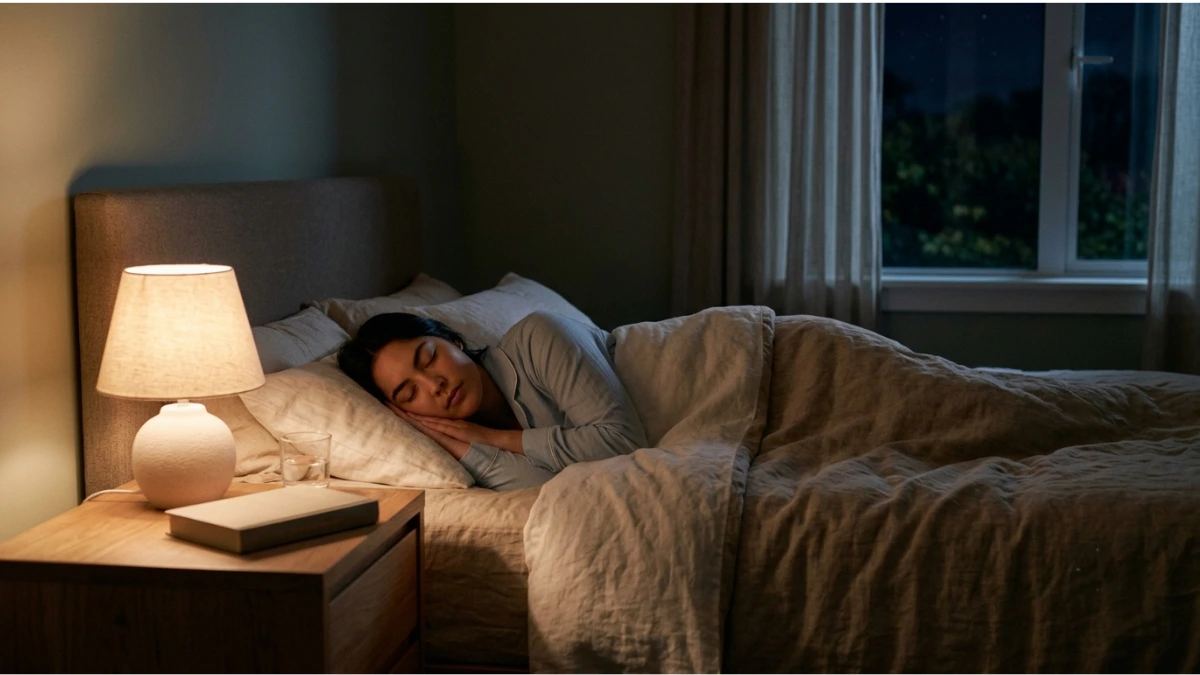
A tired body does not always mean a peaceful mind. Stress, screen time, and endless thoughts can make it difficult to relax at night, even when you want to sleep.
A gentle bedtime yoga routine can help create a calming transition from a busy day to a restful night. Through slow movements, mindful breathing, and relaxation techniques, yoga may support a more relaxed state before sleep.
Research suggests that yoga-based practices may improve sleep quality by reducing stress and promoting relaxation. In this article, we’ll explore how yoga supports better sleep and a simple 10-minute bedtime routine you can try naturally.
In This Article
Quick Guide
Best time: Evening or before bedtime when your body feels relaxed
Duration: 10 minutes of gentle yoga and breathing
Focus: Slow movements, mindful breathing, and relaxation
Avoid: Intense yoga or practicing immediately after a heavy meal
Goal: Create a calming routine that helps your mind and body prepare for rest
How Does Yoga Help You Sleep Better? Understanding the Science Behind Relaxation
Sleep is not only about feeling tired; your body also needs to enter a relaxed state before it can rest properly. Stress, mental activity, and an overactive nervous system can make it harder to slow down at night.
Gentle yoga combines slow movements, mindful breathing, and relaxation techniques that may help support the body’s natural relaxation response. These practices encourage awareness of breathing and body sensations, which may help create a calmer state before bedtime.
One reason yoga may support better sleep is its effect on stress and relaxation. A systematic review and meta-analysis published in BMC Psychiatry found that yoga interventions were associated with improvements in sleep quality, although researchers noted that more high-quality studies are needed to better understand long-term effects.
Yoga may also influence the body’s stress response. Research from Harvard Medical School on the relaxation response explains that practices involving controlled breathing, meditation, and mindfulness may help reduce stress-related activity and promote a calmer physiological state.
Rather than viewing yoga as a quick solution for sleep problems, it is better understood as a supportive bedtime habit that may help your mind and body prepare for rest.
A Simple 10-Minute Bedtime Yoga Routine for Better Sleep
You don’t need a long yoga session to create a calming bedtime habit. Gentle yoga combined with slow breathing may help promote relaxation, release everyday physical tension, and prepare your mind and body for rest.
A short and consistent routine can be a simple way to wind down in the evening. Try these gentle poses as part of your bedtime routine, choosing a time that feels comfortable for your body.
1. Child’s Pose (Balasana)
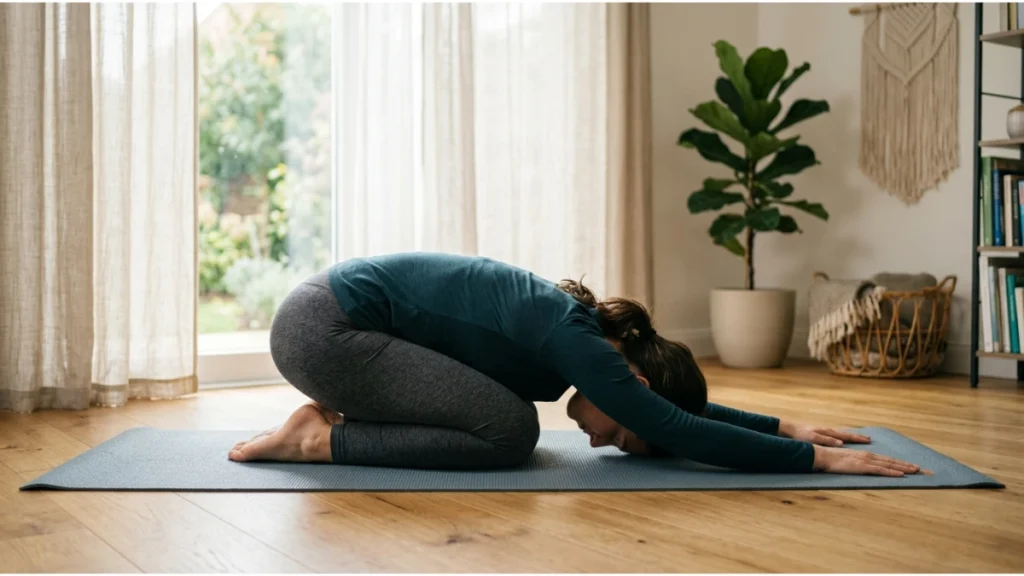
Child’s Pose is a gentle resting posture that may help ease physical tension in areas like the back, shoulders, and neck. It also encourages slow, mindful breathing, making it a comfortable way to begin a relaxing bedtime routine.
How to do it:
- Kneel on the floor and sit back on your heels.
- Slowly fold your upper body forward and extend your arms in front of you.
- Rest your forehead comfortably on the mat.
- Take slow, deep breaths for 1–2 minutes.
Why it may help:
This gentle stretch may help you feel more comfortable and relaxed by allowing your body to slow down before bedtime.
2. Legs Up the Wall Pose (Viparita Karani)
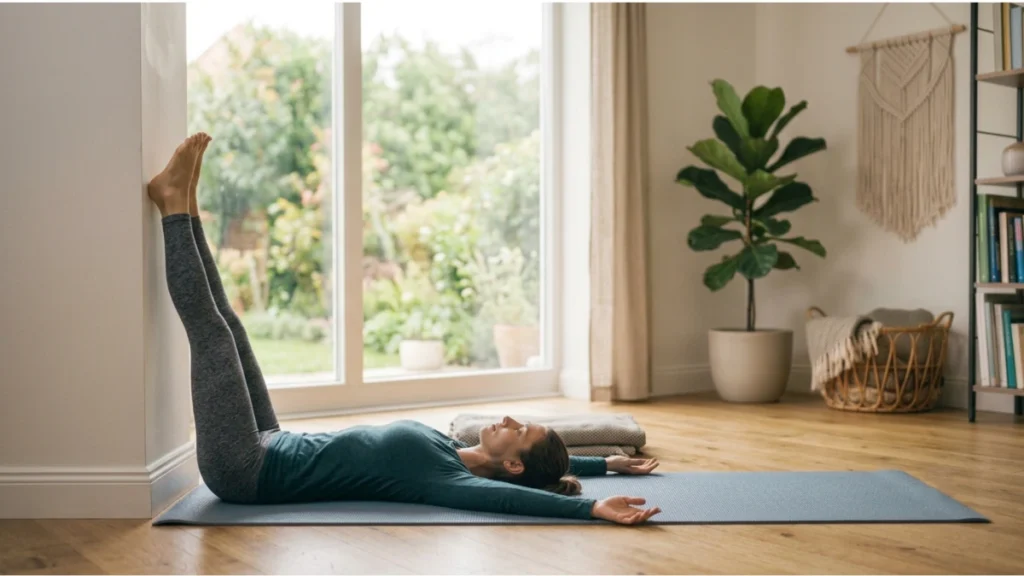
Legs Up the Wall is a restorative yoga posture that focuses on stillness and relaxation. It can be a simple way to combine a comfortable position with slow, steady breathing.
How to do it:
- Sit close to a wall and lie down on your back.
- Extend your legs upward against the wall.
- Keep your arms relaxed by your sides.
- Stay in this position for 2–5 minutes while breathing slowly.
Why it may help:
This calming posture may encourage relaxation by reducing physical tension and helping you focus on slow breathing after a long day.
3. Cat-Cow Stretch (Marjaryasana-Bitilasana)

If your body feels stiff after sitting for long hours, Cat-Cow Stretch can gently move the spine and improve body awareness through slow, controlled movement.
How to do it:
- Start on your hands and knees.
- Slowly arch your back while looking slightly upward.
- Then round your spine while bringing your chin toward your chest.
- Repeat slowly for 1–2 minutes.
Why it may help:
Gentle spinal movement may help release stiffness and bring your attention back to the present moment, creating a more relaxed state before sleep.
4. Reclined Bound Angle Pose (Supta Baddha Konasana)
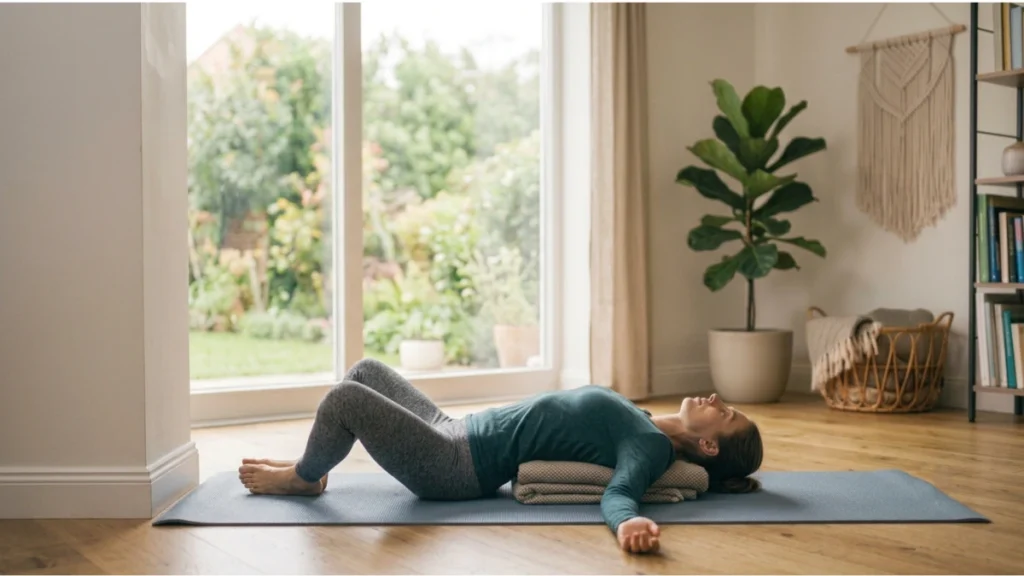
This restorative pose focuses on comfort, relaxation, and mindful breathing rather than deep stretching. It can be practiced as a gentle way to wind down before bedtime.
How to do it:
- Lie on your back.
- Bring the soles of your feet together and allow your knees to open gently.
- Place your hands comfortably on your belly or beside your body.
- Stay for 2–3 minutes while breathing slowly.
Why it may help:
A comfortable resting position combined with slow breathing may help create a peaceful transition toward bedtime.
5. Deep Breathing Practice (Diaphragmatic Breathing)
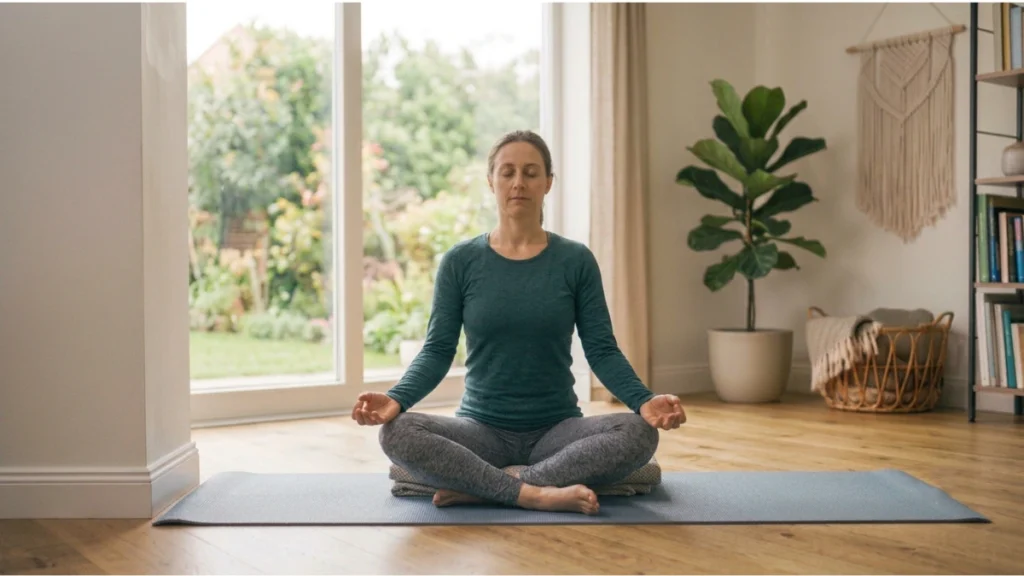
Ending your routine with slow breathing can help create a calm environment for both your mind and body. Deep breathing is often used as a relaxation technique because it encourages slower, more mindful breathing patterns.
How to do it:
- Lie comfortably or sit in a relaxed position.
- Place one hand on your belly.
- Breathe in slowly through your nose, allowing your belly to expand.
- Exhale gently and repeat for a few minutes.
Why it may help:
Research on relaxation techniques suggests that slow, controlled breathing may support relaxation and help the body manage stress responses.
Best Time to Practice Yoga for Better Sleep
The timing of your yoga practice can influence how comfortable and relaxed you feel as part of your bedtime routine. Gentle yoga is usually most helpful when it becomes a calming transition between your daily activities and sleep.
Many people prefer practicing gentle yoga in the evening, when they can create a quiet transition between daily activities and sleep. The goal is not to energize the body like a workout session, but to slowly release tension and prepare the mind for rest.
Here are a few simple tips to make your bedtime yoga routine more effective:
Keep Your Practice Gentle
Before sleep, choose slow movements, relaxing stretches, and breathing exercises. Avoid intense yoga flows or challenging poses that may increase alertness and make it harder to wind down.
Create a Calm Environment
Your surroundings can influence how easily your body relaxes. Try practicing in a quiet space with comfortable lighting and fewer distractions.
Reduce Screen Exposure Before Bed
Using phones, laptops, or other bright screens close to bedtime may interfere with your natural sleep rhythm. Creating a screen-free period before sleep can help your mind transition into a more relaxed state.
Focus on Breathing, Not Perfection
Bedtime yoga is not about flexibility or performing poses perfectly. The most important part is slow breathing, awareness, and allowing your body to relax.
Stay Consistent
Like any healthy habit, yoga may work best when practiced regularly. A short routine practiced consistently may be easier to maintain and become a healthier bedtime habit.
Remember, yoga works as a supportive lifestyle practice. If you experience ongoing sleep difficulties, it is important to speak with a healthcare professional to understand the underlying cause.
My Personal Experience: Creating a Calmer Bedtime Routine
Like many people, I sometimes find that my mind stays active at night, especially after a busy day filled with screens, responsibilities, and constant thoughts. Even when the body feels tired, it can take some time to truly relax.
Adding a few minutes of gentle stretching and slow breathing helped me create a small pause between my busy day and bedtime. It gave me a chance to slow down, focus on my breathing, and become more aware of how my body was feeling.
I realized that better sleep is not only about the number of hours we spend in bed — it is also about creating simple habits that help the mind and body prepare for rest naturally.
Is Yoga Safe Before Bed?
For most healthy adults, gentle bedtime yoga is generally a safe way to relax and prepare the body for rest. Since this type of yoga focuses on slow movements, comfortable stretches, and mindful breathing, it is usually less intense than regular exercise sessions.
However, yoga should always feel comfortable. You do not need to push your body into difficult poses or stretch beyond your limits to experience the calming benefits of a bedtime routine.
Keep these points in mind:
- Choose gentle movements: Avoid intense flows or challenging poses close to bedtime, as they may make your body feel more active.
- Listen to your body: Stop if you feel pain, discomfort, dizziness, or unusual strain.
- Modify when needed: Beginners can use cushions, blankets, or wall support to make poses more comfortable.
- Seek professional advice if needed: If you have an injury, medical condition, or ongoing sleep problems, consider discussing suitable practices with a healthcare professional.
The purpose of bedtime yoga is not to force sleep, but to create a peaceful routine that helps your mind and body transition into a more relaxed state.
A Quick Tip: Avoid Yoga Immediately After a Heavy Meal
While a relaxing bedtime routine can be helpful, it is better to avoid practicing yoga immediately after a heavy dinner. Your body needs time for digestion, and certain movements like bending, twisting, or lying down may feel uncomfortable after eating.
If you want to relax after a meal, a gentle walk or a few minutes of mindful breathing may be a more comfortable option. Practice your full bedtime yoga routine when your body feels ready and relaxed.
Frequently Asked Questions About Yoga for Better Sleep
Can yoga replace sleep medicine?
No. Yoga may support relaxation and better sleep habits, but it should not replace prescribed treatment or medical advice for sleep disorders.
How soon can I notice benefits from bedtime yoga?
Some people may feel more relaxed after a single session, but building a consistent routine over time may provide better results.
What should I avoid before bedtime yoga?
Avoid intense workouts, heavy meals, and activities that increase alertness right before your practice. A calm environment helps your body prepare for rest.
Can yoga help with racing thoughts at night?
Yes, mindful breathing and gentle yoga may help calm an overactive mind by bringing attention back to the present moment.
Final Thoughts
A good night’s sleep is often influenced by the small habits we create before bedtime. While yoga may not solve every sleep problem, a gentle evening routine can help your body slow down, release tension, and prepare for rest.
Even a few minutes of mindful movement and deep breathing can become a simple way to end your day with more calm and awareness. The key is consistency — choosing a routine that feels comfortable and sustainable for you.
Remember, better sleep is not only about sleeping longer; it is also about creating the right conditions for your mind and body to relax naturally.
You May Also Like
Does Deep Breathing Really Reduce Stress? Here’s What Research Says
