

Have you noticed your shoulders rounding forward while working on a laptop or looking down at your phone? With long hours of sitting and less movement, poor posture has become a common problem for many people.
Over time, these daily habits can affect how your body feels and moves. Tight shoulders, a stiff back, and the habit of slouching can make it harder to maintain a comfortable upright posture.
The good news is that simple practices like yoga, stretching, and mindful movement may help improve posture awareness, strengthen supporting muscles, and encourage healthier body alignment.
In this article, you’ll learn why poor posture happens, how yoga may help, and five simple yoga poses that can support better posture naturally.
Table of Contents
Quick Guide: Yoga for Poor Posture
Best for: People dealing with slouching, rounded shoulders, and stiffness from prolonged sitting.
May help with:
- Better posture awareness
- Shoulder and chest flexibility
- Back and core strength
- Reduced stiffness from sitting
Time needed: 10–15 minutes a day
Best approach: Practice consistently and combine yoga with healthy sitting habits and regular movement breaks.
Remember: Yoga can support better posture, but it is not a replacement for medical care if you have severe pain, injury, or a diagnosed spinal condition.
What Is Poor Posture and Why Does It Happen?
Poor posture means your body is not properly aligned while sitting, standing, or moving. A common example is slouching, where the shoulders round forward, the head moves ahead of the body, and the upper back becomes curved.
Poor posture usually develops slowly because of daily habits rather than one specific reason. Spending long hours sitting, looking down at phones, working on laptops, weak supporting muscles, and lack of regular movement can all contribute to posture problems.
Over time, these habits may lead to muscle tightness, stiffness, and discomfort in areas like the neck, shoulders, and back. According to Harvard Health, maintaining good posture and staying physically active are important parts of supporting musculoskeletal health.
The good news is that small changes—such as regular movement, strengthening exercises, and mindful posture habits—can help support better alignment over time.
Can Yoga Really Help Improve Poor Posture?
Yoga may help improve posture by combining stretching, strengthening, and body awareness. Many yoga poses focus on opening tight areas like the chest and shoulders while strengthening muscles that support the spine.
Regular yoga practice may also improve flexibility, balance, and movement control, which are important for maintaining healthy posture. According to NIH (National Institutes of Health), yoga can support physical function and overall musculoskeletal health.
However, yoga is not a quick fix. Better posture usually comes from consistent practice, regular movement, and making healthier daily habits part of your routine.
5 Yoga Poses That May Help Improve Poor Posture
1. Mountain Pose (Tadasana)
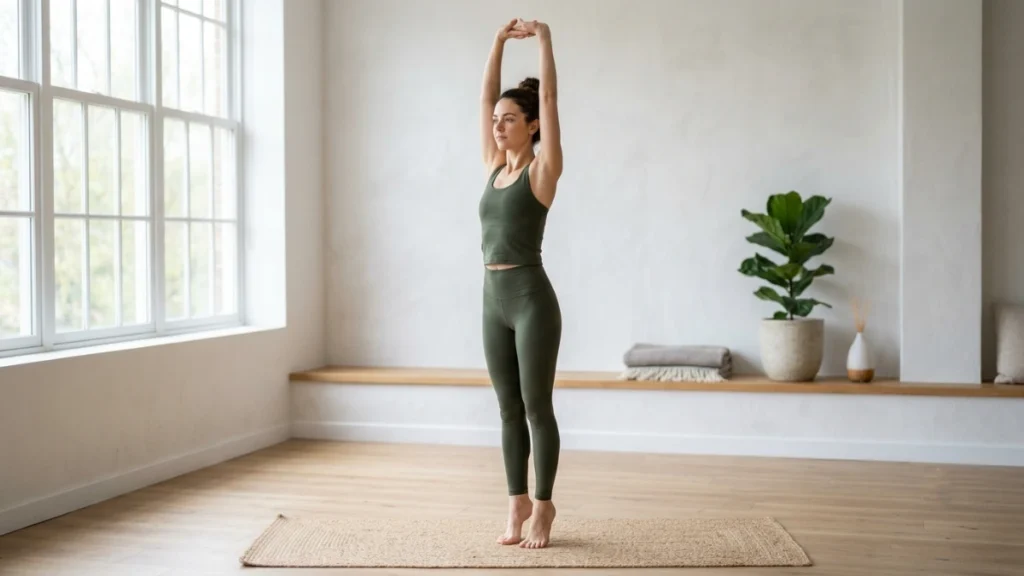
Mountain Pose teaches your body proper standing alignment and improves posture awareness. It helps you understand what a balanced upright position feels like.
How to do it:
- Stand tall with feet hip-width apart.
- Relax your shoulders and lengthen your spine.
- Keep your chin parallel to the floor.
- Hold for 30–60 seconds while breathing slowly.
Why it may help:
It encourages better body alignment and helps build awareness of everyday posture habits.
2. Cat-Cow Pose (Marjaryasana–Bitilasana)
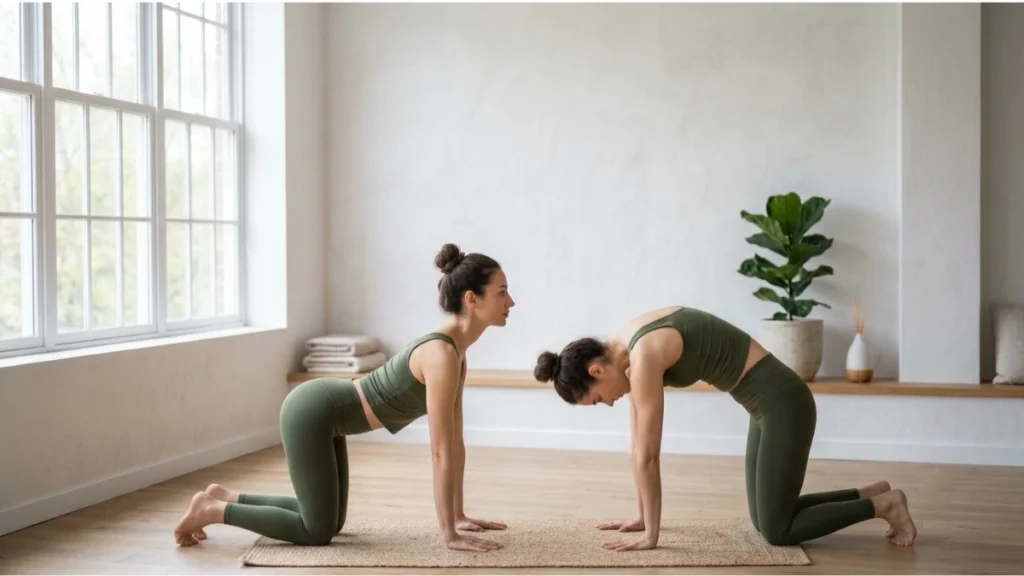
Cat-Cow is a gentle spinal movement that helps improve flexibility and reduce stiffness in the back and shoulders, especially after long periods of sitting.
How to do it:
- Start on hands and knees.
- Inhale as you lift your chest and arch your back.
- Exhale as you round your spine and tuck your chin.
- Repeat for 8–10 slow breaths.
Why it may help:
It keeps the spine mobile and helps release tension caused by prolonged sitting.
3. Cobra Pose (Bhujangasana)
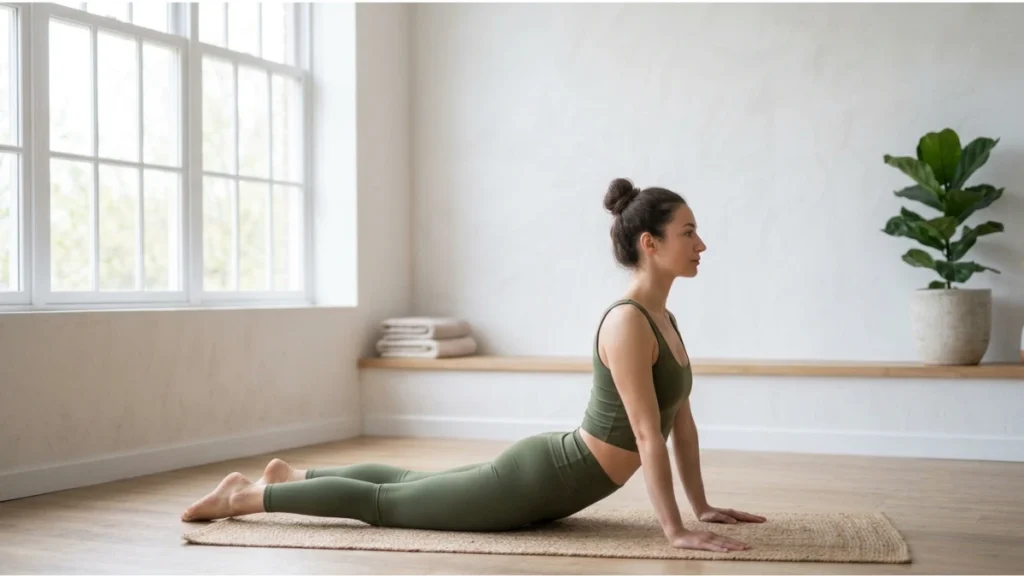
Cobra Pose gently opens the chest and shoulders while strengthening the muscles along the spine. It can be helpful for people who spend long hours sitting or working on screens.
How to do it:
- Lie on your stomach with your palms under your shoulders.
- Keep your elbows close to your body.
- Slowly lift your chest while keeping your hips on the floor.
- Hold for 15–30 seconds and breathe normally.
Why it may help:
It helps counter the rounded-shoulder position that often develops from prolonged sitting.
4. Bridge Pose (Setu Bandhasana)
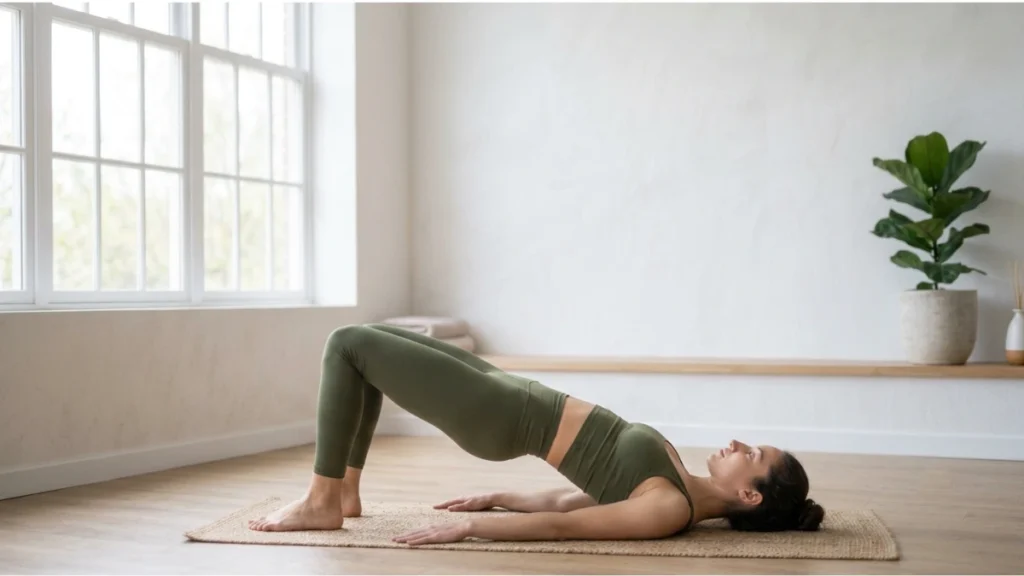
Bridge Pose strengthens the back, core, and glute muscles while gently stretching the chest. These muscles play an important role in supporting better posture.
How to do it:
- Lie on your back with knees bent and feet flat on the floor.
- Keep your arms beside your body.
- Lift your hips upward while pressing your feet into the floor.
- Hold for 20–30 seconds, then slowly release.
Why it may help:
It supports spinal stability and helps strengthen muscles needed for an upright posture.
5. Downward-Facing Dog (Adho Mukha Svanasana)
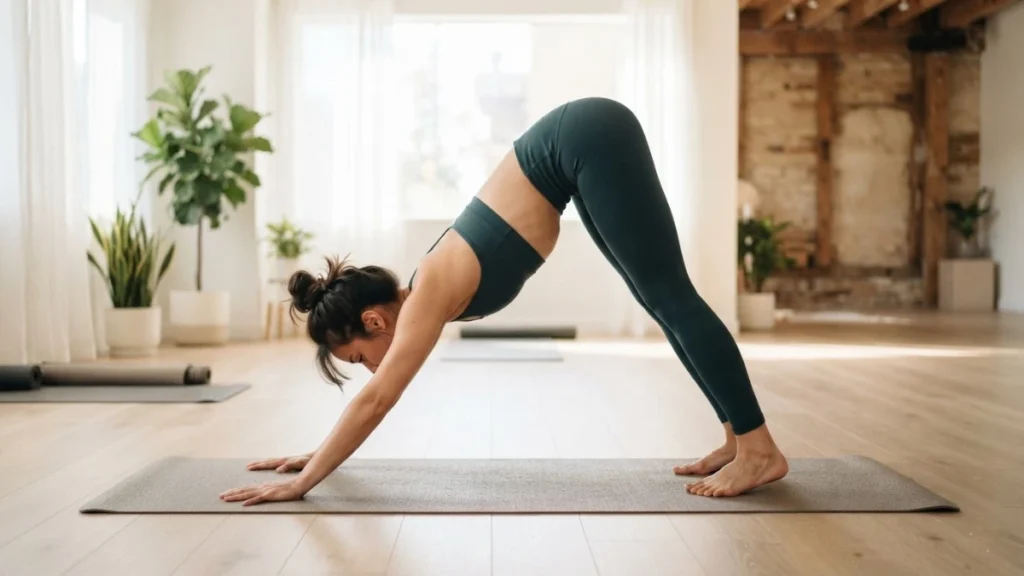
Downward-Facing Dog is a full-body pose that stretches the shoulders, back, and legs while improving overall body awareness.
How to do it:
- Start on your hands and knees.
- Lift your hips upward to form an inverted “V” shape.
- Keep your arms straight and relax your neck.
- Hold for 20–30 seconds while breathing steadily.
Why it may help:
It improves flexibility and helps release stiffness from long periods of sitting.
A Simple 10-Minute Daily Routine for Better Posture
A short daily routine can be easier to follow than occasional long workouts. Try this beginner-friendly sequence:
- Mountain Pose – 1 minute
- Cat-Cow Pose – 2 minutes
- Cobra Pose – 2 minutes
- Bridge Pose – 2 minutes
- Downward-Facing Dog – 2 minutes
- Deep breathing and relaxation – 1 minute
Practice consistently and combine yoga with regular movement breaks, a comfortable sitting position, and mindful posture throughout the day.
Common Mistakes That Can Make Poor Posture Worse
Yoga can support better posture, but daily habits matter too. Avoid these common mistakes:
- Sitting in one position for too long without breaks.
- Looking down at your phone for extended periods.
- Working with an incorrectly positioned screen.
- Ignoring back and core strengthening.
- Expecting overnight results instead of focusing on consistency.
Small changes repeated every day can create better movement habits over time.
Who Should Be Careful?
These yoga poses are gentle for most healthy adults, but they may not be suitable for everyone.
- People with severe back or neck pain: Consult a healthcare professional or a qualified yoga instructor before starting.
- People with a recent injury or surgery: Wait until your healthcare provider says it is safe to resume physical activity.
- People with spinal conditions: Conditions such as scoliosis, herniated discs, or osteoporosis may require modified poses and professional guidance.
If you feel sharp pain, dizziness, or numbness while practicing, stop immediately and seek medical advice. Yoga should never cause severe pain, and every pose should be performed within your comfort level.
My Personal Experience
Like many people, I sometimes catch myself slouching after spending long hours working on a laptop. Practicing a few simple yoga poses and taking regular movement breaks has helped me become more aware of my posture throughout the day.
One thing I’ve learned is that improving posture isn’t about standing perfectly all the time—it’s about building better daily habits. Even a short yoga routine can be a simple way to move more mindfully and reduce the effects of prolonged sitting.
Frequently Asked Questions
How long does it take to improve poor posture with yoga?
It varies from person to person. With consistent practice and better daily habits, you may gradually notice improvements in posture awareness and flexibility.
Can yoga help fix rounded shoulders?
Yoga may help improve rounded shoulders by stretching tight muscles and strengthening the upper back and shoulders.
Is 10 minutes of yoga enough for better posture?
Yes, a consistent 10-minute routine can help improve posture awareness and reduce stiffness, especially when combined with regular movement.
Can poor posture be improved naturally?
Yes, many posture habits can improve through regular exercise, mindful movement, and consistent lifestyle changes.
Final Thoughts
Poor posture often develops from everyday habits, but small changes can help create better movement patterns over time.
Adding a few simple yoga poses to your routine may support better posture, flexibility, and body awareness. The goal is not perfection—it is creating healthier habits that help your body move comfortably.
Whether you spend hours studying, working, or using digital devices, a few minutes of mindful movement each day can be a simple step toward better posture.
You May Also Like
Yoga for Better Sleep: A Simple Bedtime Routine to Help You Relax Naturally
5 Yoga Poses That May Help Reduce Back Pain from Sitting All Day Naturally
