

Quick Guide
If you spend most of your day sitting at a desk, driving, or working on a computer, it’s normal to notice stiffness or discomfort in your back. These five beginner-friendly yoga poses are gentle, easy to practice at home, and may help improve flexibility, relieve muscle tension, and support better posture when practiced regularly.
Yoga poses for back pain have become increasingly popular as more people spend long hours sitting at desks or using digital devices.
I can relate to this myself. On days when I’ve been sitting for hours researching or writing, my lower back and shoulders often feel tight. I’ve learned that even a few minutes of gentle stretching can make my body feel more relaxed and mobile.
It’s important to remember that yoga isn’t a magic cure for back pain. However, regular practice may help reduce muscle tension, improve flexibility, and support a healthier posture over time. The key is to move gently, listen to your body, and stay consistent.
Table of Contents
Why Sitting Too Long Can Lead to Back Pain
Our bodies are designed to move—not remain in the same position for hours.
When you sit for long periods, several things can happen:
- Your hip flexor muscles may become tight.
- Your core muscles may become less active.
- Poor posture can place extra stress on the spine.
- Your back muscles may become stiff due to reduced movement.
Over time, these changes can contribute to discomfort, especially in the lower back and neck.
According to the National Center for Complementary and Integrative Health (NCCIH), yoga may help improve flexibility, strengthen muscles, and reduce certain types of chronic low back pain when practiced appropriately.
5 Yoga Poses That May Help Reduce Back Pain
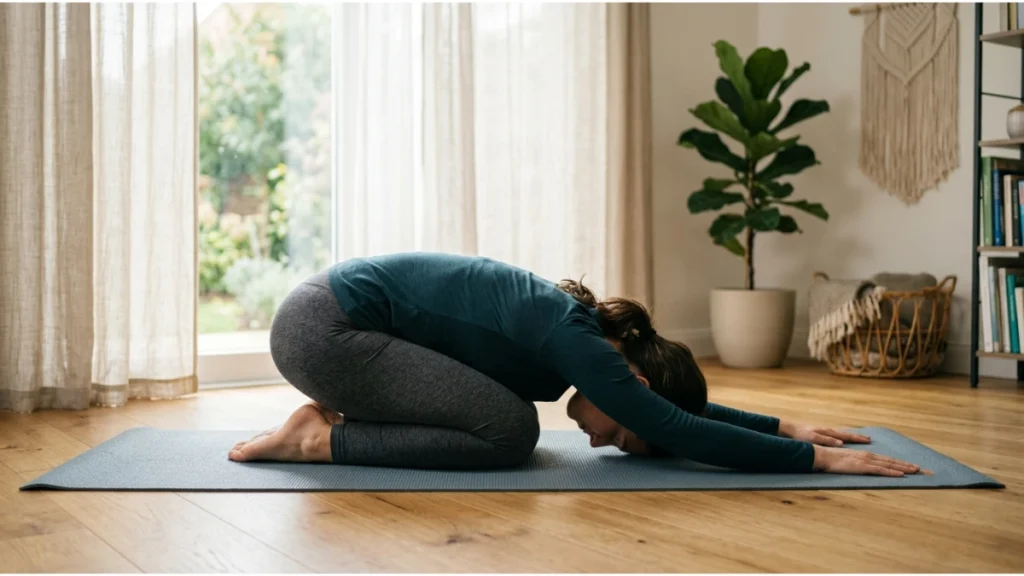
1. Child’s Pose (Balasana)
Why It Helps
Child’s Pose gently stretches the lower back, hips, and shoulders while encouraging your body to relax.
How to Do It
- Kneel on a yoga mat.
- Sit back toward your heels.
- Stretch your arms forward.
- Lower your chest toward the floor.
- Rest your forehead comfortably.
Hold For
30–60 seconds.
Beginner Tip
If your hips don’t comfortably reach your heels, place a folded blanket or cushion between them for extra support.
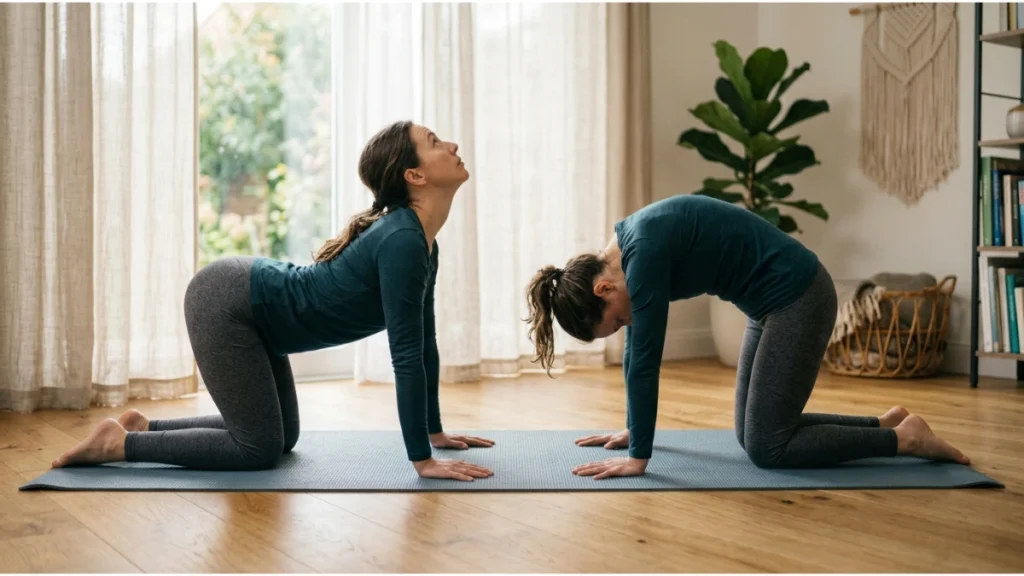
2. Cat-Cow Pose (Marjaryasana–Bitilasana)
Why It Helps
This gentle flowing movement increases spinal mobility and may help reduce stiffness after prolonged sitting.
How to Do It
- Start on your hands and knees.
- Inhale as you gently arch your back and lift your chest (Cow Pose).
- Exhale as you round your spine and tuck your chin (Cat Pose).
- Continue moving slowly with your breath.
Hold For
8–10 slow breathing cycles.
Beginner Tip
Move gently rather than trying to create large movements.
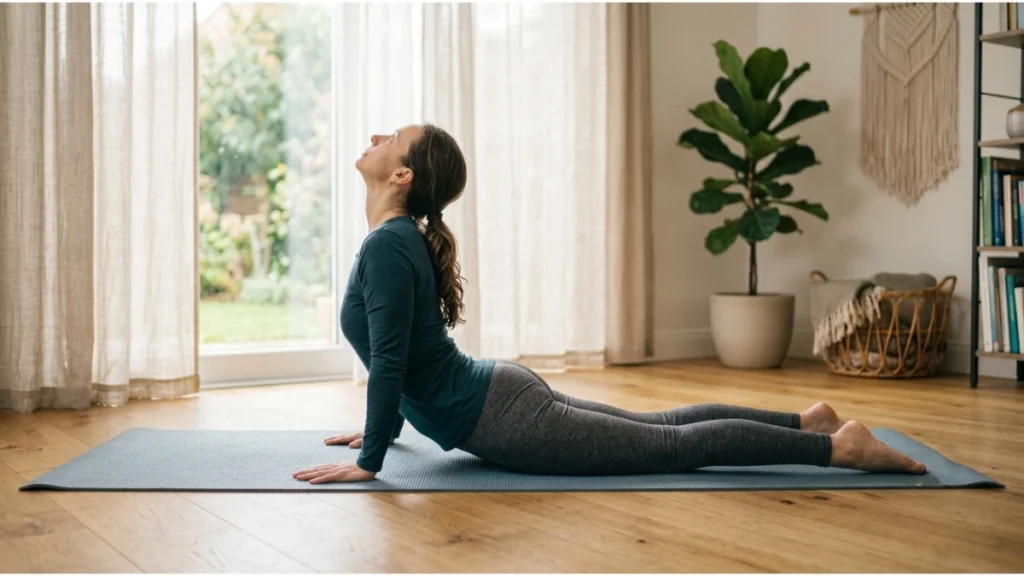
3. Cobra Pose (Bhujangasana)
Why It Helps
Cobra Pose gently opens the chest and strengthens the muscles that support your spine, helping counteract the rounded posture many people develop from sitting.
How to Do It
- Lie on your stomach.
- Place your hands under your shoulders.
- Press lightly into your palms.
- Lift your chest while keeping your elbows slightly bent.
- Relax your shoulders away from your ears.
Hold For
15–30 seconds.
Beginner Tip
Lift only as high as feels comfortable. Avoid forcing the stretch.
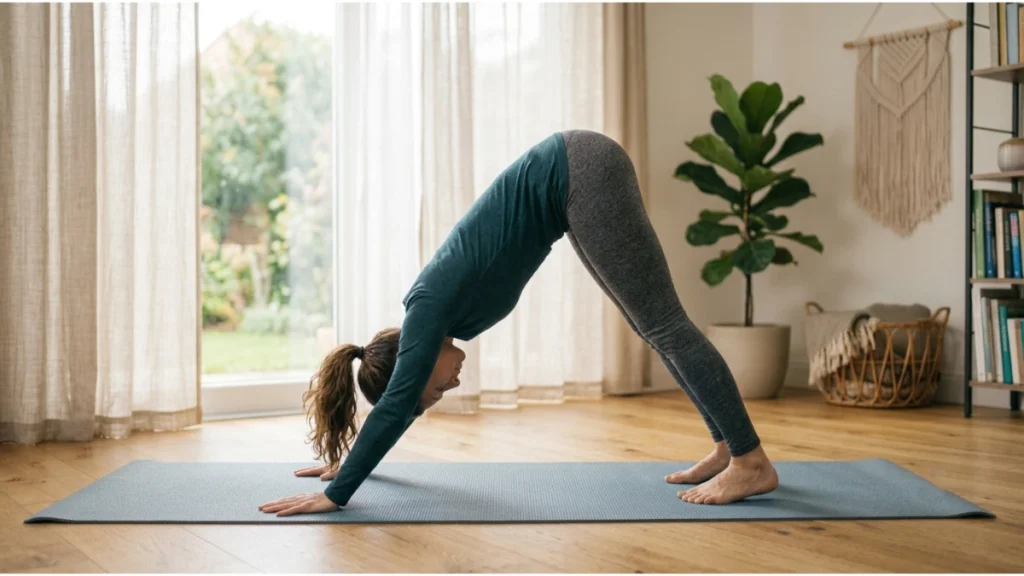
4. Downward-Facing Dog (Adho Mukha Svanasana)
Why It Helps
This classic yoga pose stretches your back, hamstrings, calves, and shoulders while helping lengthen the spine.
How to Do It
- Begin on your hands and knees.
- Lift your hips toward the ceiling.
- Keep your arms straight.
- Relax your neck.
- Bend your knees slightly if needed.
Hold For
20–30 seconds.
Beginner Tip
Don’t worry about touching your heels to the floor. Focus on keeping your spine long.
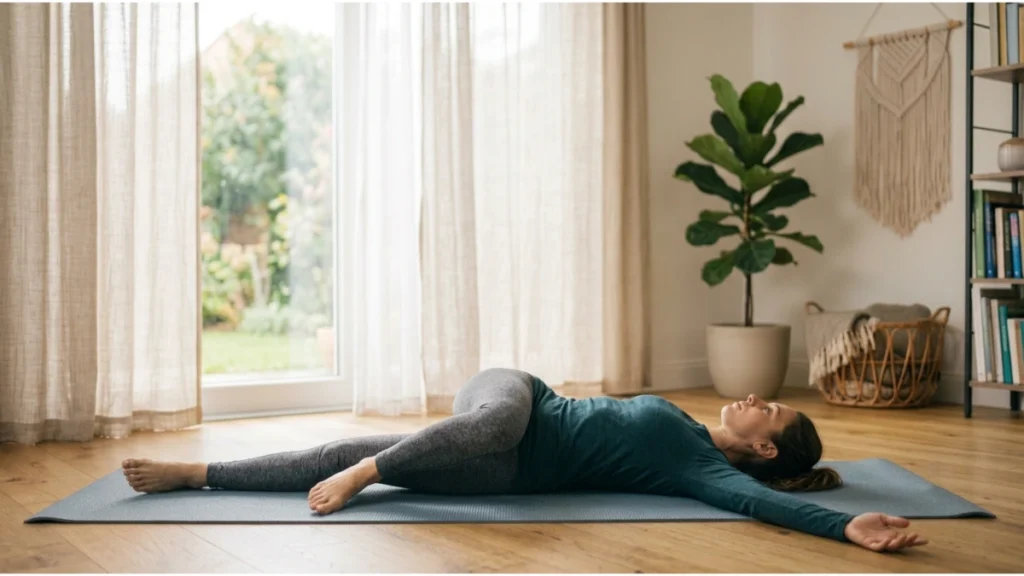
5. Supine Spinal Twist (Supta Matsyendrasana)
Why It Helps
This gentle twisting stretch helps release tension in the lower back and improves spinal mobility.
How to Do It
- Lie on your back.
- Bring one knee toward your chest.
- Gently guide it across your body.
- Extend the opposite arm.
- Turn your head in the opposite direction if comfortable.
Repeat on both sides.
Hold For
30–45 seconds each side.
Beginner Tip
Place a pillow under your bent knee if it doesn’t comfortably reach the floor.
Tips to Practice Safely
To make your yoga practice safer and more effective:
- Move slowly and with control.
- Never stretch into sharp pain.
- Breathe normally throughout each pose.
- Practice consistently rather than occasionally.
- Use a comfortable yoga mat or soft surface.
- Stop immediately if a movement causes severe discomfort.
Who Should Avoid These Poses?
Although these poses are gentle for many people, they may not be appropriate for everyone.
Speak with a healthcare professional before practicing yoga if you have:
- A severe back injury
- Recent spinal or hip surgery
- Certain pregnancy-related restrictions
- Persistent or worsening back pain
- Numbness, weakness, or pain that travels down the leg
Gentle movement should never increase pain.
Frequently Asked Questions
Can yoga really help back pain?
Research suggests that regular yoga may help improve flexibility, strengthen supporting muscles, and reduce certain types of chronic back pain for some people.
How long should I hold each pose?
Most beginners can start with 20–60 seconds, depending on the pose and their comfort level.
Can beginners do these yoga poses?
Yes. These poses are commonly recommended for beginners because they are gentle and easy to modify.
Is morning or evening better?
Both can work well. Morning yoga may reduce stiffness, while evening practice can help release tension built up during the day.
How often should I practice?
Practicing 10–15 minutes, three to five times per week is a realistic starting point for many beginners.
Final Thoughts
If sitting all day leaves your back feeling stiff or uncomfortable, adding a few gentle yoga poses to your daily routine may make a noticeable difference over time.
The goal isn’t to stretch harder—it’s to move more regularly. Even 10 minutes of mindful movement can help improve flexibility, encourage better posture, and give your body a welcome break from long hours of sitting.
Start with one or two poses, listen to your body, and build the habit gradually. Small, consistent steps often lead to the best long-term
You May Also Like
Surya Namaskar (Sun Salutation): Step-by-Step Guide, Benefits & Best Time
