
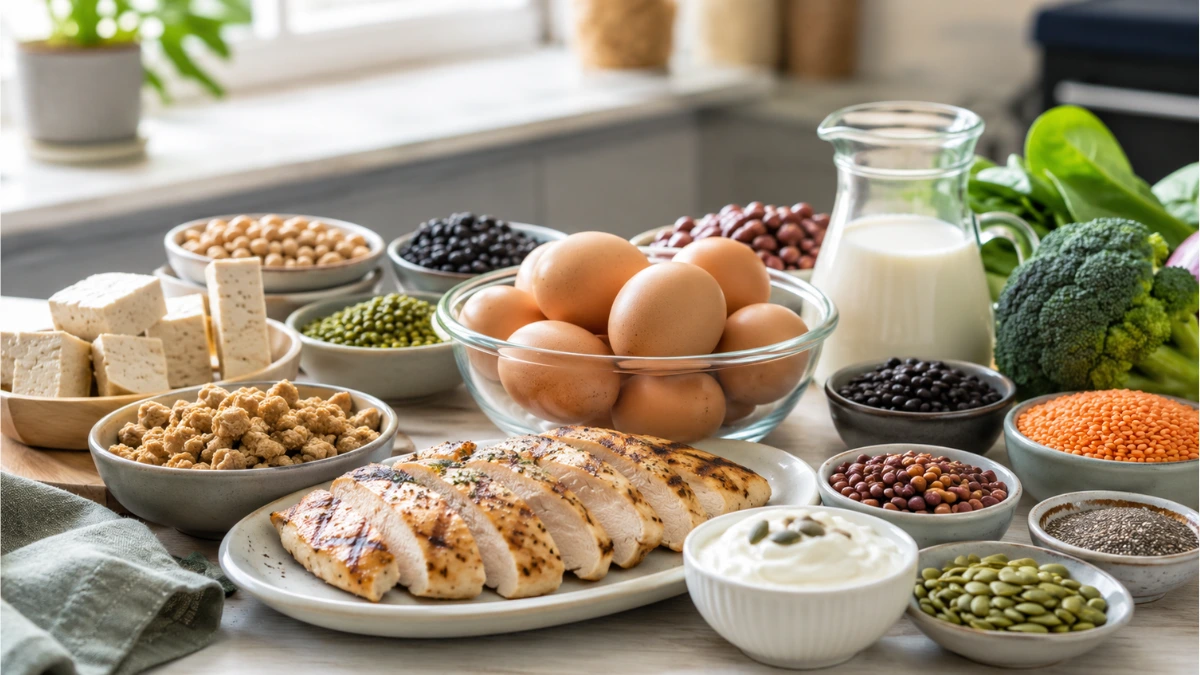
Have you ever wondered why high protein foods are always discussed when it comes to healthy eating? Whether your goal is staying active, building strength, managing weight, or improving overall nutrition, adding enough protein to your diet plays an important role in keeping your body healthy.
Protein helps repair tissues, maintain muscles, support immune function, and produce important enzymes and hormones. The good news is that you don’t need expensive supplements to increase your protein intake.
Many everyday foods like eggs, dairy products, lentils, beans, nuts, and seeds naturally provide protein. According to the Harvard T.H. Chan School of Public Health, including a variety of protein sources can help support a balanced and nutritious diet.
In this guide, we’ll explore 18 highest protein foods that are practical, nutritious, and easy to add to your daily meals.
In This Article
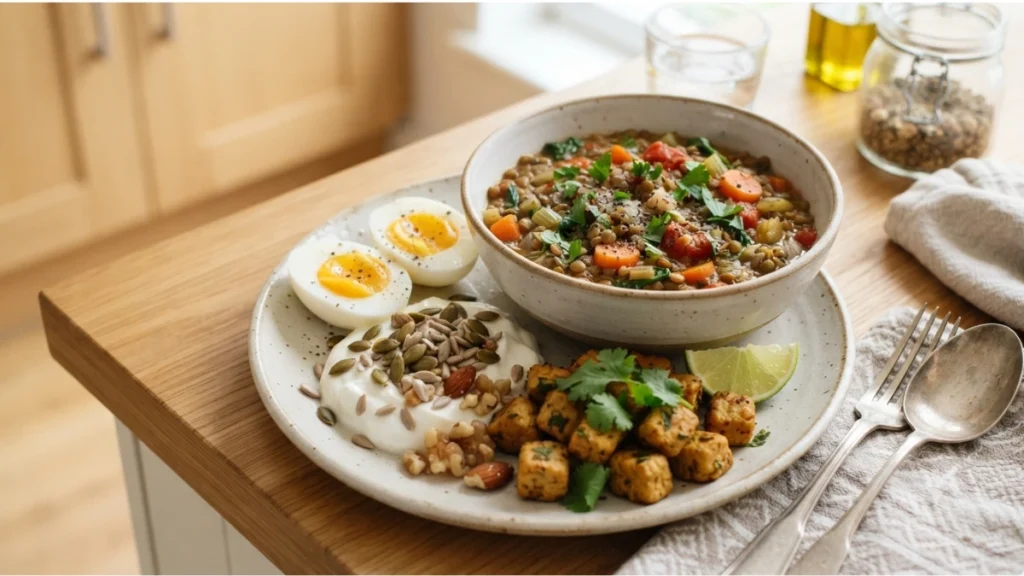
Why Does Your Body Need Protein?
Protein is one of the three essential macronutrients your body needs every day, along with carbohydrates and fats. While many people connect protein only with muscle building, it supports many important functions throughout the body.
Your body uses protein for:
- Muscle maintenance and repair: Protein provides amino acids that help maintain and rebuild muscle tissue.
- Tissue recovery: It supports the repair of cells and tissues.
- Immune support: Proteins help form antibodies and other components involved in immune function.
- Enzyme and hormone production: Many essential processes in the body depend on proteins.
Protein can also help you feel fuller after meals, making it easier to maintain balanced eating habits. Your daily protein needs depend on factors like age, body weight, activity level, and personal goals.
According to the Harvard T.H. Chan School of Public Health, including a variety of protein sources from both plant and animal foods can support a healthy and balanced diet.
How Much Protein Do You Need Daily?
Your protein needs depend on factors like age, body weight, activity level, and health goals. A general guideline for healthy adults is around 0.8 grams of protein per kilogram of body weight per day, but active people may need more.
The best approach is to include protein-rich foods in your daily meals instead of focusing on a single number. Foods like eggs, dairy products, lentils, beans, soy, nuts, and seeds can help you meet your protein needs naturally.
According to the National Institutes of Health (NIH), protein requirements vary from person to person, and a balanced diet should include enough protein along with other essential nutrients.
18 Highest Protein Foods to Add to Your Daily Diet (Veg & Non-Veg)
1. Eggs
Protein: Around 13g per 100g
Eggs are one of the most affordable and widely available protein foods around the world. They provide complete protein, meaning they contain all nine essential amino acids that your body needs.
Along with protein, eggs also provide nutrients like vitamin B12 and choline, which support overall health. They are a simple option for breakfast, snacks, or adding extra nutrition to meals.
Easy ways to eat: Boiled eggs, omelets, scrambled eggs, or added to salads.
2. Chicken Breast
Protein: Around 31g per 100g
Chicken breast is one of the most popular high-protein foods because it provides a large amount of protein with relatively low fat. It is a convenient choice for people who want to support muscle maintenance and follow an active lifestyle.
It can easily fit into different cuisines around the world and works well as part of a balanced meal with vegetables, whole grains, or healthy fats.
Easy ways to eat: Grilled chicken, roasted chicken, curries, wraps, or salads.
3. Fish (Machhli)
Protein: Around 20–25g per 100g
Fish is a nutrient-rich protein source that provides high-quality protein along with important nutrients like omega-3 fatty acids. Fatty fish such as salmon and sardines are especially known for their healthy fat content.
Including fish in your diet can add variety to your protein sources while supporting a balanced eating pattern.
Easy ways to eat: Grilled, baked, steamed, or prepared as a curry.
4. Greek Yogurt (High-Protein Yogurt)
Protein: Around 10g per 100g
Greek yogurt is a thicker, protein-rich version of regular yogurt and is a convenient option for breakfast or snacks. Along with protein, it provides calcium and other nutrients that support a balanced diet.
If Greek yogurt is not easily available, strained homemade curd (hung curd) can be a similar option that works well in many meals.
Easy ways to eat: Add fruits, nuts, and seeds, or use it in smoothies and healthy bowls.
5. Paneer (Cottage Cheese)
Protein: Around 18g per 100g
Paneer is one of the most popular vegetarian protein sources, especially in India. It provides good-quality protein along with nutrients like calcium, making it a practical addition to everyday meals.
Because it is versatile and easy to cook, paneer can be included in both traditional and modern dishes while adding more protein to your diet.
Easy ways to eat: Paneer curry, grilled paneer, salads, wraps, or sandwiches.
6. Milk
Protein: Around 3.4g per 100ml
Milk is a simple and affordable way to add protein to your daily diet. It contains two types of high-quality protein — casein and whey — which provide essential amino acids needed by the body.
Along with protein, milk also provides nutrients like calcium, phosphorus, and vitamin B12, making it a convenient addition to a balanced eating pattern.
Easy ways to drink: Plain milk, smoothies, oatmeal, coffee, or homemade shakes.
7. Soy Chunks (Soya Chunks)
Protein: Around 52g per 100g (dry)
Soy chunks are one of the highest-protein vegetarian foods and are a popular choice for people looking for affordable plant-based protein options. They are made from soy flour and provide all essential amino acids.
They are especially useful for adding more protein to everyday meals without relying on expensive supplements.
Easy ways to eat: Add them to curries, pulao, stir-fries, or salads.
8. Tofu (Soy Paneer)
Protein: Around 8g per 100g
Tofu is a plant-based protein made from soy milk and is a popular choice for vegetarian and vegan diets. It also provides minerals like calcium and iron, depending on the variety.
Its mild taste makes it easy to use in different cuisines around the world.
Easy ways to eat: Stir-fries, soups, curries, or grilled tofu dishes.
9. Lentils (Dal)
Protein: Around 9g per 100g (cooked)
Lentils are a daily staple in many Indian households and a valuable plant-based protein source. Along with protein, they provide fiber and important nutrients that support a balanced diet.
They are affordable, easy to cook, and can be included in everyday meals.
Easy ways to eat: Dal, soups, khichdi, or lentil salads.
10. Chickpeas (Kabuli Chana)
Protein: Around 9g per 100g (cooked)
Chickpeas are a filling plant-based protein food that also provides fiber. They are popular worldwide and can easily be added to different types of meals.
Their combination of protein and fiber makes them a satisfying choice.
Easy ways to eat: Chana masala, hummus, salads, or roasted chickpeas.
11. Kidney Beans (Rajma)
Protein: Around 9g per 100g (cooked)
Kidney beans are another nutritious vegetarian protein option. They provide protein along with fiber, iron, and other essential nutrients.
They are commonly used in Indian and global cuisines, making them an easy addition to balanced meals.
Easy ways to eat: Rajma curry, bean salads, or rice bowls.
12. Edamame (Green Soybeans)
Protein: Around 11g per 100g
Edamame is a young soybean that provides plant-based protein along with fiber and essential nutrients. It is considered a complete plant protein, making it a useful option for people following vegetarian or vegan diets.
It is popular as a snack and can easily be added to meals.
Easy ways to eat: Boiled as a snack, added to salads, or mixed into stir-fries.
13. Peanuts
Protein: Around 26g per 100g
Peanuts are an affordable and easily available protein-rich food in many parts of the world, including India. Along with protein, they provide healthy fats and minerals that make meals more satisfying.
They are a simple option for adding extra nutrition to snacks.
Easy ways to eat: Roasted peanuts, peanut chutney, or peanut butter.
14. Almonds
Protein: Around 21g per 100g
Almonds are known for their healthy fats, but they also provide plant-based protein along with nutrients like vitamin E and magnesium.
A small serving of almonds can add extra protein and nutrients to your daily diet.
Easy ways to eat: As a snack, added to oatmeal, smoothies, or yogurt.
15. Pumpkin Seeds
Protein: Around 30g per 100g
Pumpkin seeds are a nutrient-dense food that provides plant-based protein, healthy fats, magnesium, and zinc. They are an easy way to increase protein intake without much preparation.
They can add both nutrition and texture to everyday meals.
Easy ways to eat: Sprinkle over salads, yogurt, smoothies, or eat as a snack.
16. Oats
Protein: Around 13g per 100g (dry)
Oats are usually known as a carbohydrate-rich breakfast food, but they also provide a good amount of protein and fiber. Their combination of nutrients makes them a practical option for a balanced meal.
They are easy to customize and can be paired with other protein-rich foods for a more complete breakfast.
Easy ways to eat: Oatmeal, overnight oats, smoothies, or homemade snacks.
17. Peanut Butter
Protein: Around 25g per 100g
Peanut butter is a convenient way to add protein and healthy fats to your meals. It is popular worldwide because it is easy to store and can be added to many foods.
When choosing peanut butter, look for options with minimal added sugar and unnecessary ingredients.
Easy ways to eat: Spread on whole-grain toast, add to smoothies, or pair with fruits.
18. High-Protein Dairy Options
Protein: Varies depending on the product
Dairy foods like cottage cheese and other high-protein dairy options can be useful for people looking for convenient protein sources. They provide protein along with other nutrients and can fit easily into meals and snacks.
Different dairy products have different nutrition profiles, so choosing options based on your personal needs is important.
Easy ways to eat: Add fruits, nuts, seeds, or use in savory dishes.
How to Add More Protein to Your Daily Diet
Increasing your protein intake does not mean completely changing your eating habits. Small, consistent changes can help you include more protein throughout the day.
Try adding protein to your regular meals:
- Add eggs, Greek yogurt, or milk to breakfast.
- Include dal, beans, paneer, tofu, or chicken with lunch and dinner.
- Add nuts and seeds like almonds or pumpkin seeds to snacks.
- Combine different protein sources instead of depending on only one food.
The goal is not to eat a single “perfect” protein food but to create a balanced diet with a variety of nutrient-rich foods that fit your lifestyle.
Frequently Asked Questions
Which food has the highest amount of protein?
Soy chunks, chicken breast, fish, seeds, and some dairy products are among the highest-protein foods. The best choice depends on your dietary needs and preferences.
Can you get enough protein from plant-based foods?
Yes. Foods like lentils, beans, soy products, nuts, seeds, and grains can provide good amounts of protein when included in a balanced diet.
Do I need protein supplements to increase my protein intake?
Not always. Most people can meet their protein needs through a variety of whole foods. Supplements are only useful in certain situations.
Is protein from food better than supplements?
Whole foods are usually the best choice because they provide protein along with other nutrients like fiber, vitamins, and minerals.
Final Thoughts
Adding more protein to your diet does not have to be complicated. From everyday foods like eggs, milk, dal, and paneer to plant-based options like soy, beans, nuts, and seeds, there are many nutritious choices available.
The best protein-rich diet is one that fits your lifestyle, food preferences, and daily routine. Instead of focusing on one “perfect” food, aim for variety and balance across your meals.
Small changes, like adding a protein source to each meal, can make it easier to build healthier eating habits over time.
You May Also Like
How to Make Healthy Peanut Butter at Home: Easy 2-Ingredient Recipe, Benefits & Tips
Best Dry Fruits for Health: 9 Nutritious Choices to Add to Your Daily Diet
