
Quick Guide
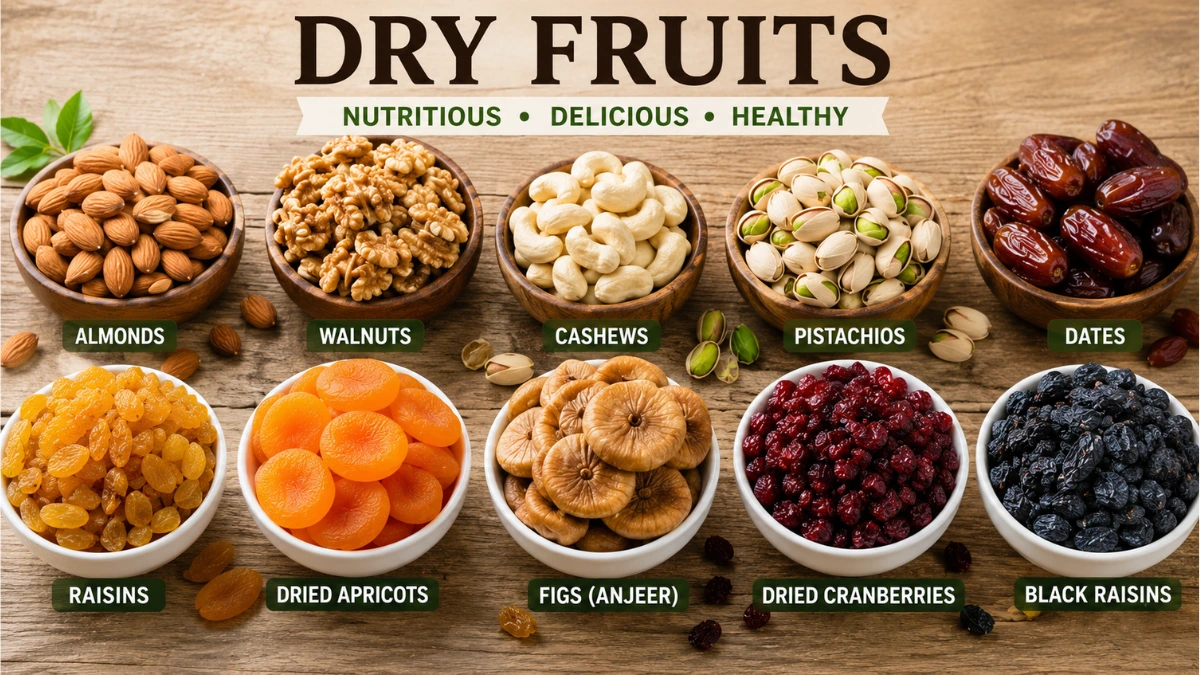
Dry fruits are nutrient-dense foods that provide healthy fats, fiber, vitamins, minerals, and plant compounds. Popular options such as almonds, walnuts, raisins, dates, pistachios, and cashews can be part of a healthy diet when eaten in moderation.
Best dry fruits are often recommended as healthy snacks because they combine convenience with impressive nutrition. Whether you’re looking for a quick energy boost, a nutrient-rich snack, or a simple way to improve your diet, dry fruits can be an easy addition to your daily routine.
When I first started learning about nutrition, I noticed that certain dry fruits appeared again and again in healthy eating recommendations. The reason is simple—they’re widely available, easy to store, and packed with nutrients.
In this guide, we’ll look at the best dry fruits for health, their benefits, how much to eat, and practical ways to include them in your everyday diet.
In This Article
What Are Dry Fruits?
Dry fruits are fruits or seeds that contain very little water compared to fresh fruits.
Some common examples include:
- Almonds
- Walnuts
- Cashews
- Pistachios
- Raisins
- Dates
These foods are naturally nutrient-dense, meaning they provide a lot of nutrition in a relatively small serving.
Why Are Dry Fruits Popular?
People often choose dry fruits because they:
- Are easy to carry
- Require no preparation
- Provide energy
- Contain healthy fats
- Offer important vitamins and minerals
- Can be added to many meals
9 Best Dry Fruits for Health
1. Almonds
Almonds are among the most popular dry fruits worldwide.
Why people like them:
- Rich in vitamin E
- Provide healthy fats
- Contain fiber
- Easy to add to meals
Simple ways to eat almonds:
- Soaked overnight
- As a snack
- In oatmeal
- In smoothies
2. Walnuts
Walnuts are known for their unique shape and healthy fat content.
Benefits of walnuts:
- Contain omega-3 fatty acids
- Provide antioxidants
- Easy to include in breakfast bowls
3. Pistachios
Pistachios are flavorful and satisfying.
Why they are popular:
- Provide protein
- Contain fiber
- Offer vitamins and minerals
4. Cashews
Cashews have a creamy texture and mild flavor.
Benefits:
- Source of healthy fats
- Contain magnesium
- Easy to use in recipes
5. Raisins
Raisins are dried grapes that naturally contain sweetness.
Why people eat them:
- Convenient snack
- Source of antioxidants
- Easy to add to cereals and yogurt
6. Dates
Dates are one of the most popular naturally sweet dry fruits.
Benefits:
- Provide quick energy
- Contain fiber
- Naturally sweet without added sugar
7. Figs (Anjeer)
Dried figs are commonly enjoyed in many households.
Benefits:
- Contain fiber
- Easy to snack on
- Pair well with nuts
8. Apricots
Dried apricots offer a naturally sweet and slightly tangy flavor.
Benefits:
- Contain vitamins and minerals
- Easy to carry as a snack
9. Mixed Dry Fruits
Many people prefer a mix of almonds, walnuts, raisins, pistachios, and cashews.
Why it works:
- More variety
- Different nutrients
- Convenient snack option
How Much Dry Fruit Should You Eat Daily?
A moderate serving is usually enough.
| Dry Fruit | Suggested Daily Amount |
|---|---|
| Almonds | 10–15 |
| Walnuts | 2–4 halves |
| Pistachios | Small handful |
| Cashews | 5–10 |
| Raisins | Small handful |
| Dates | 1–2 |
Portion sizes may vary depending on individual needs and dietary preferences.
Best Time to Eat Dry Fruits
Many people enjoy dry fruits:
In the Morning
A popular choice because they’re convenient and satisfying.
As a Mid-Morning Snack
Helps avoid highly processed snacks.
Before Exercise
Can provide energy depending on the type and amount consumed.
With Breakfast
Easy to add to oatmeal, yogurt, or smoothies.
The most important factor is consistency rather than timing.
Tips for Better Results
To get the most from dry fruits:
- Choose unsalted varieties when possible.
- Watch portion sizes.
- Pair them with a balanced diet.
- Store them properly.
- Eat a variety instead of relying on just one type.
Common Mistakes
Eating Too Many
Dry fruits are nutrient-dense and can be high in calories.
Choosing Heavily Salted Options
Excess sodium may not support overall health goals.
Ignoring Portion Sizes
Small servings often provide plenty of nutrition.
Things to Watch Out For
Although dry fruits are nutritious, they may not be suitable for everyone.
Some people may have allergies to specific nuts.
Individuals with certain medical conditions or dietary restrictions should seek professional advice if needed.
My Personal Experience
One thing I appreciate about dry fruits is how practical they are. Unlike many health foods that require preparation, dry fruits can be carried almost anywhere.
For me, keeping a small container of almonds, walnuts, and raisins nearby makes healthy snacking much easier. The simpler a healthy habit is, the easier it becomes to maintain.
Frequently Asked Questions
Which is the best dry fruit for health?
There isn’t one perfect option. Almonds, walnuts, pistachios, dates, and raisins are all nutritious choices.
Can I eat dry fruits every day?
Many people include moderate amounts of dry fruits in their daily diet.
Which dry fruit is highest in protein?
Almonds and pistachios are among the better protein-containing options.
What is the best time to eat dry fruits?
Morning or between meals are common choices, but consistency matters more than timing.
Are mixed dry fruits a good option?
Yes, they provide variety and a broader range of nutrients.
Final Thoughts
The best dry fruits are often the ones you can enjoy regularly as part of a balanced diet. Almonds, walnuts, pistachios, cashews, raisins, dates, figs, and apricots are all widely available and provide valuable nutrients.
Rather than focusing on a single “superfood,” aim for variety, moderation, and consistency. Small daily habits often make the biggest difference over time.
