
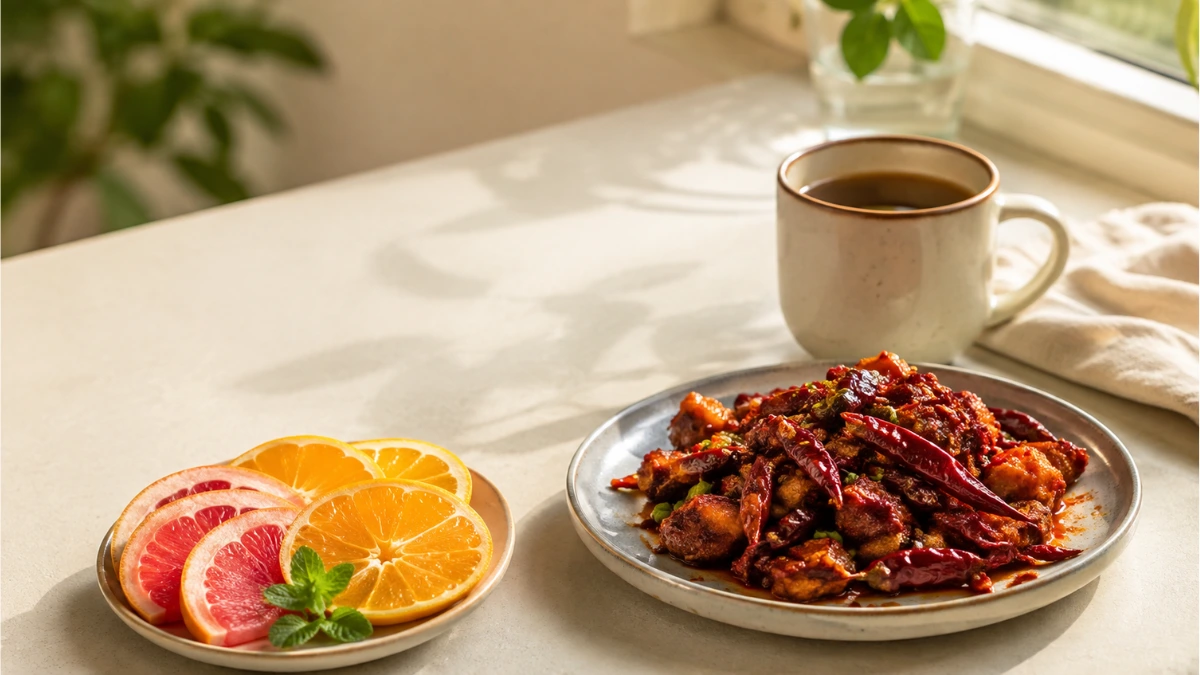
What not to eat on an empty stomach is something many people wonder about. Maybe you’ve heard that coffee, citrus fruits, or spicy foods should never be your first bite or sip of the day—but how much of that is actually true?
The answer isn’t as simple as a list of “bad” foods. Some everyday foods and drinks may trigger heartburn, acid reflux, bloating, or stomach discomfort, while others may be perfectly fine for you.
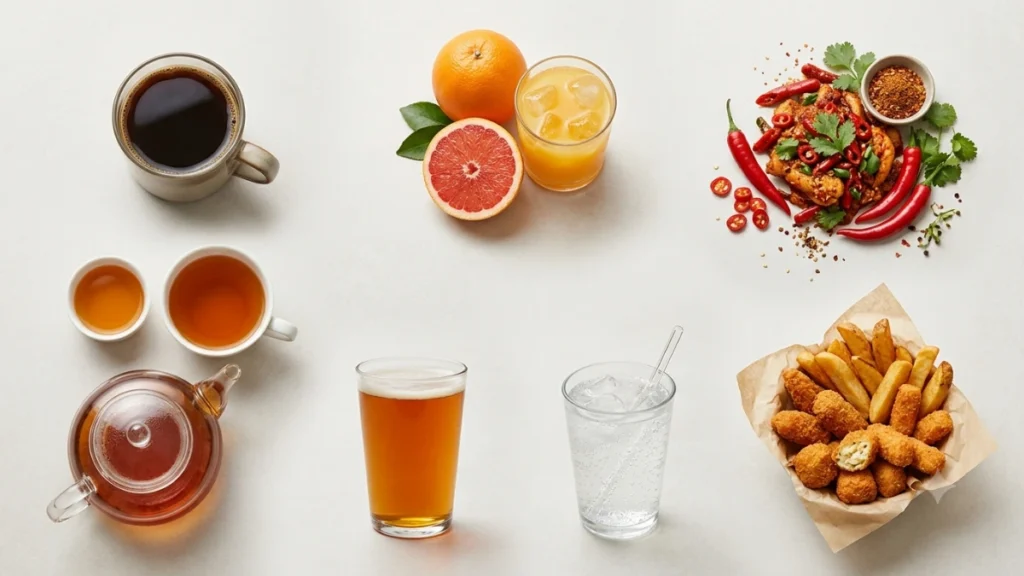
So, what should you actually be careful with? Let’s look at 7 common foods and drinks that may be worth limiting—and what the evidence really says.
In This Article
What Does “Empty Stomach” Actually Mean?
An empty stomach generally means going without food for several hours, such as overnight or between meals. It does not automatically make a food unhealthy or harmful.
The more important question is whether a particular food or drink triggers symptoms such as heartburn, acid reflux, bloating, nausea, or indigestion. These reactions can vary from person to person, so a food that causes discomfort for one person may be perfectly well tolerated by another.
That is why there is no universal list of foods that everyone needs to avoid on an empty stomach. Your individual tolerance, portion size, and existing digestive conditions can all influence how you respond.
What Not to Eat on an Empty Stomach: 7 Foods and Drinks to Know
1. Alcohol
Alcohol is one of the clearest drinks to be cautious with on an empty stomach. When you drink without food, alcohol is absorbed into the bloodstream more quickly, which can cause your blood alcohol level to rise faster. Eating before drinking slows the rate of absorption. Learn more about alcohol absorption from NIAAA
Alcohol can also irritate the gastrointestinal tract, and heavier drinking can contribute to digestive problems. Food may slow alcohol absorption and reduce some stomach irritation, but eating does not make heavy drinking safe.
2. Very Spicy Foods
Very spicy foods can trigger burning, heartburn, acid reflux, or indigestion in some people, especially those who already have reflux or a sensitive digestive system.
NIDDK lists spicy foods among foods commonly linked with GERD symptoms. A recent systematic review and meta-analysis also found an association between higher spicy-food consumption and functional dyspepsia, including upper-abdominal pain and burning.
This does not mean spicy food is harmful to everyone. If spicy meals repeatedly cause burning, reflux, or stomach discomfort, reducing the amount or choosing milder foods may be more appropriate.
3. Fried & Very High-Fat Foods
Fried and very high-fat foods can be harder to tolerate for some people and may contribute to indigestion, bloating, or uncomfortable fullness. High-fat foods are also commonly linked with worsening reflux symptoms.
NIDDK lists fatty and greasy foods among foods that may worsen symptoms of both indigestion and GERD. High-fat meals may also slow stomach emptying, which can contribute to discomfort or reflux in susceptible people.
The concern is mainly about large, greasy meals, not dietary fat itself. Healthy sources of fat can still be part of a balanced diet.
4. Coffee
Coffee is often described as something you should never drink on an empty stomach, but the evidence is more nuanced. Coffee and other caffeinated drinks may trigger or worsen heartburn, acid reflux, or indigestion in some people.
NIDDK lists coffee and other sources of caffeine among drinks commonly associated with GERD symptoms. However, this does not mean coffee is automatically harmful simply because you have not eaten.
If coffee consistently causes burning, reflux, nausea, or stomach discomfort, try reducing it or having it with or after food. If you tolerate it well, there is no universal rule requiring you to avoid it on an empty stomach.
5. Tea
Tea is not automatically harmful on an empty stomach. However, caffeinated tea may contribute to digestive discomfort in some people, particularly those who are already sensitive to caffeine or prone to indigestion.
NIDDK includes caffeinated drinks among potential dietary triggers for functional dyspepsia. Individual responses vary, so tea does not need to be avoided simply because it is consumed before food.
If strong tea regularly leaves you feeling nauseous, uncomfortable, or gives you reflux symptoms, try having a smaller amount or drinking it with or after food.
6. Carbonated & Fizzy Drinks
Carbonated drinks can cause bloating, belching, and digestive discomfort in some people. NIDDK lists fizzy drinks among beverages that may trigger or worsen symptoms of functional dyspepsia.
However, carbonated drinks are not proven to directly cause GERD or damage the digestive tract. A systematic review found no direct evidence that carbonated beverages promote or worsen GERD.
If fizzy drinks regularly make you feel bloated, overly full, or uncomfortable, limiting them may help. The problem is not that carbonation automatically makes a drink harmful when your stomach is empty.
7. Citrus Fruits & Acidic Drinks
Citrus fruits and acidic drinks, such as oranges, grapefruit, and citrus juices, may trigger or worsen heartburn and acid reflux in some people.
NIDDK lists acidic foods such as citrus fruits among foods commonly linked with GERD symptoms. Citrus can therefore be worth limiting if you already know that acidic foods trigger your reflux.
However, citrus fruits are not inherently harmful on an empty stomach, and most people do not need to avoid them simply because they have not eaten. If citrus repeatedly causes burning or reflux, choosing a less acidic option may be more comfortable.
Do You Really Need to Avoid These Foods?
Not necessarily.
The seven foods and drinks above are potential triggers, not universal rules. A food that causes heartburn, bloating, or indigestion in one person may be perfectly comfortable for another.
Instead of avoiding foods simply because your stomach is empty, pay attention to your own symptoms and patterns. If something repeatedly causes discomfort, try reducing it, changing when you consume it, or having it with a meal.
The goal isn’t to follow a strict list of “forbidden” foods. It’s to understand which foods your body tolerates well and which ones may trigger symptoms.
What Can You Eat on an Empty Stomach?
After seeing which foods and drinks may trigger digestive discomfort, you may be wondering what a better choice looks like.
You don’t need a special “empty-stomach food” to start your day. For most people, a simple, balanced meal is a better approach than following strict morning-food rules.
Some practical options include:
- Whole fruits such as bananas, apples, or berries
- Oats and other whole grains
- Eggs or other protein-rich foods
- Nuts and seeds
- Yogurt, if you tolerate dairy
- A combination of carbohydrates, protein, and healthy fats
There is no single food that is scientifically proven to be the “best” thing to eat first thing in the morning. What matters more is choosing nutritious foods that fit your overall diet and work well for your digestion.
If a particular food repeatedly causes heartburn, bloating, nausea, or indigestion, try reducing it or changing when you eat it rather than eliminating foods unnecessarily.
Think balance, not a perfect empty-stomach food.
Common Empty-Stomach Food Myths
The internet is full of strict rules about what you should “never” eat first thing in the morning. But many of these claims are more absolute than the evidence supports.
Myth 1: Bananas are bad on an empty stomach
There is no general medical rule that says bananas should be avoided simply because your stomach is empty. For most people, a banana can be part of a normal breakfast or snack. If it causes you discomfort, you can choose another food—but there is no need to avoid it based on the empty-stomach claim alone.
Myth 2: Citrus fruits cause ulcers when eaten on an empty stomach
Citrus fruits may trigger heartburn or acid reflux in some people, but that is not the same as causing an ulcer. Peptic ulcers are most commonly associated with factors such as H. pylori infection and nonsteroidal anti-inflammatory drugs (NSAIDs), rather than simply eating acidic foods. NIDDK: Peptic Ulcers
Myth 3: Yogurt should never be eaten on an empty stomach
There is no universal rule that yogurt must be avoided before eating. Yogurt can be part of a balanced diet, and whether it feels comfortable on an empty stomach depends largely on the individual. People who are sensitive to dairy may experience symptoms such as bloating or abdominal discomfort and may prefer a different option.
Myth 4: You must eat a “special” food first thing in the morning
You don’t need a detox drink, particular fruit, or other special food to “prepare” your stomach for breakfast. There is no single food that everyone needs to eat first thing in the morning. A balanced meal made from nutritious foods you tolerate well is a more useful approach.
The bottom line: An empty stomach does not automatically make ordinary foods harmful. Many popular “never eat this first thing in the morning” rules are based on individual experiences or oversimplified claims rather than universal medical advice.
When Is It More Than a Food Trigger?
If a particular food occasionally causes heartburn, bloating, or indigestion, it may simply be a personal trigger. But frequent, severe, or persistent symptoms should not automatically be blamed on eating on an empty stomach.
Talk to a healthcare professional if symptoms keep returning despite dietary changes, or if you develop warning signs such as difficulty swallowing, persistent vomiting, unexplained weight loss, severe abdominal pain, or blood in your vomit or stool.
Don’t keep eliminating foods to manage symptoms that may have another underlying cause.
Frequently Asked Questions
What should I not eat on an empty stomach?
If you’re wondering what not to eat on an empty stomach, there is no universal list of foods everyone needs to avoid. Alcohol, very spicy foods, fried or high-fat foods, coffee, carbonated drinks, and acidic foods may trigger digestive symptoms in some people, particularly those prone to reflux or indigestion.
What fruits should you avoid on an empty stomach?
You don’t generally need to avoid a particular fruit simply because your stomach is empty. However, citrus fruits may trigger heartburn or reflux in people who are sensitive to acidic foods.
What is good to eat on an empty stomach?
There is no single “best” food to eat on an empty stomach. Whole fruits, oats and other whole grains, eggs, nuts and seeds, and yogurt can all be part of a balanced meal if you tolerate them well.
Is lemon water safe on an empty stomach?
Lemon water is not inherently harmful, but its acidity may trigger heartburn or reflux in some people. If it causes burning or discomfort, plain water is a simple alternative.
Is coffee bad on an empty stomach?
Not necessarily. Coffee may trigger heartburn, acid reflux, or indigestion in some people, but drinking it on an empty stomach is not automatically harmful. If coffee consistently causes symptoms, try having it with or after food.
Final Takeaway
There isn’t a universal list of foods you must avoid on an empty stomach. Some foods and drinks may trigger heartburn, reflux, bloating, or indigestion, but the effect varies from person to person. What matters most is understanding your own triggers rather than following strict internet food rules.
Pay attention to the pattern: what you ate, how much you had, and how your body responded. If something consistently causes discomfort, adjusting the portion, timing, or how you consume it may help. An empty stomach doesn’t automatically make an ordinary food harmful—let evidence and your own tolerance guide your choices.
