
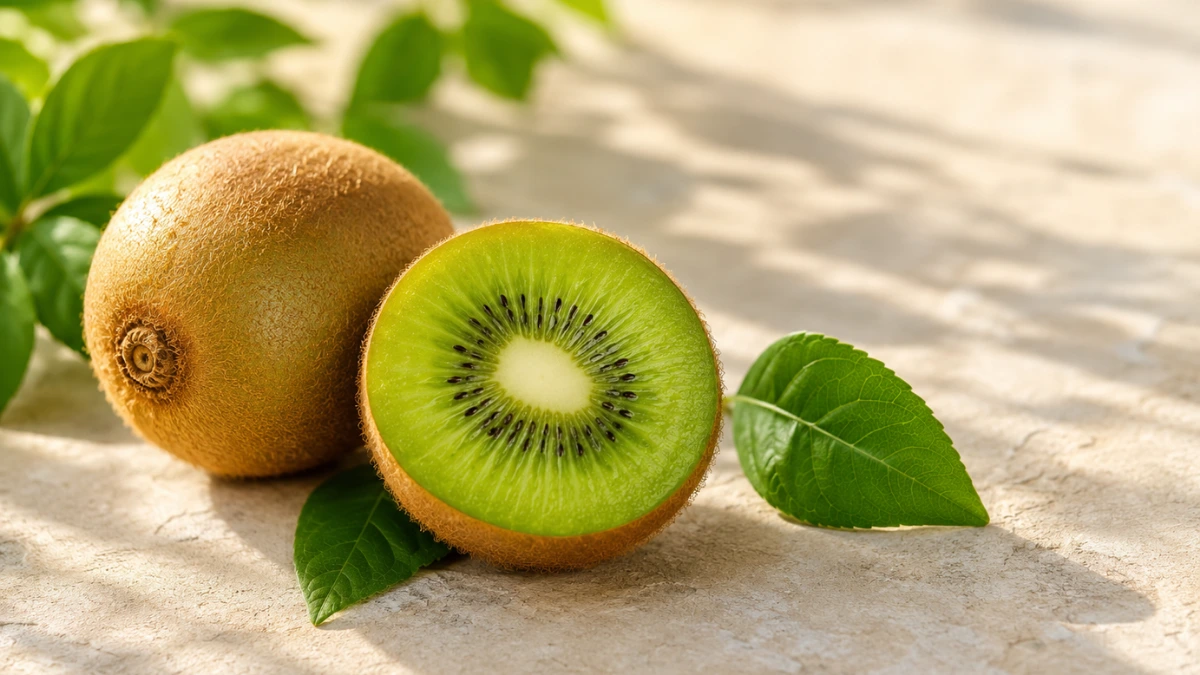
Constipation can leave you feeling uncomfortable, bloated, and frustrated. If you’re looking for a simple food that may help, kiwi for constipation is worth considering. Clinical trials suggest that eating kiwifruit regularly may increase bowel movement frequency and improve digestive comfort in some adults with constipation.
But how much kiwi should you eat, how long might it take to help, and does the skin matter? Here’s what the research says—and how you can include kiwifruit as part of a constipation-friendly diet.
In This Article
Does Kiwi Help With Constipation?
Yes, kiwi may help with constipation. Research suggests that eating whole kiwifruit regularly can increase bowel movement frequency and improve some constipation-related symptoms, including digestive discomfort, in adults with constipation.
In a multicenter randomized controlled trial, adults with functional constipation or constipation-predominant IBS who ate two green kiwifruits daily for four weeks experienced about 1.5–1.7 additional complete spontaneous bowel movements per week and reported improved gastrointestinal comfort.
The overall evidence is promising, but it is not conclusive. A systematic review and meta-analysis of seven randomized controlled trials involving 399 participants found that kiwifruit may improve bowel movement frequency and some constipation-related symptoms, but the certainty of evidence varied by outcome and was generally limited.
So, kiwi isn’t a proven “cure” or an instant laxative. Instead, it’s a food-based option supported by clinical research that may help promote more regular bowel movements as part of a constipation-friendly diet.
How Does Kiwi Help With Constipation?
Kiwi may help constipation through a combination of fiber and other properties of the whole fruit. Its dietary fiber can support stool bulk and regular bowel movements, while research suggests kiwifruit may also improve stool consistency and intestinal transit. Research on kiwifruit and gastrointestinal function
Kiwi also contains actinidin, a natural enzyme that helps break down proteins during digestion. However, there isn’t enough evidence to say that actinidin itself is responsible for kiwi’s effects on constipation. The exact mechanisms are still not fully understood. Review of kiwifruit’s effects on digestive function
Overall, kiwi is best viewed as a fiber-rich whole fruit that may support normal bowel function, rather than as a natural laxative.
How Much Kiwi Should You Eat for Constipation?
For constipation, research has most consistently studied two kiwifruits per day, particularly green kiwifruit. In a large clinical trial, adults who ate two green kiwis daily for four weeks experienced improvements in bowel regularity and gastrointestinal comfort.
Some evidence-based dietary guidance suggests that 2–3 kiwifruits per day for at least four weeks may help manage constipation. You can eat them together or at different times, depending on what feels comfortable.
If you’re not used to eating much fiber, increase your intake gradually and drink enough fluids. Since kiwi is a food rather than a laxative medication, how well it works can vary from person to person.
How Long Does Kiwi Take to Help With Constipation?
There is no proven exact time for how quickly kiwi may help with constipation. It is not an instant laxative, so you should not expect a bowel movement immediately after eating it.
Clinical research has mainly studied regular kiwifruit consumption over several weeks. In one major trial, adults who ate two green kiwifruits daily were assessed after four weeks and experienced improvements in bowel regularity and gastrointestinal comfort. See the randomized controlled trial
This does not mean kiwi takes exactly four weeks to work. Some people may notice changes sooner, while others may not respond as well. There is no reliable number of hours or days that applies to everyone.
If constipation is persistent, severe, or keeps returning, don’t rely on kiwi alone; consider speaking with a healthcare professional.
What Is the Best Time to Eat Kiwi for Constipation?
There is no scientifically established best time of day to eat kiwi for constipation. Research has focused on eating kiwifruit regularly rather than on a specific morning, afternoon, or evening schedule.
In a major clinical trial, participants ate two green kiwifruits daily for four weeks, but they were not required to eat them at a particular time of day.
So, there’s no need to wait for a specific “best” time. Choose a time that fits comfortably into your routine and helps you eat kiwi consistently.
Kiwi for Constipation: With or Without the Skin?
You can eat kiwi with or without the skin. The skin is edible and contains fiber, but eating it is not necessary to get the potential constipation benefits of kiwi.
In a major randomized trial on kiwi and constipation, participants ate peeled green kiwifruit, so the study does not establish that eating the skin provides additional constipation benefits. See the clinical trial
If you prefer the skin, wash the fruit thoroughly before eating it. If you dislike its texture or fuzziness, simply peel it—the flesh still provides fiber and other nutrients.
Bottom line: Choose whichever you prefer. There is currently no good clinical evidence showing that eating kiwi skin works better than eating peeled kiwi.
Green or Gold Kiwi: Which Is Better for Constipation?
Both green and gold kiwifruit have been studied for constipation, although green kiwifruit has a larger clinical evidence base. Research has found that eating two green kiwifruits daily for four weeks can improve bowel regularity and gastrointestinal comfort in adults with constipation. See the green kiwifruit trial
Gold kiwifruit has also shown benefits in a randomized trial using two kiwifruits daily for four weeks. See the gold kiwifruit trial
There is currently no strong evidence that green kiwi is better than gold kiwi for constipation. Either can be a reasonable choice based on your preference and tolerance.
Kiwi vs. Prunes for Constipation: Which Is Better?
Both kiwi and prunes may help support bowel regularity, but they work somewhat differently. Kiwi provides dietary fiber and other compounds that may support normal bowel function, while prunes provide fiber and sorbitol, a sugar alcohol that can help draw water into the bowel.
Clinical research supports both foods, but studies have used different doses and participant groups, so there is not enough evidence to say that one is universally better.
If you prefer fresh fruit, kiwi is a practical option. If you enjoy dried fruit, prunes are another evidence-supported choice. You don’t have to choose only one—the better option is the one you tolerate well and can include regularly.
Can Kiwi Make Constipation Worse?
Kiwi does not usually make constipation worse, but suddenly eating a large amount may cause bloating, gas, or abdominal discomfort, especially if you are not used to eating much fiber. Increasing fiber gradually and drinking enough fluids may help your digestive system adjust.
Kiwi can also cause an allergic reaction in some people. Symptoms may include itching or tingling in the mouth, hives, swelling, vomiting, or difficulty breathing. Stop eating kiwi if you develop allergy symptoms and seek urgent medical care for trouble breathing or significant swelling. Learn more about food allergy symptoms.
If kiwi repeatedly worsens your digestive symptoms, you do not need to continue eating it. Another fiber-rich food may be a better fit for you.
Is Kiwi Safe for Constipation During Pregnancy or for Children?
For most people, kiwi can be part of a balanced diet during pregnancy and childhood, but the appropriate amount depends on age, diet, and individual tolerance.
During pregnancy, constipation is common, and kiwi can be one way to add fruit and fiber to the diet. If constipation is persistent or difficult to manage, talk with your healthcare professional rather than relying on kiwi alone.
For babies, toddlers, and young children, kiwi can be introduced according to age-appropriate feeding guidance. Adult amounts, such as two kiwis per day, should not be automatically applied to children.
If a child has persistent constipation, severe abdominal pain, vomiting, blood in the stool, or other concerning symptoms, consult a pediatrician.
How to Eat Kiwi for Constipation
The simplest way to eat kiwi for constipation is to have it fresh and whole. You can peel it or eat the skin after washing it thoroughly.
Easy ways to include kiwi in your diet:
- Eat it on its own: Have a ripe kiwi as a snack.
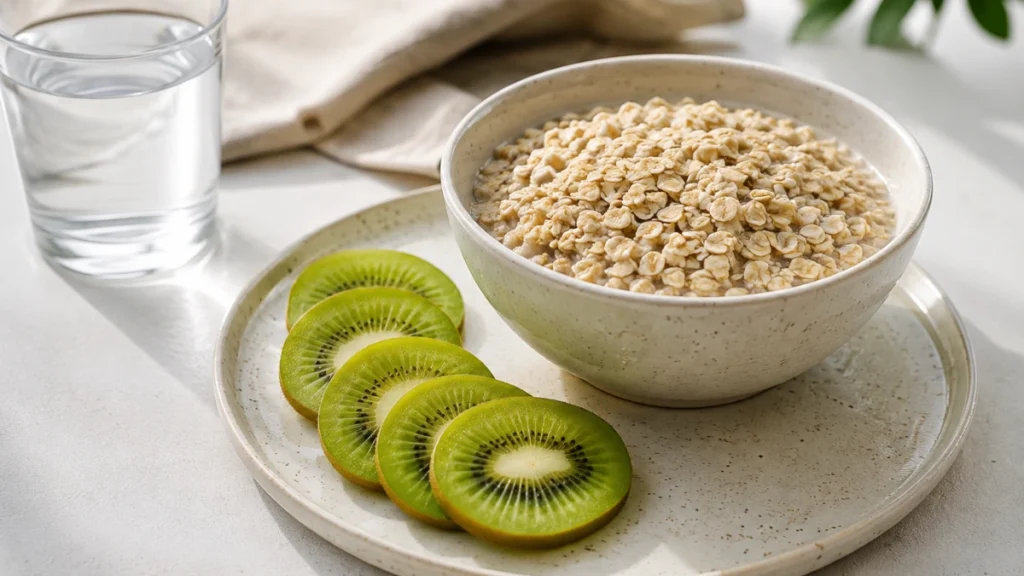
- Add it to breakfast: Slice it over oats, whole-grain cereal, or yogurt.
- Make a fruit bowl: Combine kiwi with other fruits.
- Add it to a smoothie: Blend kiwi with other fruits and a liquid of your choice.
If you’re increasing your fiber intake, do so gradually and drink enough fluids to help reduce bloating or digestive discomfort.
When Should You See a Doctor for Constipation?
Occasional constipation is common, but persistent, recurrent, or severe constipation should not be managed with food alone. Talk to a healthcare professional if constipation does not improve, keeps returning, or is affecting your daily life.
Seek medical attention promptly if constipation occurs with blood in the stool, unexplained weight loss, persistent vomiting, severe or worsening abdominal pain, or significant abdominal swelling. These symptoms may indicate an underlying problem that needs medical evaluation. Learn more about constipation warning signs.
Kiwi can be a nutritious addition to a constipation-friendly diet, but it should not replace medical care when symptoms are persistent, severe, or accompanied by warning signs.
Frequently Asked Questions
1. Does kiwi make you poop instantly?
No. Kiwi is not an instant laxative. Research has mainly studied the effects of regular kiwifruit consumption over several weeks, rather than immediate bowel movements.
2. How many kiwis should you eat for constipation?
Research in adults has commonly studied two kiwifruits per day. Some dietary guidance suggests 2–3 kiwifruits daily for at least four weeks may help manage constipation.
3. Is kiwi skin a laxative?
No. Kiwi skin is edible and contains fiber, but it is not a laxative. You can eat kiwi with or without the skin.
4. Is green kiwi better than gold kiwi for constipation?
Green kiwi has been studied more extensively, but current evidence does not establish that green kiwi is better than gold kiwi for constipation.
5. What is the best time to eat kiwi for constipation?
There is no scientifically established best time. Choose a time that fits your routine and allows you to eat kiwi consistently.
6. Can I eat kiwi every day for constipation?
Yes, kiwi can generally be included in a balanced diet every day. If you are increasing your fiber intake, do so gradually and drink enough fluids.
7. Can I eat kiwi for constipation during pregnancy?
Kiwi can be part of a balanced pregnancy diet. If constipation is persistent or difficult to manage, discuss it with your healthcare professional.
8. Can babies and toddlers eat kiwi for constipation?
Kiwi can be introduced according to age-appropriate feeding guidance, but adult recommendations should not be applied to babies or toddlers. Persistent constipation in a child should be discussed with a pediatrician.
Final Thoughts
Kiwi may not be a quick fix, but it can be a simple, evidence-backed addition to a constipation-friendly diet.
If you enjoy kiwi, adding it regularly may be worth trying. Just remember that healthy bowel habits depend on your overall diet, hydration, physical activity, and daily routine—not one food alone.
If constipation doesn’t improve or comes with warning signs, it’s important to look beyond diet and speak with a healthcare professional.
