
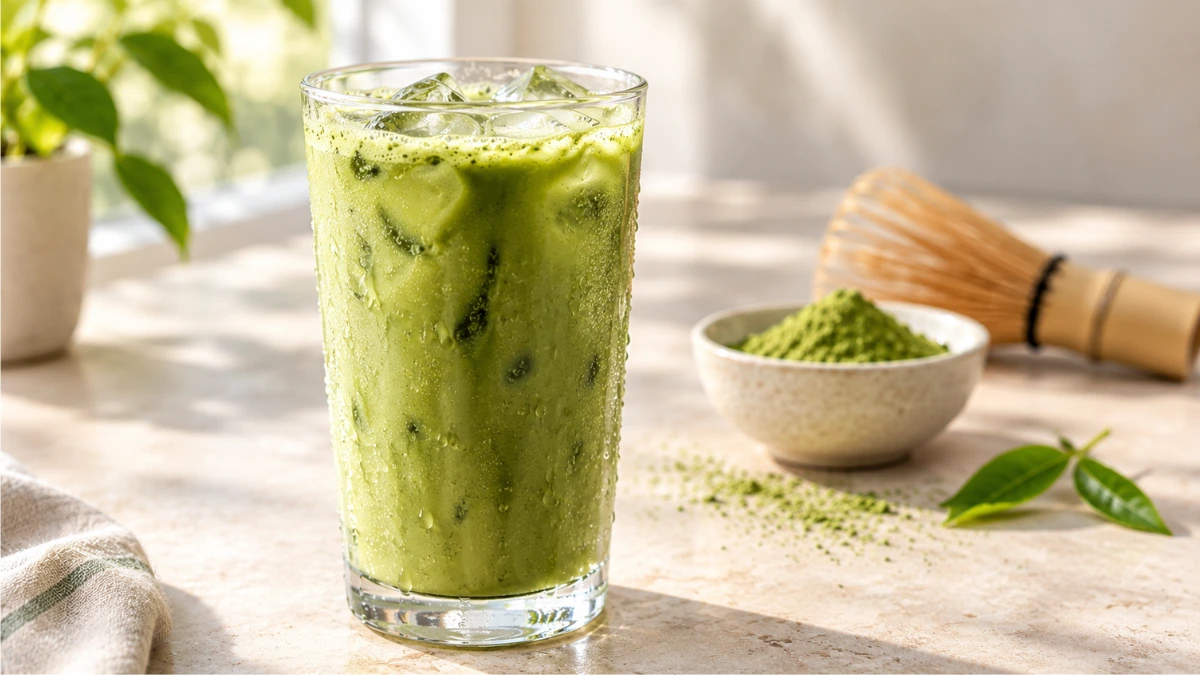
Making iced matcha sounds easy—until you get clumps, bitterness, or powder floating on top. The trick to smooth iced matcha is simple: mix the powder with a little warm water first, then add ice and your preferred cold liquid.
In this guide, you’ll learn how to make iced matcha at home, with the right starting ratio, easy no-whisk methods, and simple latte and strawberry variations.
In This Article
Quick Answer: How to Make Iced Matcha
For one glass, you’ll need:
- 1 teaspoon (about 2 g) matcha powder
- 60 mL (2 oz) warm water
- Ice
- Cold water or milk
- Optional sweetener
Quick method
- Sift the matcha into a small bowl or cup.
- Add the warm water and whisk until smooth and lightly frothy.
- Pour the matcha over ice.
- Add cold water for a lighter drink or milk for an iced matcha latte.
- Taste and add a little sweetener if needed.
A traditional preparation from Kyoto-based Ippodo Tea uses 2 g of matcha with 60 mL of water at about 80°C (176°F), followed by vigorous whisking before the matcha is chilled with ice.
What You’ll Need
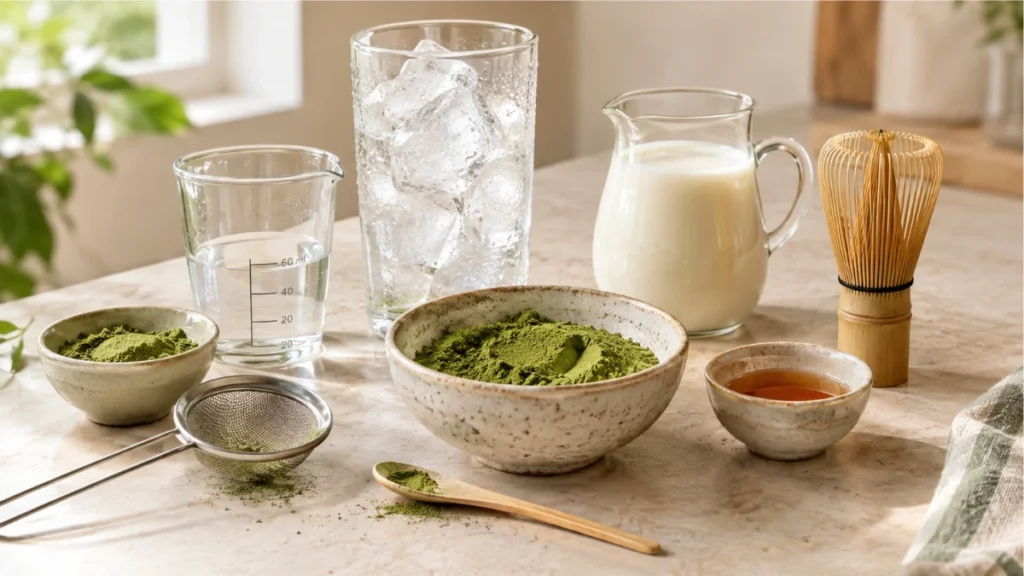
Matcha powder
Choose matcha intended for drinking rather than a product specifically sold for baking. Flavor and texture vary between matchas, so the best choice depends on how strong, smooth, or delicate you want your drink to taste.
For a first glass, 1 teaspoon (about 2 g) is a practical starting point.
Warm water
Use a small amount of warm water to create a smooth matcha base before adding the rest of the liquid. Around 60 mL (2 oz) at about 80°C (176°F) works as a starting point.
There is no need to use boiling water directly on the matcha.
Ice
Use enough ice to chill the drink well without leaving the final matcha overly diluted.
Optional milk or sweetener
Use cold water for a simple iced matcha or milk for a creamier latte. Add sweetener only if you want it.
How to Make Iced Matcha Step by Step
1. Sift the matcha
Measure 1 teaspoon (about 2 g) of matcha and sift it into a small bowl or cup.
Sifting helps break up compacted powder before you add water, which can make the matcha easier to mix smoothly.
2. Add warm water
Pour in 60 mL (2 oz) of warm water at about 80°C (176°F).
Using a small amount of water at this stage creates a concentrated base that is easier to mix thoroughly than a full glass of liquid.
3. Whisk until smooth
Whisk vigorously for about 15 seconds.
With a bamboo matcha whisk, use quick back-and-forth movements rather than slowly stirring in circles. You’re aiming for an evenly mixed liquid with a light layer of foam on top.
4. Add ice
Fill a glass with ice, then pour the prepared matcha over it.
Chilling the matcha after it has been mixed helps avoid the clumps that can occur when powder is added directly to a glass of ice-cold liquid.
5. Adjust the drink
Add cold water for a lighter, more tea-forward iced matcha or cold milk for a creamier latte.
Taste before adding sweetener. Matcha naturally has a distinctive vegetal, savory, and slightly bitter flavor, so a little sweetness may be enough to balance it without overpowering the tea.
What Is the Best Matcha-to-Water Ratio for Iced Matcha?
The 1 teaspoon (about 2 g) matcha to 60 mL (2 oz) warm water ratio used in the basic recipe is a good starting point. It creates a concentrated matcha base that you can dilute with cold water or milk after adding ice.
You can adjust the amount depending on how strong you like your drink:
| Style | Matcha | Warm water | Finish with |
|---|---|---|---|
| Light | ½–1 tsp | 30–60 mL | Cold water + ice |
| Balanced | 1 tsp | 60 mL | Cold water or milk + ice |
| Strong | 1–1½ tsp | 60 mL | Milk + ice |
These are starting points rather than fixed rules. The final strength will also depend on the amount of milk or water, the type of matcha, and your personal taste.
How to Make Iced Matcha Without a Whisk
You don’t need a traditional bamboo whisk to make iced matcha. For a cold drink, a shaker or handheld frother can work well.
Method 1: Use a Shaker or Jar
Sift the matcha into a shaker or jar, add a small amount of cool or room-temperature water, seal it tightly, and shake vigorously until the powder is evenly dispersed. Pour it over ice, then add cold water or milk.
This method is especially convenient when making iced matcha because vigorous shaking helps disperse the fine powder.
Safety note: Never shake very hot liquid in a sealed jar or shaker. Allow the liquid to cool first or use cool or room-temperature water.
Method 2: Use an Electric Frother
Sift the matcha into a deep cup, add a small amount of water, and blend with a handheld electric frother until smooth. Then add ice and your remaining cold liquid.
Keep the container deep enough to reduce splashing.
Method 3: Use a Spoon
No whisk, shaker, or frother? Sift the matcha and mix it with a small amount of warm water using a spoon to form a smooth paste. Gradually add more liquid while stirring.
This method may not create the same fine foam as whisking or frothing, but it can still work for a simple homemade iced matcha.
Why Does Iced Matcha Get Clumpy?
Clumps are common when making iced matcha and don’t necessarily mean the matcha has gone bad.
Matcha is a very fine powder, so it can compact during storage. Sifting before mixing helps break up those compacted particles and makes the powder easier to disperse.
It also helps to avoid adding the matcha directly to a full glass of cold liquid. Start with a small amount of water, mix the powder thoroughly, and then add the remaining liquid and ice.
For a smoother drink:
Sift → mix with a small amount of liquid → whisk or shake well → add the remaining liquid → chill.
Still seeing clumps?
Try these simple fixes:
- Sift the matcha before mixing.
- Use a small amount of liquid first rather than a full glass.
- Whisk vigorously instead of slowly stirring.
- For a no-whisk method, use a shaker or electric frother.
- If using a shaker, make sure the lid is securely closed before shaking.
A small amount of matcha settling at the bottom is normal. Unlike brewed tea, matcha contains the powdered tea leaf itself, so it does not completely dissolve or remain perfectly suspended in the liquid.
Can You Make Iced Matcha With Cold Water?
Yes, but mixing it well is the tricky part. Matcha can be made with cold water using a shaker or another vigorous mixing method, while simply stirring the powder into a glass of cold water is more likely to leave clumps.
For the smoothest beginner-friendly result, first mix the matcha with a small amount of warm water, then add your cold liquid and ice.
How to Make an Iced Matcha Latte
An iced matcha latte combines prepared matcha with cold milk and ice. For a balanced starting point, use:
- 1 teaspoon (about 2 g) matcha
- 60 mL (2 oz) warm water
- 120–180 mL (4–6 oz) cold milk
- Ice
- Optional sweetener
Method
- Sift and whisk the matcha with the warm water until smooth.
- Fill a glass with ice and add the cold milk.
- Pour the prepared matcha over the milk and stir.
- Add a little sweetener if desired.
You can use dairy milk or a plant-based option such as soy, oat, or almond milk. The best choice depends on the flavor, texture, and nutrition you prefer.
Tip: For a stronger matcha flavor, start by using less milk rather than immediately adding more matcha. This lets you adjust the flavor without unnecessarily increasing the caffeine.
How Much Caffeine Is in Iced Matcha?
Yes, iced matcha contains caffeine because you consume the powdered green tea leaves rather than brewing and discarding them. The amount varies by the type and quantity of matcha; for example, one study found about 71.5 mg of caffeine in a 2.7 g serving, but this is not a universal value. (pubmed.ncbi.nlm.nih.gov)
For most healthy adults, the FDA cites 400 mg of caffeine per day as an amount not generally associated with negative effects, although sensitivity varies. (fda.gov) If caffeine makes you feel jittery or affects your sleep, use less matcha or drink it earlier in the day.
How Many Calories Are in Iced Matcha?
Plain iced matcha made with matcha, water, and ice is very low in calories. A 2 g serving of matcha provides roughly 5–6 calories, although the exact amount can vary by product. (nutritional-density.com)
Most of the calories in an iced matcha latte come from the milk, sweeteners, and syrups rather than the matcha itself. Unsweetened milk will usually add less than sweetened versions, while dairy and plant-based milks vary in calories. For the most accurate total, check the nutrition labels of the matcha, milk, and sweetener you use.
Is Iced Matcha Healthy?
Iced matcha can be a reasonable beverage choice, especially when you keep added sugar modest. Matcha naturally contains catechins, caffeine, and L-theanine, and research has explored their potential effects on areas such as antioxidant activity, cognition, and metabolic health.
However, containing beneficial compounds is not the same as proving a specific health benefit. Research on matcha is promising, but evidence for many claimed effects is still limited and more human studies are needed. It’s best to enjoy iced matcha as part of a balanced diet rather than treat it as a detox drink, fat-burning shortcut, or treatment for a health condition.
For a lighter option, keep added sugar moderate and choose unsweetened milk when possible. If caffeine affects your sleep or makes you feel jittery, use less matcha or have it earlier in the day. Whether matcha is iced or hot matters less nutritionally than what you add to it.
Common Iced Matcha Mistakes to Avoid
A few small mistakes can leave iced matcha gritty, bitter, or watery. Here’s how to avoid them.
Adding Matcha Directly to Cold Water
Don’t dump the powder into a full glass of cold liquid. Instead, mix it with a small amount of liquid first, then add the remaining water or milk and ice. This makes it easier to disperse the fine powder evenly.
Using Too Much Matcha
More matcha doesn’t necessarily mean a better drink. Too much can make the flavor overly bitter and overpower the rest of the drink. Start with 1 teaspoon (about 2 g) and adjust to taste.
Skipping the Sifting Step
Matcha can form compacted lumps during storage. Sifting breaks them apart and helps create a smoother mixture.
Using Boiling Water
You don’t need boiling water to prepare matcha. A temperature around 80°C (176°F) is commonly used for whisking and can help produce a smoother, less harsh-tasting drink.
Adding Too Much Ice
Too much melting ice can dilute a weak matcha base. Prepare the matcha strongly enough first, then add ice and adjust the drink with cold water or milk.
Adding Too Much Sweetener
A little sweetness can balance matcha’s bitterness, but too much can quickly turn the drink into a high-sugar beverage. Start with a small amount, taste, and add more only if needed.
Easy Ways to Customize Iced Matcha
Once you’ve mastered the basic recipe, you can easily adjust the drink to suit your taste.
Iced Matcha Without Milk
For a lighter, more tea-forward drink, replace the milk with cold water. This keeps the recipe simple and lets the matcha flavor stand out.
Strawberry Iced Matcha
Strawberry and matcha make a popular combination because the fruit’s sweetness balances matcha’s earthy flavor.
For a simple version, add strawberry puree or mashed strawberries to a glass, followed by ice and cold milk. Pour the prepared matcha over the top and stir gently. Add sweetener only if needed.
Adjust the Sweetness
Honey, maple syrup, simple syrup, or another sweetener can be added to the prepared matcha base. Start with a small amount, taste, and adjust rather than making the drink very sweet from the beginning.
Can You Make Iced Matcha Ahead of Time?
Iced matcha is best when freshly mixed, but you can prepare the matcha base or finished drink in advance and refrigerate it in a covered container. Since the fine tea particles can settle, shake or stir before serving.
For the best texture, add the ice shortly before drinking rather than storing the drink over ice.
What Kind of Matcha Should You Use for Iced Matcha?
Choose a matcha intended for drinking rather than assuming that any green tea powder will give the same flavor or texture. You don’t necessarily need the most expensive ceremonial-grade matcha for an iced latte; a good-quality drinking matcha can work well, particularly when you’re adding milk or sweetener.
For a simple iced matcha made with only water and ice, the matcha’s flavor is more noticeable, so choose one you genuinely enjoy.
Your Iced Matcha Questions, Answered
How do you make iced matcha properly?
Sift the matcha, whisk it with a small amount of warm water until smooth, then pour it over ice and add cold water or milk. Starting with a concentrated matcha base helps reduce clumping.
Can you make iced matcha without a whisk?
Yes. A shaker, tightly sealed jar, or handheld electric frother can help mix the matcha. When using a shaker, use cool or room-temperature liquid rather than very hot water.
Can you make iced matcha with cold water?
Yes, but cold water can be harder to mix smoothly. A shaker or vigorous mixing method works well, while beginners may find it easier to prepare the matcha with a small amount of warm water first.
Does iced matcha have caffeine?
Yes. Matcha naturally contains caffeine, and the amount varies depending on the type and quantity of powder used.
Is iced matcha healthy?
Iced matcha can fit into a balanced diet. Its overall nutritional value depends on the matcha itself and additions such as milk, sugar, and syrups. It should not be treated as a detox drink or a treatment for a health condition.
How many calories are in iced matcha?
Plain iced matcha made with matcha, water, and ice is very low in calories. In a latte, most of the calories usually come from the milk, sweeteners, or syrups.
Can I drink iced matcha every day?
For most healthy adults, matcha can be part of a normal diet. Keep your overall caffeine intake in mind, especially if caffeine affects your sleep or makes you feel jittery.
Final Thoughts
Making iced matcha at home is simple once you get the mixing method right. Start with a concentrated matcha base, mix it thoroughly, then add ice and your preferred cold liquid.
From there, adjust the strength, sweetness, and milk to your taste. Whether you prefer a simple iced matcha, a creamy latte, or a strawberry variation, the best recipe is one that’s smooth, balanced, and easy to make again.
