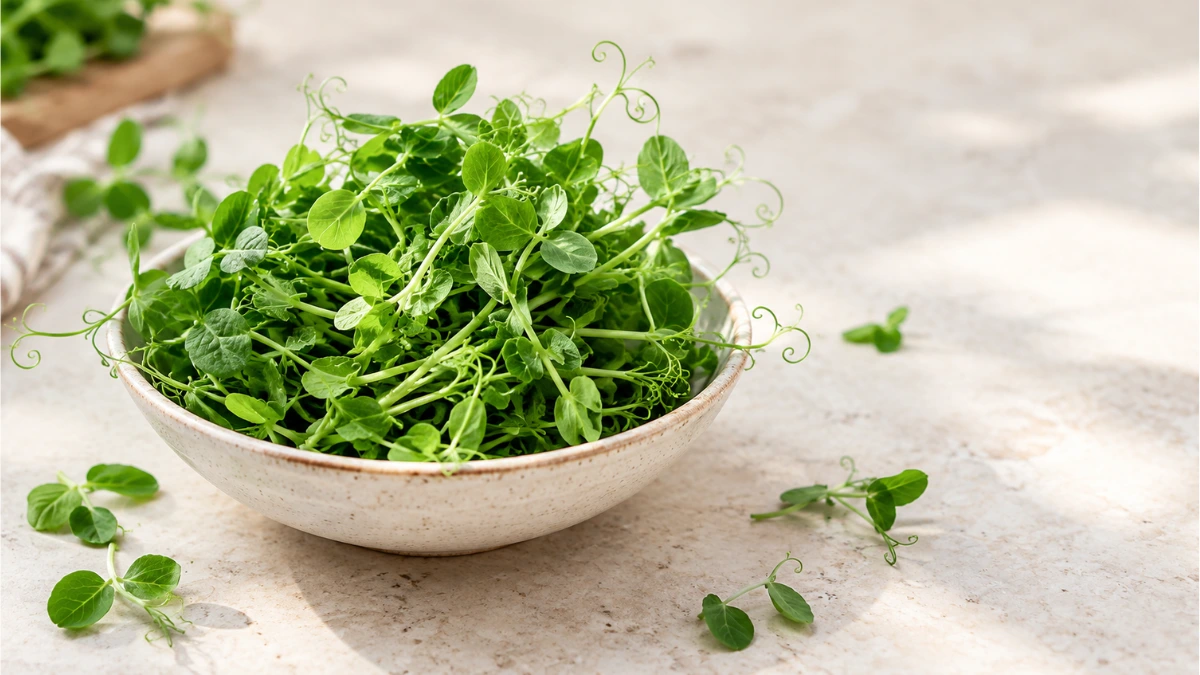
If you’ve ever noticed delicate green leaves and curling tendrils on a restaurant plate or at a farmers’ market, you may have come across pea shoots. These tender greens come from pea plants and can add a fresh flavor, delicate texture, fiber, vitamins, and plant compounds to everyday meals.
But pea shoots can be confusing at first. Are they the same as pea sprouts? Do they count as microgreens? Can you eat them raw, and are they actually healthy?
With their mildly sweet flavor, pea shoots can be enjoyed in salads, sandwiches, stir-fries, soups, and other dishes.
In this guide, we’ll explore pea shoots nutrition, potential health benefits, how they differ from pea sprouts and microgreens, and easy ways to eat and cook them—so you can decide whether these fresh greens deserve a place on your plate.
In This Article
What Are Pea Shoots?
Pea shoots are the young leaves, tender stems, and curling tendrils of pea plants (Pisum sativum). They are harvested while still young and tender and are commonly eaten as a leafy green.
With a fresh, mildly sweet flavor and delicate texture, pea shoots can be enjoyed in salads, sandwiches, stir-fries, soups, and other dishes. They may also be called pea greens, pea leaves, or pea tendrils, although the terminology can vary among growers and regions.
Pea shoots are different from pea sprouts, which are germinated seeds harvested at an earlier stage of growth. They may also be sold or described as pea microgreens, depending on how the plants are grown and when they are harvested.
The main difference between these terms comes down to the growth stage and part of the plant being harvested.
Pea Shoots vs Pea Sprouts vs Microgreens
Pea shoots, pea sprouts, and pea microgreens are all young forms of pea plants, but they are harvested at different stages of growth. Penn State Extension: The ABCs of Microgreens
| Type | What it is | Typical harvest stage |
|---|---|---|
| Pea sprouts | Germinated pea seeds with a young root and shoot | Earliest stage |
| Pea microgreens | Young seedlings harvested after the cotyledons develop and true leaves begin to emerge | Later than sprouts |
| Pea shoots | Young leaves, tender stems, and tendrils of the pea plant | When the shoots are tender |
The terminology can vary between growers and retailers, so these terms are not always used consistently. In simple terms, the main difference is when the young pea plant is harvested and which parts are eaten.
If you’re specifically looking for pea shoots, look for fresh, tender leaves and young stems or tendrils rather than relying only on the product label.
Pea Shoots Nutrition
Pea shoots are a light, nutrient-dense leafy green. Research on fresh pea shoots found that they contain dietary fiber, vitamin C, vitamin E, vitamin A, potassium, and other plant compounds. One study found about 2.1 g of dietary fiber per 100 g of fresh pea shoots. Research study on the nutritional profile of pea shoots
Pea shoots also contain naturally occurring plant compounds, including carotenoids and flavonoids such as quercetin and kaempferol derivatives. These are naturally occurring plant compounds that contribute to the nutritional profile of leafy greens.
Key nutrients in pea shoots
| Nutrient | Why it matters |
|---|---|
| Fiber | Supports normal digestive health |
| Vitamin C | Helps with collagen production and iron absorption |
| Vitamin A | Supports normal vision and immune function |
| Vitamin E | Acts as an antioxidant |
| Vitamin K | Important for blood clotting and bone health |
| Potassium | Helps support normal muscle and nerve function |
The exact nutritional content can vary depending on the variety, growing conditions, freshness, and preparation method.
Health Benefits of Pea Shoots
Adding pea shoots to your meals is an easy way to include more leafy greens in your diet. Their fiber, vitamins, minerals, and naturally occurring plant compounds contribute to their overall nutritional value.
1. They Add Fiber to Your Diet
Pea shoots provide dietary fiber, which supports normal digestion and helps add bulk to the diet. Including fiber-rich vegetables regularly can be part of an overall healthy eating pattern.
2. They Provide Vitamin C
Pea shoots contain vitamin C, a nutrient involved in collagen production and normal immune function. Vitamin C also helps the body absorb non-heme iron from plant foods. NIH Office of Dietary Supplements: Vitamin C
3. They Contain Antioxidant Plant Compounds
Pea shoots contain naturally occurring compounds such as flavonoids and carotenoids. Research has identified compounds including quercetin and kaempferol derivatives in pea shoots, which contribute to their antioxidant properties. Research on the nutritional profile of pea shoots
4. They Make It Easier to Eat More Greens
Perhaps the simplest benefit is practical: pea shoots are versatile. You can add them to salads, sandwiches, stir-fries, or soups, making it easier to include a wider variety of vegetables in everyday meals.
How to Eat Pea Shoots
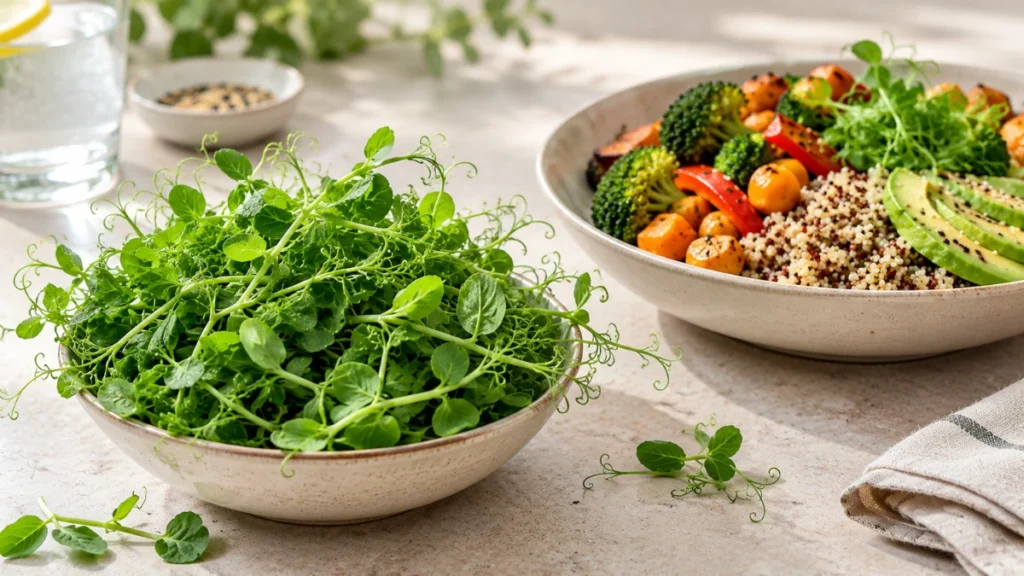
Pea shoots have a fresh, mildly sweet flavor and tender texture, making them easy to add to everyday meals. They can be enjoyed raw or cooked, depending on the dish.
Here are some simple ways to eat them:
- Add them to salads: Toss fresh pea shoots with cucumber, carrots, tomatoes, or your favorite dressing.
- Use them in sandwiches and wraps: Add a handful for a fresh, tender crunch.
- Add them to grain bowls: Top rice, quinoa, or other grain-based meals with fresh pea shoots just before serving.
- Use them as a topping: Add them to noodles, soups, or savory dishes for a fresh green element.
- Blend them into smoothies: A small handful can be blended with fruit and other greens.
- Add them to cooked dishes: Stir pea shoots into soups or other dishes near the end of cooking to help retain their delicate texture.
For raw preparations, choose fresh, tender pea shoots and wash them thoroughly under running water before eating. If you prefer them cooked, a quick sauté or brief steaming is usually enough—see the next section for an easy cooking method.
How to Cook Pea Shoots
Pea shoots cook quickly, so they generally need only a short time over heat. Overcooking can make their delicate texture less appealing.
Quick Garlic Sauté
One of the easiest ways to cook pea shoots is a simple garlic sauté:
- Wash the pea shoots thoroughly and drain well.
- Heat a small amount of oil in a pan and lightly sauté minced garlic.
- Add the pea shoots and toss over medium-high heat for about 1–2 minutes, until they soften slightly but remain bright and tender.
- Season with a pinch of salt and serve immediately.
You can also steam pea shoots briefly if you prefer a lighter preparation. A 2025 study examining different cooking methods found that steaming preserved antioxidant activity better than boiling or microwaving in the tested pea shoots. Research on cooking methods and antioxidant activity in pea shoots
For everyday cooking, the goal is simple: cook them briefly rather than treating them like tougher leafy vegetables.
Can You Eat Pea Shoots Raw?
Yes, fresh pea shoots can be eaten raw. Their tender leaves and stems work well in salads, sandwiches, wraps, and as a topping for other dishes.
However, raw pea shoots should be handled like other fresh produce. Wash them thoroughly under running water before eating, keep them refrigerated, and avoid using greens that look slimy, wilted, or spoiled.
It is also important not to confuse pea shoots with pea sprouts. Food-safety concerns are particularly important with raw or lightly cooked sprouts because sprouts are grown in warm, humid conditions that can support the growth of harmful bacteria. FDA: Selecting and Serving Produce Safely
So, while fresh pea shoots can be enjoyed raw, good produce hygiene is still important.
How to Choose and Store Pea Shoots
When buying pea shoots, look for fresh, bright green leaves and tender stems. Avoid bunches that appear slimy, yellowing, excessively wilted, or have damaged leaves.
For storage, keep pea shoots refrigerated and use them while they are fresh. If they seem damp, gently pat them dry before storing to help prevent premature spoilage. A clean, breathable container or loosely wrapped bag can help maintain their quality.
Before eating, check the shoots for signs of spoilage and wash them thoroughly under running water.
Fresh pea shoots are delicate, so buying smaller amounts and using them within a few days can help you enjoy their best texture and flavor.
Frequently Asked Questions About Pea Shoots
Are pea shoots healthy?
Yes. Pea shoots can be a nutritious addition to a balanced diet. They provide fiber, vitamin C, vitamin A, vitamin K, potassium, and naturally occurring plant compounds, making them an easy way to add more variety to your vegetable intake.
Are pea shoots the same as pea sprouts?
No. Pea sprouts are germinated seeds harvested at an earlier stage, while pea shoots are the young leaves, tender stems, and tendrils of the growing pea plant. Although the terms may sometimes be used loosely, they generally refer to different stages of growth.
Can you eat pea shoots raw?
Yes. Fresh pea shoots can be eaten raw in salads, sandwiches, wraps, and other dishes. Wash them thoroughly under running water before eating and keep them refrigerated until use.
Do pea shoots count as microgreens?
Not always. Pea shoots and pea microgreens are both young pea plants, but the terms generally describe different harvest stages. Microgreens are typically harvested as young seedlings, while pea shoots are harvested for their tender leaves, stems, and tendrils.
What do pea shoots taste like?
Pea shoots have a fresh, mildly sweet, pea-like flavor with a tender texture. Their delicate taste works well in both raw dishes and lightly cooked recipes.
Final Thoughts
Pea shoots are a simple way to add variety to your meals while enjoying a fresh, tender leafy green. They provide fiber, vitamins, minerals, and naturally occurring plant compounds, while their mild flavor makes them easy to use in everyday dishes.
Enjoy them raw in salads and sandwiches, or lightly cook them for a quick side or addition to other meals. As with any vegetable, pea shoots are best enjoyed as one part of a varied, balanced diet alongside other vegetables, fruits, whole grains, legumes, and nutritious foods.
