
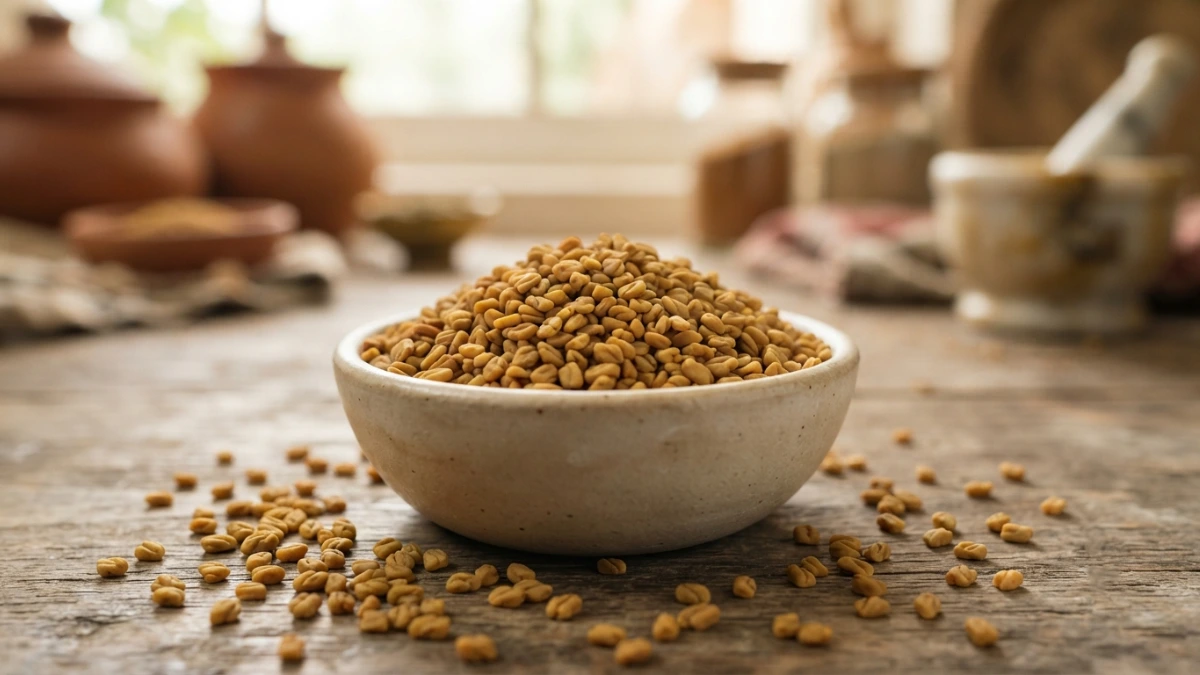
Wondering how to consume fenugreek seeds beyond soaking them in water overnight? Methi dana can be used in several ways, including soaked seeds, fenugreek water, powder, tea, and everyday cooking. Fenugreek (Trigonella foenum-graecum) has been used as a spice and traditional herbal ingredient for centuries. Its seeds contain fiber, protein, iron, magnesium, and other plant compounds, and have been studied for potential effects on blood sugar and other health outcomes. However, research does not establish one universally “best” preparation or dose for everyone.
So, should you eat the soaked seeds or just drink the water? Can you swallow fenugreek seeds directly, and how much is reasonable? This guide covers 5 practical ways to consume fenugreek seeds, what research says about common uses, and important precautions to know before making fenugreek seeds a regular part of your diet.
In This Article
What Is Fenugreek and Why Do People Consume It?
Fenugreek is an herb whose small, golden-brown seeds are commonly known as methi dana in India. They have a slightly bitter, nutty flavor and are widely used as a spice in Indian and other cuisines. Fenugreek has also been used traditionally for various health purposes, although research evidence varies depending on the specific use. (NCCIH)
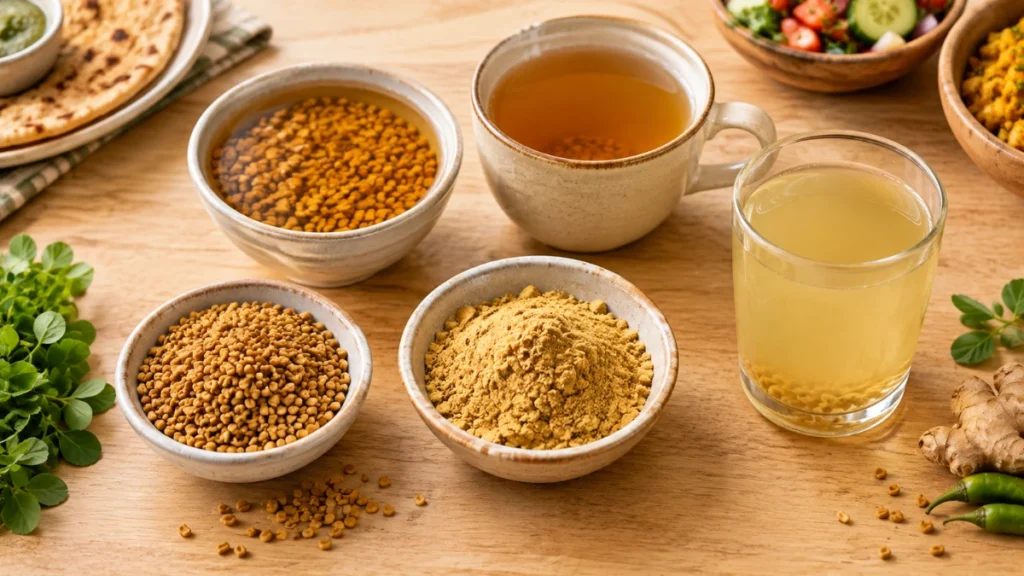
People consume fenugreek seeds in several forms, including whole or soaked seeds, fenugreek water, powder, tea, and cooked dishes. The seeds also provide nutrients such as fiber, protein, iron, magnesium, and manganese. For example, one tablespoon (about 11 grams) of whole fenugreek seeds contains around 3 grams of fiber and 3 grams of protein.
Fenugreek has been studied particularly for its potential effects on blood sugar, as well as cholesterol, menstrual symptoms, breastfeeding, and other health outcomes. However, the strength of evidence varies across these uses, and findings from concentrated extracts or supplements cannot automatically be applied to ordinary amounts used in food.
So, there is no single preparation proven to provide the maximum benefits for everyone. The most practical choice depends on how you want to include fenugreek in your diet and what form you can comfortably consume.
5 Ways to Consume Fenugreek Seeds
1. Soak Fenugreek Seeds Overnight
Soaking is one of the simplest ways to consume fenugreek seeds. It softens the seeds, making them easier to chew, and may make their naturally bitter taste milder.
How to prepare soaked fenugreek seeds:
- Add about 1 teaspoon of fenugreek seeds to a cup of water.
- Cover and leave them to soak overnight.
- In the morning, drain the water if you prefer, then chew and eat the softened seeds.
- You can also add them to breakfast or another meal instead of eating them on their own.
You may also see recommendations to drink the soaking water along with the seeds. However, there is not enough evidence to show that overnight soaking makes fenugreek more beneficial than other preparation methods.
If you’re new to fenugreek, starting with a small food-sized amount may be more comfortable. Larger amounts can cause digestive symptoms such as gas, bloating, or diarrhea in some people. (NCCIH)
Soaked seeds or just the water? If you tolerate the seeds, eating them provides the fiber and other components present in the whole seed. Drinking only the soaking water is a different preparation, and its effects should not automatically be assumed to be the same as eating the seeds.
2. Drink Fenugreek Seed Water
Fenugreek seed water is a popular way to consume methi dana. It is usually made by soaking the seeds in water for several hours or overnight and then drinking the infused water.
How to make fenugreek seed water:
- Add about 1 teaspoon of fenugreek seeds to a glass or cup of water.
- Cover and leave it to soak overnight.
- Strain the water in the morning.
- Drink the infused water on its own or alongside breakfast.
You may see claims that drinking fenugreek water on an empty stomach provides special health benefits. However, there is not enough evidence to show that taking fenugreek specifically in the morning or on an empty stomach makes it more effective. Research has also used different preparations and doses, so findings from other forms of fenugreek cannot automatically be applied to homemade fenugreek water.
Fenugreek has been studied for possible effects on blood sugar, but the evidence is not strong enough to use it as a replacement for diabetes medication or medical care. (NCCIH)
If you prefer, you can also eat the softened seeds after straining the water. This gives you the whole seed rather than only the infused water, but there is no established evidence that doing so makes fenugreek more effective.
3. Add Fenugreek Seed Powder to Foods
If you find whole fenugreek seeds too bitter or difficult to chew, fenugreek seed powder can be an easier way to include them in your diet. Ground fenugreek can be used in small amounts as a spice.
You can add fenugreek powder to:
- Dal and lentil dishes
- Vegetable curries
- Soups and stews
- Homemade spice blends
- Savory yogurt or raita
- Dough or batter for certain recipes
Because fenugreek has a naturally strong, slightly bitter flavor, you usually don’t need much to add its characteristic taste to a dish. Using it in regular meals can also be more convenient than preparing a separate drink.
However, fenugreek powder should not be treated as equivalent to a concentrated fenugreek supplement. Research has used different forms and doses, so findings from extracts or supplements cannot automatically be applied to culinary amounts.
If buying packaged fenugreek powder, choose one intended for food use and check the ingredient label for any added ingredients.
4. Make Fenugreek Seed Tea
Fenugreek seed tea is another simple way to consume methi without chewing the seeds. It has a naturally bitter, earthy flavor, so you can adjust its strength to your taste.
How to make fenugreek tea:
- Lightly crush 1 teaspoon of fenugreek seeds.
- Add them to about 1 cup (240 ml) of water.
- Bring to a gentle boil and simmer for a few minutes.
- Strain into a cup and let it cool slightly before drinking.
There is not enough evidence to show that drinking fenugreek as tea provides greater health benefits than consuming the seeds in food. Research has used different forms and doses of fenugreek, so findings from one preparation cannot automatically be applied to homemade tea. (NCCIH)
If you’re trying fenugreek for the first time, start with a mild preparation rather than making a highly concentrated tea. Larger amounts may cause digestive symptoms such as gas, bloating, or diarrhea in some people.
5. Add Fenugreek Seeds to Everyday Meals
You don’t have to prepare fenugreek water or tea to include methi in your diet. Fenugreek seeds can also be used as a spice in everyday cooking, adding a slightly bitter, nutty flavor to dishes such as:
- Dal and lentils
- Vegetable curries
- Homemade pickles
- Spice blends
- Savory rice dishes
- Soups and stews
For cooking, fenugreek seeds are often lightly roasted or tempered in oil with other spices. This can deepen their nutty flavor, but using too much may make a dish noticeably bitter.
Adding a small amount to regular meals can be a convenient way to consume fenugreek without preparing a separate drink. However, culinary amounts are generally different from the quantities used in some fenugreek supplements or clinical studies, so their effects should not automatically be considered equivalent.
Which Way of Consuming Fenugreek Seeds Is Best?
There isn’t one universally best way to consume fenugreek seeds. The right option depends on what you prefer, how well you tolerate it, and how you want to include it in your diet.
If you want the whole seed, soaked seeds, fenugreek powder, or seeds used in cooking allow you to consume the seed itself. Fenugreek water and tea are infused preparations; when the seeds are strained out, you are not consuming the whole seed.
Here’s a simple comparison:
| Method | What you consume | Practical use |
|---|---|---|
| Soaked seeds | Whole softened seeds | Easy to chew after soaking |
| Fenugreek seed water | Infused water | Simple drink |
| Fenugreek powder | Ground whole seeds | Add to regular meals |
| Fenugreek tea | Infused water | Warm drink option |
| Cooking with seeds | Whole seeds in food | Everyday use |
Soaking, making tea, or drinking fenugreek water has not been proven to provide special or maximum benefits compared with other preparation methods. Research has used different forms and amounts of fenugreek, making it difficult to identify one preparation as the best for everyone. (NCCIH)
For most people, choosing a form that you enjoy and can comfortably include in a balanced diet is more practical than looking for a single “most powerful” method.
How Much Fenugreek Can You Consume in a Day?
If you’re wondering how many spoons of fenugreek seeds you should take per day, there isn’t one standard amount that applies to everyone. Research has used different doses depending on the form and purpose, including whole seeds, powders, and extracts, so these amounts cannot simply be turned into a daily recommendation for homemade fenugreek water or food use. (NCCIH)
For everyday use, start with a small food-sized amount, especially if you’re new to fenugreek. You can add a small amount to meals or try a mild preparation such as soaked seeds or tea and see how your body responds. Taking more does not necessarily mean greater benefits, and larger amounts may cause gas, bloating, diarrhea, or stomach discomfort in some people.
If you’re using fenugreek specifically for a health condition, don’t treat a particular number of teaspoons as a medically established dose. The appropriate amount can depend on the form of fenugreek, your health status, and any medications you take.
What Does Research Say About Fenugreek for Different Health Goals?
People often search for how to consume fenugreek seeds for diabetes, weight loss, hair growth, testosterone, or breastfeeding. Fenugreek has been studied for some of these uses, but the evidence varies considerably by health goal.
Fenugreek and Blood Sugar
Fenugreek has been investigated for its possible effects on blood glucose, and some research suggests it may have a blood-sugar-lowering effect. However, the evidence is not strong enough to use fenugreek as a replacement for diabetes medication or prescribed treatment. (NCCIH)
If you have diabetes or take blood-sugar-lowering medication, talk with your healthcare professional before regularly using concentrated amounts of fenugreek.
Fenugreek and Weight Loss
Fenugreek is sometimes promoted as a weight-loss food or drink, particularly as fenugreek water. However, drinking fenugreek water does not automatically cause fat loss.
Fenugreek can be part of a balanced diet, but weight management depends on factors such as overall calorie intake, diet quality, physical activity, and sleep rather than a single food or drink.
Fenugreek for Hair
Fenugreek seeds are traditionally used in some hair and scalp practices, which is why fenugreek for hair growth is a common search. However, evidence that eating fenugreek or drinking fenugreek water directly promotes hair growth is limited.
It should therefore not be presented as a proven treatment for hair loss.
Fenugreek for Breastfeeding
Fenugreek has been studied and traditionally used as a galactagogue, a substance intended to increase breast milk production. However, research findings are mixed, so it cannot be assumed to increase milk supply for everyone. (NCCIH)
Anyone who is breastfeeding and considering fenugreek supplements should discuss them with a healthcare professional, particularly if there are health concerns involving the parent or baby.
Fenugreek and Testosterone
Fenugreek supplements are sometimes marketed for testosterone and exercise performance. Some small studies have investigated these effects, but this does not establish that drinking fenugreek water or eating ordinary amounts of methi seeds will reliably increase testosterone.
Overall, fenugreek can be a useful culinary ingredient, but its preparation should not be promoted as a guaranteed treatment for a specific health goal.
What to Avoid While Taking Fenugreek?
Fenugreek is commonly used as a food ingredient, but consuming larger amounts or concentrated supplements may not be suitable for everyone. A few precautions are worth knowing before making it a regular part of your routine.
Don’t Take Large Amounts Just for More Benefits
More fenugreek does not necessarily mean more health benefits. Larger amounts can cause digestive symptoms such as gas, bloating, diarrhea, or stomach discomfort. Start with a small food-sized amount if you’re not used to it. (NCCIH)
Be Careful If You Take Blood Sugar Medication
Fenugreek may lower blood sugar, so combining larger amounts or supplements with diabetes medication could potentially cause blood sugar to drop too much. If you take medication for diabetes, discuss regular fenugreek use with your healthcare professional. (NCCIH)
Check for Possible Medication Interactions
Fenugreek may interact with certain medicines, including medications that affect blood sugar or blood clotting. This is particularly relevant when using concentrated supplements rather than the small amounts normally used in cooking.
If you take prescription medicines regularly, check with your doctor or pharmacist before using fenugreek supplements or consuming large amounts.
Be Extra Careful During Pregnancy
Fenugreek is commonly used as a food spice, but medicinal or concentrated amounts are different. NCCIH advises against using fenugreek during pregnancy in amounts greater than those normally found in food because of safety concerns. (NCCIH)
Stop If You Develop a Reaction
Some people may experience digestive discomfort or other reactions after consuming fenugreek. If you develop unusual symptoms after taking it, stop using it and seek medical advice if the symptoms are significant or persistent.
For most people, the simplest approach is to treat fenugreek primarily as a food ingredient rather than a high-dose remedy. That keeps the focus on adding variety to your diet instead of relying on fenugreek for a specific health outcome.
Frequently Asked Questions About Consuming Fenugreek Seeds
Can you swallow fenugreek seeds with water?
You can consume whole fenugreek seeds with water, but dry seeds can be hard to chew and have a bitter taste. Soaking them first softens the seeds and may make them easier to eat. If you find them difficult to swallow, adding fenugreek powder to food is another option.
Is it better to eat soaked fenugreek seeds or drink the water?
They are different preparations. Eating the softened seeds means you consume the whole seed, including its fiber, while drinking only the strained water does not provide the whole seed. There is not enough evidence to show that the soaking water provides greater benefits.
Can I consume fenugreek seeds every day?
Fenugreek can be included regularly as a food or spice if you tolerate it. However, there is no universally established daily dose, and larger amounts may cause digestive symptoms. Concentrated supplements require more caution than the small amounts typically used in food.
Should fenugreek seeds be soaked overnight?
Overnight soaking is a convenient preparation method, but it has not been proven to make fenugreek more beneficial than other forms. You can also use the seeds in cooking, grind them into powder, or prepare them as tea.
Is fenugreek water good for weight loss?
Fenugreek water does not automatically cause fat loss. Although fenugreek is sometimes promoted for weight loss, there is not enough evidence to consider homemade fenugreek water a weight-loss treatment.
What is the best way to consume fenugreek seeds?
There is no single best method for everyone. Soaked seeds, powder, tea, fenugreek water, and cooking are all practical options. Choose a form that you enjoy, tolerate well, and can comfortably include in a balanced diet.
What should you avoid while taking fenugreek?
Avoid unnecessarily large amounts, particularly concentrated supplements. People taking blood-sugar-lowering or blood-thinning medicines, pregnant people considering medicinal amounts, and anyone with a relevant medical condition should consult a healthcare professional before using larger amounts of fenugreek. (NCCIH)
Final Thoughts
There are several practical ways to consume fenugreek seeds, from soaking and making fenugreek water or tea to adding the seeds or powder to everyday meals. There is no single preparation proven to provide the maximum benefits for everyone, so choose a form that fits your diet and that you tolerate well.
Start with a small food-sized amount, especially if you’re new to fenugreek, and remember that more is not necessarily better. Fenugreek can be a useful part of a balanced diet, but it should not be treated as a cure or quick fix for a specific health problem.
