
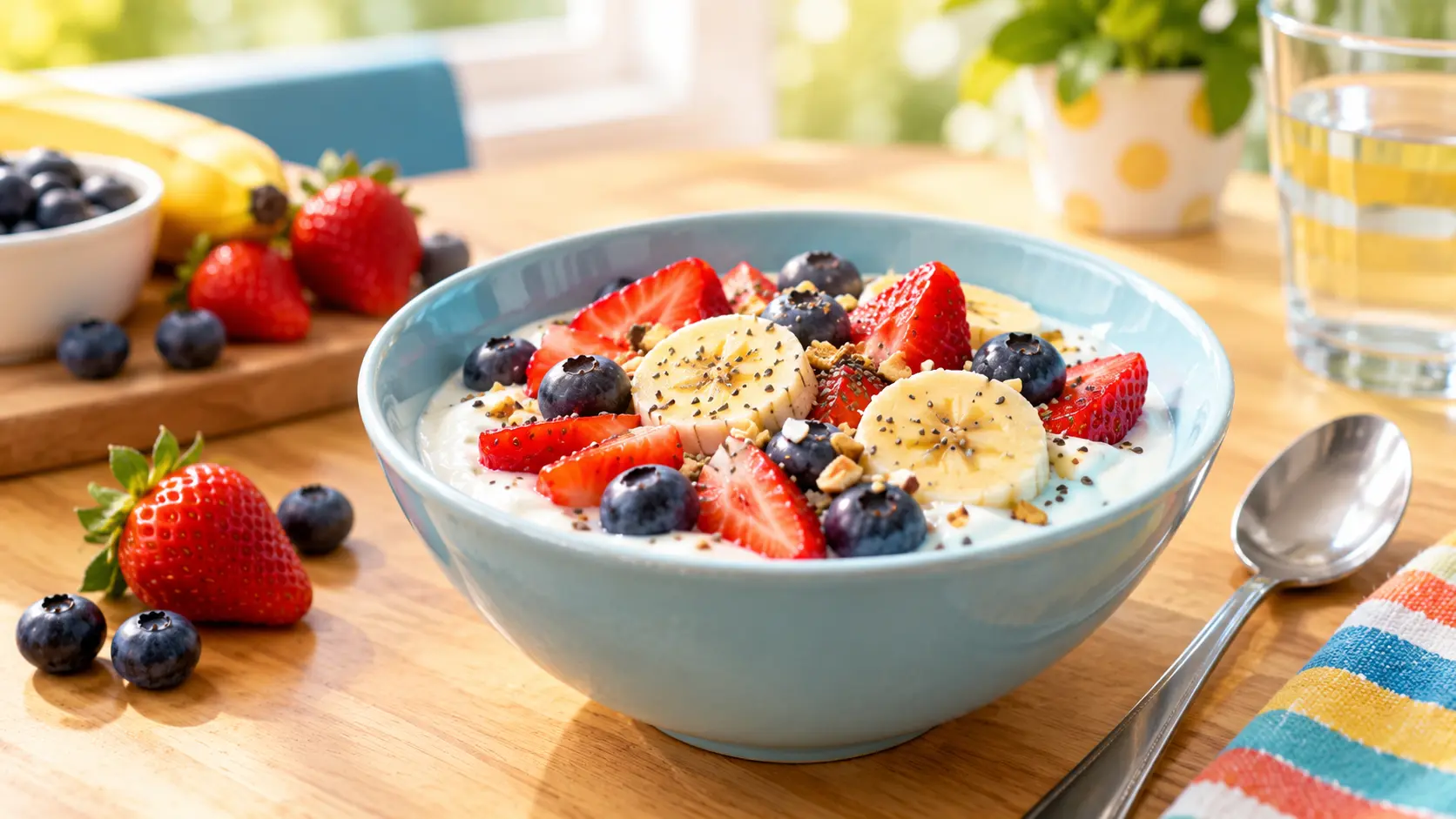
Finding healthy foods for kids doesn’t have to mean planning perfect meals or filling every plate with “superfoods.” What matters more is offering a variety of nutritious foods that children can enjoy regularly across breakfast, lunch, dinner, and snacks.
So, what are some healthy foods for kids that are practical for everyday eating? This guide covers 12 nutritious choices, from eggs and yogurt to oats, lentils, fruits, vegetables, and more. For each one, you’ll find why it can be a useful part of a child’s diet and simple ways to serve it.
The goal isn’t to make every meal perfect. It’s to make healthy eating simple, varied, and realistic for everyday family life.
In This Article
What Makes a Food Healthy for Kids?
A healthy diet for kids doesn’t have to be built around special “superfoods.” What matters is the overall eating pattern. Children benefit from a variety of foods, including fruits, vegetables, whole grains, protein foods, dairy or suitable alternatives, and healthy fats. These foods can provide important nutrients such as protein, fiber, vitamins, and minerals while fitting into everyday meals and snacks.
No single food provides everything a growing child needs, so variety matters more than making every meal perfectly balanced. Instead of trying to include every food group at every meal, think about the variety your child gets across the day and week. With that in mind, here are 12 nutritious foods that can fit into breakfast, lunch, dinner, or snacks.
12 Healthy Foods for Kids
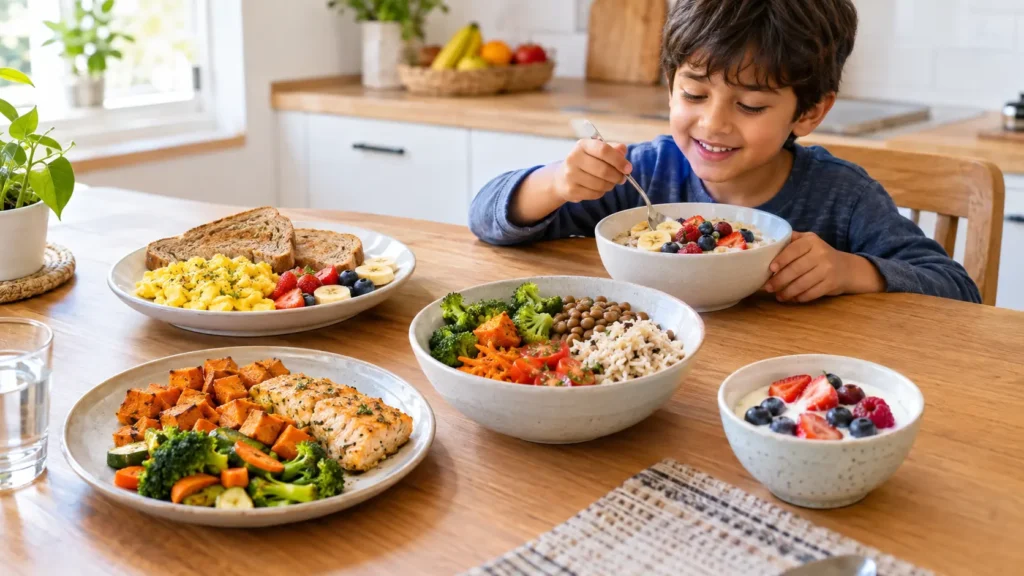
Here are 12 nutritious foods that can fit easily into a child’s meals and snacks. Each one offers useful nutrients and can be prepared in simple, family-friendly ways.
1. Eggs
Eggs are an easy way to add protein to a child’s meal, along with several vitamins and minerals. They are also versatile, so they can be prepared in different ways and included in regular family meals.
Easy ways to serve: Scrambled eggs with whole-grain toast, a boiled egg with fruit, an omelet with vegetables, or chopped egg added to a sandwich.
Best fit: Breakfast • Lunch • Dinner
2. Yogurt
Yogurt is a convenient source of protein and calcium and can be an easy way to include dairy in a child’s diet. When choosing yogurt for children, opting for plain or lower-added-sugar varieties can help limit added sugar. CDC healthy eating guidance
Easy ways to serve: Mix plain yogurt with berries or banana, add it to oats, serve it as a dip with soft fruit or vegetables, or use it as a base for a simple breakfast bowl.
Best fit: Breakfast • Snack • Lunch
3. Oats
Oats are a simple whole-grain food that provides carbohydrates, fiber, and some protein. They are an easy base for breakfast and can be combined with other nutritious foods such as fruit, yogurt, or nut and seed butter.
Easy ways to serve: Make oatmeal with milk or a suitable alternative and top it with banana or berries, mix oats into yogurt, or use them to make simple homemade oat pancakes.
Best fit: Breakfast • Snack
4. Lentils
Lentils are a practical source of plant-based protein and fiber, along with nutrients such as iron and folate. They are also versatile and can be added to a variety of family meals.
Easy ways to serve: Add cooked lentils to soups, stews, or curries, mix them into rice or grain bowls, or blend them into a smooth lentil soup for younger children.
Best fit: Lunch • Dinner
5. Beans
Beans provide plant-based protein and fiber, along with nutrients such as iron, folate, and potassium. Their variety and versatility make them an easy way to include nutritious foods in a child’s regular meals.
Easy ways to serve: Add soft cooked beans to rice or grain bowls, mash them into a spread or dip, mix them into tacos or wraps, or add them to soups and stews.
Best fit: Lunch • Dinner • Snack
6. Fish
Fish provides high-quality protein and can also provide nutrients such as vitamin D, vitamin B12, iodine, and omega-3 fatty acids, depending on the type. For children, choosing a variety of lower-mercury fish can help make fish part of a healthy eating pattern. FDA advice on choosing fish for children
Easy ways to serve: Bake or steam boneless fish and serve it with vegetables and sweet potato, flake cooked fish into rice or pasta, or add it to soft tacos or wraps.
Best fit: Lunch • Dinner
7. Sweet Potatoes
Sweet potatoes are a good source of carbohydrates and fiber and are especially rich in beta-carotene, which the body can convert to vitamin A. NIH — Vitamin A and Carotenoids Their naturally sweet flavor and soft texture can also make them easy to include in meals for children.
Easy ways to serve: Roast or bake them as soft wedges, mash them as a side dish, add them to soups, or combine them with beans, lentils, or eggs for a more filling meal.
Best fit: Breakfast • Lunch • Dinner • Snack
8. Broccoli
Broccoli provides fiber, vitamin C, vitamin K, and folate, along with other nutrients found in vegetables. Offering it in different textures and preparations can give children opportunities to become familiar with its taste and texture over time. American Academy of Pediatrics — Helping Children Eat More Fruits and Vegetables
Easy ways to serve: Steam or roast broccoli until tender, add small pieces to pasta or rice, mix it into an omelet, or serve it with a simple yogurt-based dip.
Best fit: Lunch • Dinner
9. Berries
Berries such as strawberries, blueberries, and raspberries provide fiber, vitamin C, and other nutrients and plant compounds. Their naturally sweet flavor makes them an easy way to add fruit to a child’s meals and snacks.
Easy ways to serve: Add fresh or frozen berries to oatmeal or yogurt, serve them alongside breakfast, blend them into a smoothie, or offer them as a simple snack.
Best fit: Breakfast • Snack
10. Bananas
Bananas are an easy-to-eat fruit that provides carbohydrates, fiber, and potassium. Their soft texture and naturally sweet taste make them convenient for breakfasts and snacks, and they can be combined with other foods such as yogurt, oats, or nut and seed butter.
Easy ways to serve: Slice banana over oatmeal or yogurt, add it to a smoothie, serve it with whole-grain toast and nut or seed butter, or simply offer it as a snack.
Best fit: Breakfast • Snack
11. Avocado
Avocado provides unsaturated fats, fiber, and several vitamins and minerals. Its soft texture makes it easy to mash or combine with other foods, giving parents a simple way to include healthy fats in a child’s diet.
Easy ways to serve: Mash it onto whole-grain toast, add it to a sandwich or wrap, mix it into a grain bowl, or serve it alongside eggs, beans, or vegetables.
Best fit: Breakfast • Lunch • Dinner
12. Nut or Seed Butter
Nut and seed butters, such as peanut, almond, or sunflower seed butter, can provide protein, unsaturated fats, and other nutrients. Choose varieties with little or no added sugar and avoid products with excessive added salt.
Easy ways to serve: Spread a thin layer on whole-grain toast, stir it into oatmeal or yogurt, or pair a small amount with banana or other soft fruit. For young children, avoid giving thick spoonfuls of nut butter on its own because of choking risk; instead, spread it thinly or prepare it in a texture appropriate for the child’s age and eating skills. American Academy of Pediatrics — Choking Prevention
Best fit: Breakfast • Snack
Easy Ways to Include These Foods in a Child’s Day
You don’t need to serve all 12 foods in one day. Instead, mix and match them across meals and snacks and aim for variety over the week.
Breakfast
Combine foods from different food groups to create a balanced breakfast. For example, oats with yogurt and banana, or eggs with whole-grain toast and berries.
Lunch and Dinner
Build meals around a protein food, a grain or other starchy food, and vegetables or fruit. Lentils with grains and broccoli, beans with avocado and whole-grain wraps, or fish with sweet potato and vegetables are simple combinations that can work across different cuisines.
Snacks
Keep snacks simple and appropriate for your child’s age and appetite. Yogurt with berries, banana with a thin layer of nut or seed butter, or avocado on whole-grain toast are a few easy options.
Healthy Breakfast Ideas for Kids
A balanced breakfast doesn’t need to be complicated. Many healthy breakfast foods for kids can be combined to provide a mix of protein, whole grains, fruit, dairy or suitable alternatives, and other nutritious foods.
Some simple combinations include:
- Oatmeal + yogurt + banana or berries
- Eggs + whole-grain toast + fruit
- Yogurt + oats + berries
- Whole-grain toast + avocado + egg
- Oat pancakes + yogurt + sliced banana
You can adjust these combinations based on your child’s age, preferences, and what your family normally eats. The goal is variety—not making the same “perfect” breakfast every morning.
Healthy Lunch Ideas for Kids
A healthy lunch for kids can be simple and flexible. A practical approach is to combine a protein food with a grain or other starchy food and add a fruit or vegetable when it works for your child’s preferences and appetite.
Some easy combinations include:
- Beans + whole-grain wrap + avocado + soft vegetables
- Lentils + rice or another whole grain + broccoli
- Baked fish + sweet potato + vegetables
- Egg sandwich + fruit + yogurt
- Lentil or bean soup + whole-grain toast + fruit
For school lunches, choose foods that are practical to pack and easy for your child to eat. A lunch doesn’t have to look elaborate to be nutritious.
Healthy Snack Ideas for Kids
Healthy snacks for kids don’t need to be complicated. A simple snack can combine fruit or vegetables with a source of protein or healthy fat, or pair a whole-grain food with yogurt or another nutritious option.
Try ideas such as:
- Yogurt + berries
- Banana + thinly spread nut or seed butter
- Apple slices + nut or seed butter
- Whole-grain toast + avocado
- Boiled egg + fruit
- Sweet potato wedges + plain yogurt dip
- Whole-grain crackers + mashed avocado
- Oatmeal + banana
Keep portions appropriate for your child’s age and appetite, and vary the choices rather than relying on the same snack every day. For younger children, prepare foods in age-appropriate textures and sizes to help reduce choking risks. CDC — Foods and Drinks to Encourage for Infants and Toddlers
What About Sweets and Packaged Foods?
Healthy eating for kids doesn’t mean that every sweet or packaged food needs to be completely off the menu. The bigger picture is what your child eats most of the time and whether nutritious foods make up a regular part of their diet.
Foods high in added sugar, sodium, or saturated fat are generally better kept as occasional choices rather than everyday staples. CDC healthy eating guidance Instead, keep offering a variety of nutritious foods while leaving room for occasional treats.
For everyday meals and snacks, focus on foods such as fruits, vegetables, whole grains, protein foods, dairy or suitable alternatives, and healthy fats. This approach can make healthy eating more practical and sustainable for the whole family.
What If Your Child Is a Picky Eater?
Picky eating is common in childhood, and children may need repeated opportunities to become comfortable with a new food. Instead of forcing them to eat, continue offering a variety of foods and give them opportunities to explore different tastes and textures. American Academy of Pediatrics — Helping Children Try New Foods
A useful approach is to serve a new food alongside something your child already enjoys. For example, you could offer broccoli with a familiar grain, or a new fruit alongside yogurt. Keep portions small and let your child decide how much to eat from what is offered.
Try not to turn every meal into a battle. A relaxed mealtime environment and continued exposure to different nutritious foods can help children gradually become more comfortable with a wider variety of foods.
Frequently Asked Questions
What are the 10 most healthy foods for kids?
There isn’t one official list of the “10 healthiest” foods for children. Kids need a variety of foods from different food groups rather than relying on a fixed set of foods. Nutritious options include eggs, yogurt, oats, lentils, beans, fish, vegetables, fruits, avocado, and age-appropriate nut or seed butter.
What is the healthiest food for a kid?
There isn’t a single healthiest food for every child. A healthy diet for kids includes a variety of fruits, vegetables, whole grains, protein foods, dairy or suitable alternatives, and healthy fats. What matters is the overall eating pattern and variety over time.
What are five healthy foods for kids?
Five practical choices include eggs, yogurt, oats, lentils, and berries. However, these aren’t necessarily “the healthiest” five foods—other nutritious foods can also contribute important nutrients to a child’s diet.
What is the 5-2-1-0 rule for kids?
The 5-2-1-0 rule is a simple healthy-routines framework used by some childhood wellness programs: 5 servings of fruits and vegetables, 2 hours or less of recreational screen time, 1 hour or more of physical activity, and 0 sugary drinks each day. American Academy of Pediatrics — The 5-2-1-0 Approach It is a general framework rather than a complete nutrition plan, and children’s needs can vary by age.
Final Thoughts
Healthy eating for kids is about offering a variety of nutritious foods regularly rather than trying to make every meal perfect.
From eggs and yogurt to oats, lentils, fruits, vegetables, fish, and healthy fats, there are plenty of simple foods to rotate through the week. Start with foods your child already enjoys, introduce new foods gradually, and keep offering a variety of choices as their tastes develop.
