
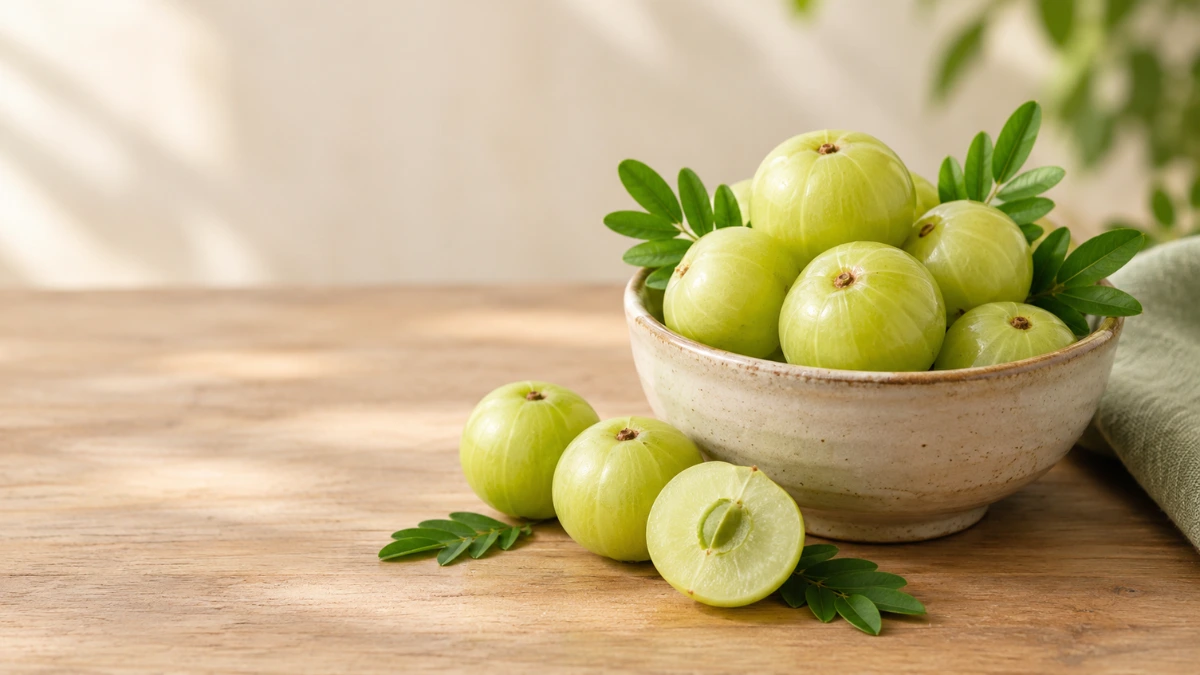
Amla, also known as Indian gooseberry, is a tangy fruit widely used in Indian diets for its nutritional value. But if its sour taste makes it difficult to eat raw, you may wonder how else you can include it in your daily routine.
There are several ways to consume amla, from eating it fresh to drinking amla juice or adding amla powder to water and food. In this guide, you’ll learn how to consume amla in different ways, how to choose between common forms, and what to know about daily intake, timing, and precautions.
In This Article
7 Ways to Consume Amla
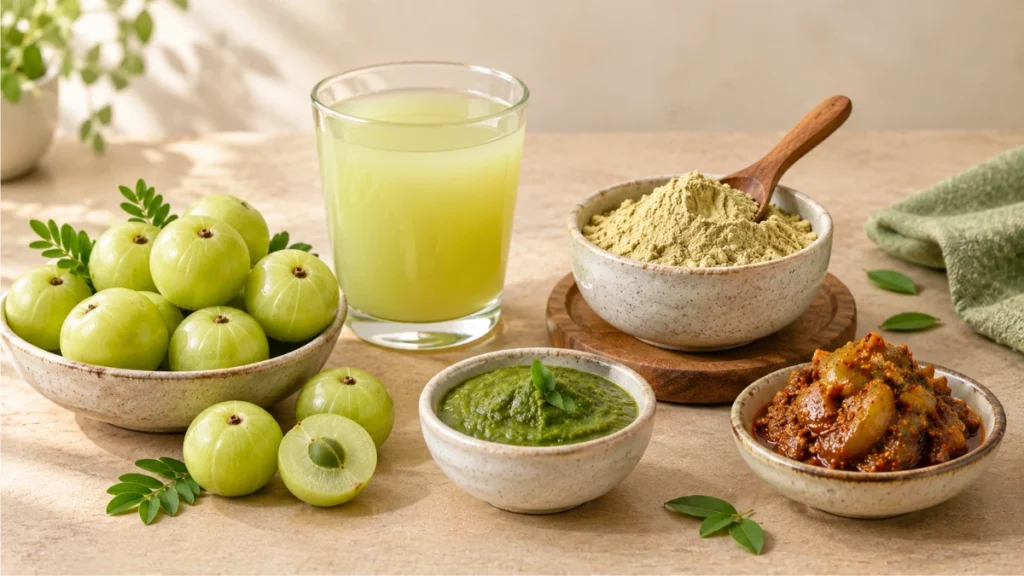
Amla can be enjoyed in different forms, depending on your taste, dietary preferences, and convenience. From eating it fresh to adding it to everyday recipes, these methods can help you include amla in your diet without relying on supplements.
1. Eat Fresh, Raw Amla
Eating fresh amla is one of the simplest ways to enjoy the fruit. Wash it thoroughly under running water, cut it into smaller pieces, and remove the hard seed before eating. Its naturally sour, slightly bitter taste may take some getting used to. If you find it too tart on its own, try eating it alongside a meal or adding a few small pieces to a salad.
Fresh amla contains vitamin C and other plant compounds, although its nutritional composition can vary by variety and growing conditions. Research reviews have documented this variation in amla’s nutritional composition. Vitamin C content may also be affected by storage and preparation, so the amount you get from a serving is not always the same.
If you enjoy raw amla, you can eat it as part of a varied diet. You do not need to force yourself to eat it plain to benefit from its nutritional value.
2. Drink Amla Juice
Amla juice is a convenient option if you find fresh amla too sour to eat on its own. To make it at home, wash the fruit thoroughly, remove the seeds, and blend the pieces with water. You can drink the mixture without straining it or strain out the pulp for a smoother texture.
For more fiber, retain the pulp instead of straining the juice. Research-based guidance from the Mayo Clinic explains how juicing differs from blending whole fruits. If you prefer packaged amla juice, check the ingredient list and nutrition label for added sugar and other ingredients.
If the juice tastes too strong, dilute it with water to suit your taste. Amla juice can fit into a balanced diet, but drinking it every day is not essential for good health. When practical, eating whole fruit is generally a better way to retain dietary fiber, as explained in the CDC’s guidance on choosing whole fruits over juice.
3. Consume Amla Powder
Amla powder is a convenient option when fresh fruit is unavailable or you prefer a form that is easy to store. You can mix it with water or add a small amount to smoothies, yogurt, or porridge, following the product’s serving instructions.
Amla powder is not always nutritionally equivalent to fresh amla. Research comparing fresh fruit with dried amla powders has found that vitamin C content can vary depending on the drying method. You can read this published study on the nutritional properties of fresh and dried amla for more details.
When buying amla powder, check the ingredient list to see whether it contains only amla or includes other ingredients. Follow the serving instructions on the label, as products can differ in concentration and composition. Avoid assuming that larger amounts will provide greater benefits, and consult a healthcare professional before using concentrated amla supplements regularly if you take medication or have a medical condition.
4. Add Amla to Chutney
Amla chutney is an easy way to enjoy this tangy fruit with everyday meals. Blend washed, deseeded amla with fresh coriander, mint, green chilli, and your preferred seasonings to make a flavorful chutney. Adjust the ingredients to suit your taste.
Making chutney at home lets you control how much salt you add. Serve it with roti, snacks, or sandwiches for a tangy twist. Prepare a small batch for freshness, and store leftovers in a clean, covered container in the refrigerator. For food safety, FoodSafety.gov recommends refrigerating perishable foods within two hours.
5. Eat Amla Pickle or Preserve
Amla pickle and sweetened amla preserves are traditional ways to enjoy this fruit if you prefer a stronger or sweeter flavor. Amla pickle is commonly prepared with salt, oil, and spices, while sweetened preserves contain added sugar. The Tamil Nadu Agricultural University guide to amla processing describes preparation methods for both amla pickle and preserve.
You can enjoy a small portion alongside your regular meals, but check the ingredient list and nutrition label if you are monitoring your sodium or added sugar intake. The amounts can vary considerably between recipes and products.
Pickles and sweetened preserves offer different nutritional profiles from fresh amla because of their added ingredients and preparation methods. Enjoy them for variety and flavor, but do not assume they provide the same nutritional benefits as fresh fruit.
6. Add Amla to Everyday Meals
If you prefer not to eat amla on its own, try adding small amounts of fresh, deseeded amla to everyday dishes. Finely chop or grate it into salads, mix it into homemade chutneys or dips, or blend a little into a smoothie for a tangy flavor.
Adding amla to meals gives you another way to enjoy the fruit without relying only on juice or supplements. Start with a small amount and adjust it to your taste.
If you want to retain more vitamin C, consider adding freshly chopped amla after a dish has finished cooking rather than exposing it to prolonged heat. Vitamin C is sensitive to heat, and cooking can reduce the amount in foods. The NIH’s Vitamin C fact sheet explains vitamin C’s properties and dietary importance. However, the amount retained in amla will depend on the preparation method and cooking conditions.
7. Try Dried Amla
Dried amla is a convenient option when fresh fruit is unavailable or you prefer a chewy snack. It may be sold plain, salted, or sweetened, so check the ingredient list before buying.
Enjoy a small portion as a snack or add chopped dried amla to a homemade trail mix. Drying removes much of the fruit’s water, making dried amla more concentrated by weight than fresh fruit. However, its vitamin C content can change during drying and storage, depending on the processing method.
If you are watching your sugar or sodium intake, choose a variety with little or no added sugar or salt. Remember that dried amla products can differ in ingredients and nutritional composition, so check the label rather than assuming all varieties offer the same nutritional value.
How Much Amla Should You Consume in a Day?
There is no universally established daily serving size for amla that applies to everyone. The amount you choose depends on whether you eat fresh fruit, drink amla juice, or use amla powder or dried amla. These forms can differ in concentration, ingredients, and nutritional composition.
If you are new to fresh amla, start with a small portion and adjust it to your taste and tolerance. For juice and amla powder, check the product label and follow its serving instructions. Keep in mind that a serving of fresh fruit is not nutritionally equivalent to the same weight or volume of a concentrated product.
Eating amla as part of a varied, balanced diet does not mean you need to consume large amounts or take supplements. If you take regular medication or have an ongoing medical condition, consult a healthcare professional about dietary supplement safety and possible interactions before using concentrated amla supplements regularly.
What Is the Best Time to Consume Amla?
There is no established scientific evidence that eating amla at a particular time of day provides greater health benefits. You can enjoy it in the morning, alongside a meal, or as a snack, depending on your preference and how well you tolerate its sour taste.
If raw amla or amla juice causes stomach discomfort when consumed on an empty stomach, try having it with food instead. You do not need to eat amla first thing in the morning to include its nutrients in your diet.
Rather than following a strict timing rule, choose a way to consume amla that fits comfortably into your routine and supports an overall balanced diet.
Can You Consume Amla Daily?
For most people, fresh amla can be included in a varied, balanced diet. However, whether daily consumption is suitable depends on the portion, the form of amla, and individual circumstances.
Fresh fruit, juice, powder, and sweetened or salted preparations differ in their ingredients and nutritional composition. If you consume amla juice or powder regularly, check the product label and avoid assuming that larger amounts provide greater benefits.
Research on amla supplements is still developing. Findings from studies using concentrated or standardized extracts cannot automatically be applied to fresh amla eaten as food. If you plan to take concentrated amla supplements regularly, particularly if you use medication, consult a healthcare professional about their suitability and potential interactions. The NCCIH guide to dietary and herbal supplements provides general guidance on supplement safety.
How to Consume Amla for Hair Growth and Skin Health
Amla is commonly used in traditional hair and skincare routines, but there is not enough strong human evidence to conclude that eating amla directly promotes hair growth or improves skin in otherwise healthy people.
You can include amla in your diet by eating it fresh, drinking unsweetened amla juice, or mixing amla powder into food or water. These are ways to enjoy the fruit, not proven treatments for hair loss or skin concerns.
Amla contains vitamin C, which supports collagen formation and helps the body absorb iron from plant-based foods. The NIH explains these functions in its Vitamin C fact sheet. However, evidence that vitamin C is essential for normal body functions does not establish that consuming extra amla will make hair grow faster, prevent wrinkles, or treat a skin condition.
If you experience persistent hair loss or an ongoing skin problem, consult a qualified healthcare professional to identify the cause and discuss appropriate treatment.
Precautions When Consuming Amla
Amla can fit into a balanced diet, but keep these practical precautions in mind:
- Start with a small portion: If you are new to fresh amla or amla juice, begin with a small amount and see how well you tolerate it.
- Check added sugar and salt: Packaged amla juice, dried amla, pickles, and sweetened preserves may contain added sugar or salt. Read the ingredient list and nutrition label when monitoring your intake.
- Use supplements carefully: Amla supplements can differ in concentration and formulation from fresh fruit. Dietary supplements may also interact with medicines. Review the NCCIH guidance on dietary and herbal supplements and consult a healthcare professional before regularly using concentrated supplements if you take medication or have a medical condition.
- Do not replace medical treatment: Amla is a food, not a proven treatment for hair loss, skin conditions, or other medical problems. Do not stop or replace prescribed treatment with amla.
- Pay attention to unusual reactions: Stop using a product if you experience a suspected adverse reaction. Seek medical advice if symptoms persist or are severe.
For everyday use, focus on food-based forms you enjoy, check product ingredients, and remember that concentrated supplements are not automatically safer or more effective than fresh fruit.
Frequently Asked Questions
1. Can You Eat Raw Amla Directly?
Yes, you can eat fresh, raw amla after washing it thoroughly. Cut it into smaller pieces and remove the hard seed. If its sour taste is too strong, try eating it with a meal or adding small pieces to a salad.
2. Is It OK to Eat Amla Daily?
Fresh amla can be included in a varied, balanced diet, but there is no universally established daily amount that applies to everyone. If you plan to take concentrated amla supplements regularly, consult a healthcare professional, particularly if you take medication.
3. How Do You Eat Raw Amla in the Morning?
Wash the fruit, cut it into pieces, and remove the seed. You can eat it on its own or alongside breakfast. There is no established evidence that eating amla first thing in the morning provides greater health benefits than eating it at another time.
4. How Do You Consume Amla with Water?
You can blend washed, deseeded amla with water to make fresh juice, or mix amla powder into water according to the product’s serving instructions. The nutritional composition can vary between fresh fruit, juice, and powdered products, so they should not automatically be considered equivalent.
5. What Happens If You Eat Amla for 7 Days?
Eating amla for seven days does not guarantee noticeable changes in your hair, skin, or overall health. Amla contains vitamin C, which supports normal collagen formation and other essential functions. You can learn more in the NIH’s Vitamin C fact sheet. However, there is insufficient evidence to predict specific results from eating amla for exactly seven days.
Final Thoughts
Amla is a versatile fruit that you can enjoy fresh, as juice, in powder form, or as part of everyday meals. The right option depends on your taste, convenience, and dietary preferences.
Rather than following strict timing rules or consuming large amounts, focus on including amla in a balanced diet in a way that suits you. Check the ingredients of packaged products, use supplements cautiously, and remember that while amla provides useful nutrients, it is not a guaranteed treatment for hair, skin, or other health concerns.
