
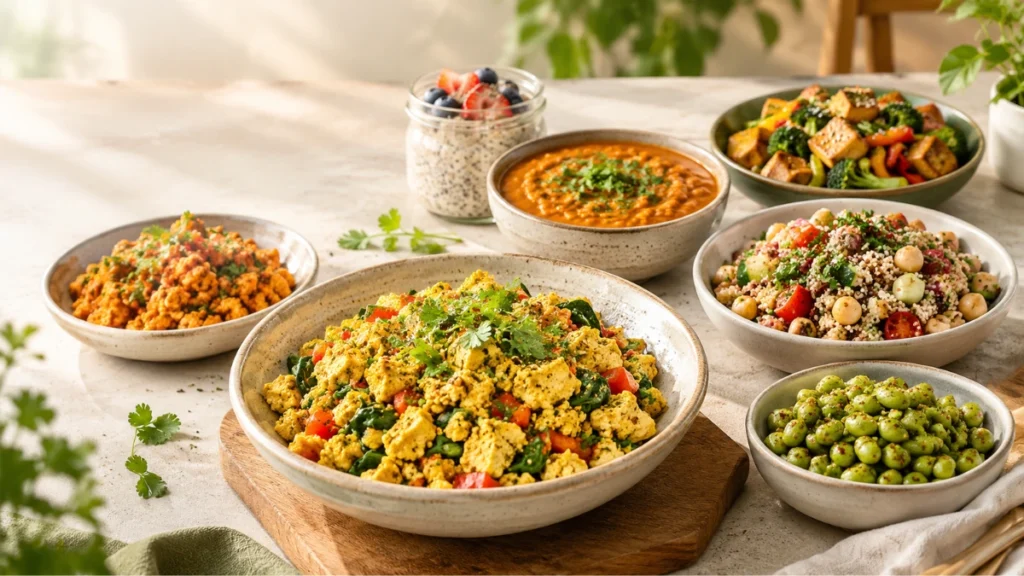
Eating enough protein on a vegetarian diet doesn’t have to mean eating the same meals every day. A few simple ingredient swaps can help you prepare meals that are nutritious, satisfying, and easy to fit into a busy schedule.
Looking for high protein vegetarian recipes that are easy to make? These seven ideas cover breakfast, lunch, dinner, and snacks, including creamy overnight oats, Indian-style paneer bhurji, chickpea quinoa salad, and tofu stir-fry.
Each recipe includes measured ingredients, step-by-step instructions, serving sizes, and estimated protein per serving, so you can choose meals that fit your preferences and plan your day more easily.
In This Article
7 Easy High-Protein Vegetarian Recipes
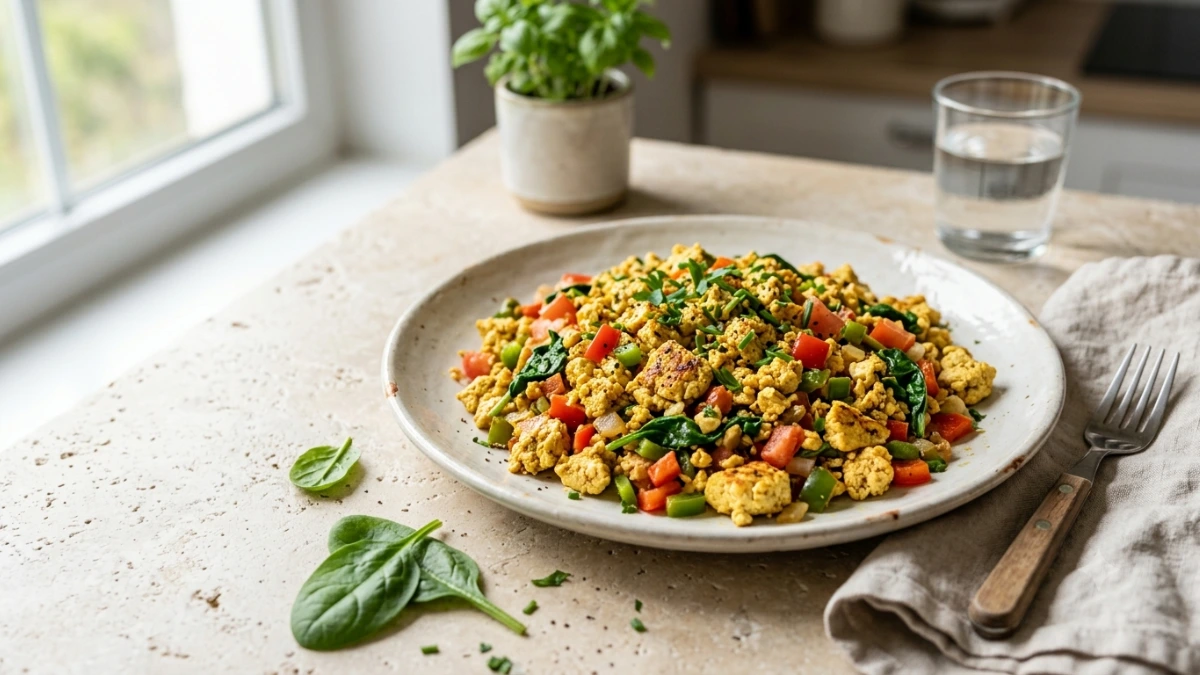
1. High-Protein Tofu Scramble
Want a savory, dairy-free breakfast that is easy to customize? Tofu scramble combines crumbled tofu with vegetables and simple seasonings for a meal you can enjoy with whole-grain toast or in a breakfast wrap.
Preparation Time: 10 minutes
Cooking Time: 10 minutes
Servings: 2
Estimated Protein: Approximately 20–25 g per serving, depending on the tofu brand. Check the nutrition label for a more accurate estimate.
Ingredients
- 400 g firm tofu, drained
- 1 small onion, finely chopped
- 1 small bell pepper, chopped
- 50 g spinach, roughly chopped
- 1 teaspoon olive oil
- ¼ teaspoon turmeric
- ½ teaspoon garlic powder
- Black pepper and salt, to taste
- 1–2 tablespoons water, if needed
Instructions
- Drain the tofu, gently press out excess water, and crumble it with your hands or a fork.
- Heat the olive oil in a non-stick pan over medium heat.
- Add the onion and bell pepper. Cook for 3–4 minutes until slightly softened.
- Stir in the crumbled tofu, turmeric, garlic powder, black pepper, and salt.
- Cook for 4–5 minutes, stirring occasionally. Add a little water if the mixture becomes too dry.
- Add the spinach and cook for another 1–2 minutes, until wilted. Divide into two servings and serve warm.
Tips
- Add mushrooms or tomatoes for extra variety.
- Serve with whole-grain toast for a more substantial breakfast.
- Choose firm tofu with a clearly listed protein value to estimate the nutrition of each serving more accurately.
2. High-Protein Overnight Oats
Need a quick breakfast for busy mornings? These overnight oats combine rolled oats, Greek yogurt, milk, and chia seeds for a creamy, protein-rich meal. Prepare them the night before, refrigerate, and add your favorite fruit when you’re ready to eat.
Preparation Time: 5 minutes
Chilling Time: At least 4 hours, preferably overnight
Servings: 2
Estimated Protein: Approximately 26–28 g per serving when using Greek yogurt with around 10 g protein per 100 g. The amount will vary by brand.
Ingredients
- 80 g rolled oats
- 300 g plain Greek yogurt
- 200 ml milk
- 20 g chia seeds
- 100 g berries or sliced banana
- ½ teaspoon cinnamon (optional)
Instructions
- Combine the rolled oats, Greek yogurt, milk, and chia seeds in a mixing bowl.
- Stir well. Add a little extra milk if you prefer a thinner consistency.
- Divide the mixture between two clean jars or airtight containers.
- Cover and refrigerate for at least 4 hours or overnight.
- Before serving, stir the oats and top with berries or sliced banana. Add cinnamon if desired.
Tips
- Check the yogurt label for its protein content; regular yogurt may provide less protein than Greek yogurt.
- For a dairy-free version, use unsweetened soy yogurt and soy milk. The protein content will depend on the products you choose.
- Keep the oats refrigerated until serving.
Nutrition Note: The protein estimate is calculated from the listed ingredients and assumes two equal servings. For a more accurate figure, use the nutrition labels of your specific oats, yogurt, and milk. Refrigerate promptly and avoid leaving the prepared oats at room temperature for more than two hours.
3. Chickpea and Quinoa Salad
Looking for a fresh lunch that provides both protein and fiber? This chickpea and quinoa salad combines tender chickpeas, fluffy quinoa, crunchy vegetables, and a simple lemon dressing. It is easy to customize and works well for lunch, a light dinner, or meal prep.
Preparation Time: 15 minutes
Cooking Time: 15 minutes if preparing quinoa from scratch
Servings: 2
Estimated Protein: Approximately 18–20 g per serving, depending on the ingredients and brands used.
Ingredients
- 300 g cooked chickpeas, drained
- 200 g cooked quinoa, cooled
- 100 g cucumber, diced
- 100 g tomatoes, diced
- 2 tablespoons chopped fresh parsley
- 1 tablespoon lemon juice
- 1 tablespoon olive oil
- Black pepper and salt, to taste
Instructions
- If using dry quinoa, rinse it and cook according to the package instructions. Allow it to cool.
- If using canned chickpeas, drain and rinse them.
- Combine the chickpeas, cooked quinoa, cucumber, tomatoes, and parsley in a large bowl.
- In a small bowl, mix the lemon juice, olive oil, black pepper, and salt.
- Pour the dressing over the salad and toss gently until evenly combined.
- Taste and adjust the seasoning or lemon juice as needed.
- Serve immediately, or refrigerate in an airtight container until ready to eat.
Tips for a More Flavorful Salad
- Add chopped red onion, bell pepper, or fresh mint for extra flavor and crunch.
- Swap parsley for cilantro if you prefer.
- Add crumbled feta if you eat dairy; this will change the nutritional values.
- For meal prep, divide the salad into airtight containers and refrigerate promptly.
Nutrition Note: The protein estimate assumes that both the chickpeas and quinoa are weighed after cooking, with the chickpeas drained. The estimate is approximate and includes the other ingredients. For a more accurate figure, calculate protein using the nutrition labels of your ingredients. Refrigerate leftovers within two hours of preparation.
4. Paneer Bhurji
Paneer bhurji is a quick Indian vegetarian dish made with crumbled paneer, onions, tomatoes, and aromatic spices. It is easy to prepare and works for breakfast, lunch, or dinner. Serve it with whole-wheat roti, whole-grain toast, or a side of vegetables for a more complete meal.
Preparation Time: 10 minutes
Cooking Time: 10–15 minutes
Servings: 2
Estimated Protein: Approximately 25–27 g per serving, depending on the paneer used.
Ingredients
- 300 g paneer, crumbled
- 1 small onion, finely chopped
- 1 medium tomato, finely chopped
- ½ small bell pepper, chopped
- 1 teaspoon oil
- ¼ teaspoon cumin seeds
- ¼ teaspoon turmeric
- ½ teaspoon ground coriander
- ¼ teaspoon red chili powder, or to taste
- Salt, to taste
- 1–2 tablespoons water, if needed
- Fresh cilantro, chopped, for garnish
Instructions
- Heat the oil in a pan over medium heat. Add the cumin seeds and let them sizzle briefly.
- Add the onion and cook for 2–3 minutes until softened.
- Stir in the bell pepper and cook for another 2 minutes.
- Add the tomato, turmeric, ground coriander, chili powder, and salt. Cook for 3–4 minutes, until the tomato softens and the mixture thickens slightly.
- Add the crumbled paneer and gently mix it with the vegetables and spices.
- Cook for another 2–3 minutes. If the mixture looks too dry, add a little water.
- Garnish with fresh cilantro and serve warm.
Tips for a More Flavorful Paneer Bhurji
- Add peas or spinach for extra vegetables and variety.
- Reduce the chili powder for a milder version.
- Serve with whole-wheat roti or whole-grain toast for a more filling meal.
- Check the paneer nutrition label if you want a more accurate protein estimate, as values vary between products.
Nutrition Note: The protein estimate is approximate and assumes two equal servings. Paneer provides around 16 g of protein per 100 g in one USDA-based reference, but the amount varies by brand and preparation. Use your paneer’s nutrition label for a more accurate calculation.
Tips for Serving
- Serve with whole-wheat roti or whole-grain toast for a more complete meal.
- Add peas or spinach for extra vegetables and variety.
- For a milder version, reduce the chili powder and increase the amount of cilantro.
- If you prefer a lower-fat option, compare paneer nutrition labels before choosing a product; protein and fat content vary by brand.
Nutrition Note: The estimated protein depends on the paneer’s nutrition label and the final serving size. For accurate reporting, calculate the protein from the specific paneer and other ingredients used in the recipe.
5. Red Lentil Curry
Need a comforting, budget-friendly dinner? Red lentil curry is made with lentils, tomatoes, onions, garlic, ginger, and warming spices. Red lentils cook relatively quickly and soften into a creamy dal, making this a practical option for busy weeknights.
Lentils provide plant-based protein and dietary fiber. Serve this curry with brown rice or whole-wheat roti for a more substantial meal.
Preparation Time: 10 minutes
Cooking Time: 20–25 minutes
Servings: 2
Estimated Protein: Approximately 15–18 g per serving, depending on the ingredients and portion sizes.
Ingredients
- 160 g dry red lentils, rinsed
- 1 small onion, finely chopped
- 2 medium tomatoes, chopped
- 2 garlic cloves, minced
- 1 teaspoon grated fresh ginger
- 1 teaspoon oil
- ½ teaspoon ground cumin
- ½ teaspoon ground coriander
- ¼ teaspoon turmeric
- ¼ teaspoon chili powder, or to taste
- 600–700 ml water or low-sodium vegetable stock
- Salt, to taste
- Fresh cilantro, chopped, for garnish
Instructions
- Rinse the lentils under running water until the water runs clearer.
- Heat the oil in a saucepan over medium heat. Add the onion and cook for 3–4 minutes until softened.
- Add the garlic and ginger. Stir for about 30 seconds until fragrant.
- Add the cumin, coriander, turmeric, chili powder, and tomatoes. Cook for 3–4 minutes, until the tomatoes begin to soften.
- Add the lentils and water or vegetable stock. Stir and bring to a gentle boil.
- Reduce the heat and simmer for 15–20 minutes, stirring occasionally, until the lentils are soft. Add more water if needed.
- Season with salt, garnish with fresh cilantro, and serve warm.
Tips for Better Flavor
- Stir in spinach during the last few minutes of cooking.
- Adjust the water to make the dal thicker or thinner, depending on your preference.
- Use low-sodium stock to add flavor while keeping sodium in check.
- Serve with rice or roti for a more filling meal.
Nutrition Note: The recipe uses the weight of dry lentils. Lentils absorb water during cooking, increasing their weight without increasing the total protein in the recipe. The protein estimate is approximate; calculate the total using your ingredient labels and divide by two servings. Rice or roti served alongside will add extra protein and calories.
6. Tofu and Vegetable Stir-Fry
Want a quick dinner with protein and plenty of vegetables? This tofu stir-fry combines golden tofu, crisp vegetables, and a simple garlic-soy sauce. It is easy to customize and pairs well with brown rice or noodles.
Preparation Time: 10 minutes
Cooking Time: 12–15 minutes
Servings: 2
Estimated Protein: Approximately 20–25 g per serving, depending on the tofu brand.
Ingredients
- 400 g firm tofu, drained and cut into cubes
- 200 g broccoli florets
- 1 medium bell pepper, sliced
- 2 garlic cloves, minced
- 1 tablespoon low-sodium soy sauce
- 1 teaspoon sesame seeds
- 1 teaspoon oil
- 1–2 tablespoons water, if needed
- Black pepper, to taste
Instructions
- Drain the tofu, gently press out excess water, and cut it into bite-sized cubes.
- Heat half the oil in a non-stick skillet or wok over medium-high heat.
- Add the tofu and cook for 5–7 minutes, turning occasionally until lightly golden. Transfer to a plate.
- Add the remaining oil to the pan. Stir-fry the broccoli and bell pepper for 4–5 minutes. Add a splash of water if needed to soften the broccoli.
- Add the garlic and cook for about 30 seconds, stirring to prevent it from burning.
- Return the tofu to the pan. Add the soy sauce and black pepper, then toss for another 1–2 minutes.
- Sprinkle with sesame seeds and serve warm.
Tips for the Best Results
- Pat the tofu dry before cooking to help it brown.
- Avoid overcrowding the pan; cook in batches if necessary.
- Swap the broccoli or bell pepper for mushrooms, carrots, or green beans.
- For a gluten-free version, use gluten-free soy sauce or tamari and check the product label.
Nutrition Note: Protein content varies by tofu brand and type. Use the nutrition label to estimate the amount per serving. If you add rice or noodles, include them when calculating the nutrition for the complete meal.
7. Seasoned Edamame
Need a quick, protein-rich snack? Edamame are young soybeans that are harvested before they fully mature. Shelled edamame cooks quickly and makes an easy snack or side dish with minimal preparation.
Lemon juice, garlic powder, and chili flakes add flavor without a complicated sauce. Enjoy edamame on its own or add it to a salad or grain bowl.
Preparation Time: 2 minutes
Cooking Time: 5–8 minutes
Servings: 2
Estimated Protein: Approximately 17–18 g per serving, depending on the product.
Ingredients
- 300 g shelled edamame, fresh or frozen
- 1 teaspoon lemon juice
- ¼ teaspoon garlic powder
- Chili flakes, to taste
- A small pinch of salt
Instructions
- Bring a saucepan of water to a boil.
- Add the shelled edamame and cook according to the package instructions, usually around 3–5 minutes for frozen beans.
- Drain thoroughly once the beans are tender.
- Transfer to a bowl and add the lemon juice, garlic powder, chili flakes, and salt.
- Toss until the seasoning is evenly distributed.
- Serve warm or chilled as a snack or side dish.
Tips for Serving
- Try black pepper, smoked paprika, or a little lime juice for a different flavor.
- Add edamame to salads, grain bowls, or vegetable stir-fries for extra protein.
- Use shelled edamame so the stated weight refers to the edible beans, not the pods.
Nutrition Note: The protein estimate assumes 300 g of edible, shelled edamame, divided into two servings. Protein content varies by product, so check the package nutrition label for a more accurate estimate.
Tips to Get More Protein from Vegetarian Meals
You don’t need to change your entire diet to eat more protein. A few simple ingredient swaps and a variety of protein sources can help you make everyday vegetarian meals more nourishing.
Combine Different Plant Protein Sources
Include lentils, beans, chickpeas, tofu, tempeh, nuts, seeds, and whole grains in your diet. Different plant foods provide different combinations of essential amino acids, which your body needs to build and repair tissues. You don’t need to combine complementary proteins in every meal; eating a variety of protein sources throughout the day is generally sufficient. Harvard Health
Add Protein-Rich Ingredients to Everyday Meals
Small additions can increase the protein content of familiar meals. Try adding lentils to soups, chickpeas to salads, tofu to stir-fries, or chia seeds to oatmeal. These simple changes can help you include more protein without preparing separate dishes.
Choose Greek Yogurt, Paneer, or Tofu Based on Your Diet
If you eat dairy, Greek yogurt and paneer are useful protein sources. For dairy-free meals, try tofu, tempeh, edamame, or soy milk. Compare nutrition labels because protein content varies by product. NHS: The Vegetarian Diet
How Much Protein Should a Vegetarian Meal Provide?
There is no fixed protein target for every meal. Your daily needs depend on factors such as body weight, age, activity level, and health.
For generally healthy adults, the recommended dietary allowance (RDA) is approximately 0.8 g of protein per kilogram of body weight per day. For example, a 60 kg adult needs around 48 g daily as a general baseline—not 48 g per meal. Harvard Health
Include protein-rich foods such as lentils, beans, chickpeas, tofu, paneer, and Greek yogurt throughout the day. Pair them with vegetables, fruits, whole grains, and healthy fats for a balanced vegetarian diet. If a medical condition affects your protein needs, seek personalized advice from a qualified healthcare professional or registered dietitian.
Frequently Asked Questions
What Are the Easiest High-Protein Vegetarian Recipes?
Tofu scramble, Greek yogurt overnight oats, chickpea and quinoa salad, paneer bhurji, and seasoned edamame are easy options made with simple ingredients.
How Can I Get 20–30 Grams of Protein in a Vegetarian Meal?
Build your meal around protein-rich foods such as tofu, Greek yogurt, paneer, or lentils, and add other foods that contribute protein. Check ingredient quantities and nutrition labels to estimate the total accurately.
Can Vegetarian Meals Provide Enough Protein?
Yes. A well-planned vegetarian diet can provide enough protein through foods such as lentils, beans, chickpeas, soy products, nuts, seeds, dairy, and eggs if included. Eating a variety of protein sources throughout the day helps provide essential amino acids. NHS guidance on vegetarian diets
What Are Good High-Protein Vegetarian Meals for Meal Prep?
Chickpea and quinoa salad, red lentil curry, and tofu stir-fry are practical meal-prep choices. Divide them into portions, store them in airtight containers, and refrigerate promptly. Keep dressings and fresh toppings separate when needed.
Are These High-Protein Vegetarian Recipes Suitable for Vegans?
Tofu scramble, chickpea and quinoa salad, red lentil curry, tofu stir-fry, and seasoned edamame can be vegan when made with plant-based ingredients. Make the overnight oats with plant-based yogurt and milk. Paneer bhurji is vegetarian but not vegan because paneer is made from dairy milk.
Final Thoughts
Eating enough protein on a vegetarian diet doesn’t have to be complicated. These seven high-protein vegetarian recipes offer practical options for breakfast, lunch, dinner, and snacks, from tofu scramble and overnight oats to paneer bhurji and red lentil curry.
Start with recipes that suit your taste and routine, and adjust portions to meet your needs. For more ideas, explore our guide to high-protein foods to discover more protein-rich ingredients and their nutritional values.
