
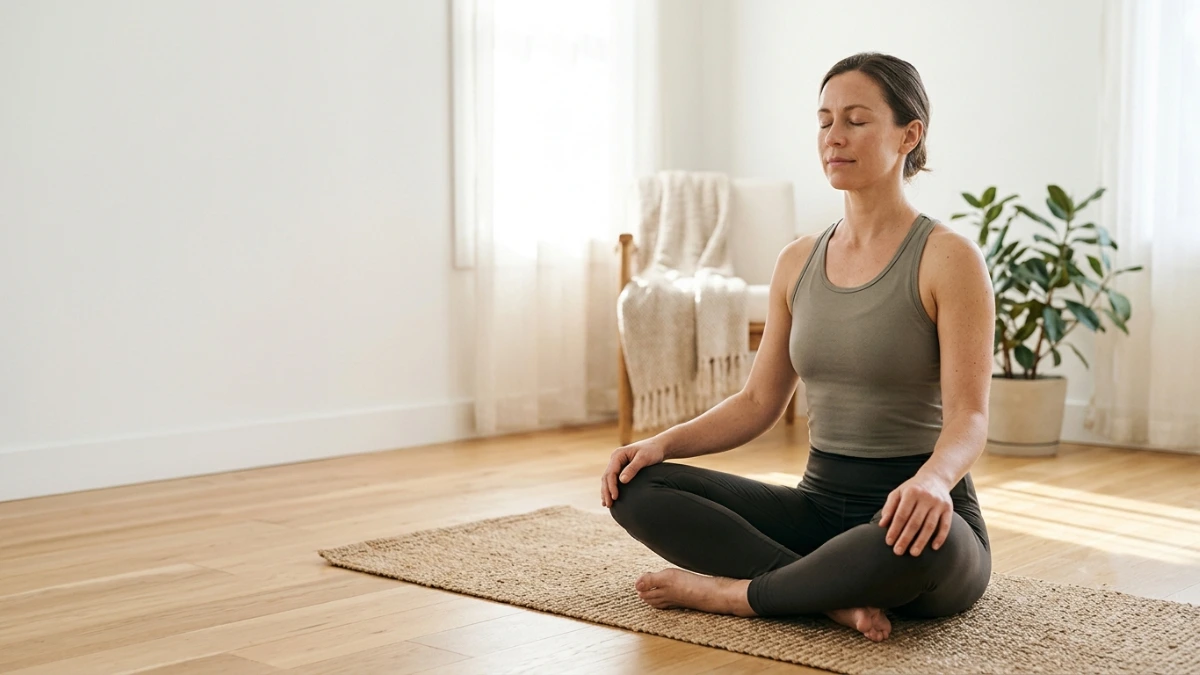
Have you ever noticed that your shoulders still feel tense even after stretching? Sometimes, the way you move matters just as much as the stretch itself.
Somatic yoga focuses on body awareness and gentle, mindful movements rather than trying to achieve a perfect pose. By slowing down and paying attention to physical sensations, you can explore how your body moves and adjust each movement to your comfort level.
In this guide, you’ll learn what somatic yoga is, how it differs from regular yoga, what research says about its potential benefits, and seven gentle movements you can try at home as a beginner.
In This Article
What Is Somatic Yoga?
Somatic yoga takes a different approach to movement: instead of concentrating on how well you perform a pose, you pay attention to how your body feels while moving.
You might notice that your shoulders feel tense after sitting at a desk, that one side of your body moves more comfortably than the other, or that a small movement feels easier than a deep stretch. In somatic yoga, these observations matter more than achieving a perfect position.
The practice combines gentle yoga movements with body awareness. You move slowly, notice physical sensations, and adjust each movement to your comfort level. The aim is to explore movement with attention rather than push your body further. This approach is described in the Cleveland Clinic’s guide to somatic yoga.
How Does Somatic Yoga Work?
Imagine lying on your back with your knees bent. Instead of immediately stretching your lower back, you gently tilt your pelvis forward and backward. You pay attention to how your back feels against the floor and how the movement feels, keeping the range small and comfortable.
This illustrates the basic idea behind somatic movement: slow, deliberate movements combined with attention to bodily sensations. You do not need special equipment, advanced flexibility, or previous yoga experience to try this approach.
Is Somatic Yoga the Same as Somatic Therapy?
No. Somatic yoga generally focuses on mindful movement and body awareness, while somatic therapy refers to therapeutic approaches that use bodily sensations and experiences as part of psychological support. The methods and evidence vary between approaches, so the terms should not be used interchangeably.
Somatic yoga should not be presented as a proven treatment for trauma or as a substitute for appropriate mental health care.
In simple terms, somatic yoga shifts your attention from how a movement looks to how it feels. This mindful approach can be applied to gentle yoga movements without requiring a perfect pose.
How Is Somatic Yoga Different From Regular Yoga?
The main difference is where you place your attention. In many yoga classes, you focus on posture, alignment, flexibility, or holding a pose. In somatic yoga, you pay closer attention to the sensations you experience while moving and adjust your movements based on what feels comfortable.
The two approaches can overlap. You can practise a familiar yoga pose somatically by slowing down, reducing the range of motion, and noticing how your body responds, as explained in the Cleveland Clinic’s guide to somatic yoga.
Regular yoga is not necessarily the opposite of somatic yoga. Many yoga practices already emphasise awareness of the body and mind. The difference often comes down to the teaching style and how the practice is approached.
| Regular yoga classes may emphasise | Somatic-focused practice emphasises |
|---|---|
| Learning poses and alignment | Noticing sensations during movement |
| Holding or moving between poses | Exploring slow, comfortable movements |
| Building strength, balance, or flexibility | Developing awareness of how the body moves |
| Following a teacher’s sequence | Adjusting movements to your comfort level |
These are general tendencies, not strict rules. Regular yoga can also be slow and mindful, while somatic-focused sessions may include familiar yoga poses.
Potential Benefits of Somatic Yoga: What Does Research Say?
Somatic yoga may appeal to people who want a gentler, more mindful way to move. However, research specifically examining somatic yoga is limited, so it is important to distinguish potential benefits from established evidence.
Here are some possible benefits to consider:
- Greater body awareness: Paying attention to movement and physical sensations may help you notice your posture, movement habits, and areas of tension. However, the specific effects of somatic yoga need further research.
- Stress management: Slow movement and focused attention may feel calming. Research suggests that yoga in general may help with stress management, but this does not establish the same effects specifically for somatic yoga.
- Gentle movement and mobility: Moving within a comfortable range allows you to explore how your body moves without forcing deep stretches. Improvements in flexibility or mobility will vary from person to person.
- Mind–body awareness: Combining movement with attention to physical sensations may encourage a more mindful approach to exercise. More research is needed to establish the specific health effects of somatic yoga.
The National Center for Complementary and Integrative Health (NCCIH) reports that research suggests yoga may support stress management, sleep, balance, and aspects of mental well-being. However, yoga styles and study methods vary, and these findings relate to yoga generally rather than somatic yoga specifically.
The takeaway: Somatic yoga is one way to explore mindful movement, not a guaranteed treatment for pain, anxiety, or trauma. Its potential value lies in slowing down, paying attention to your body, and moving within your comfortable limits.
7 Somatic Yoga Poses and Exercises for Beginners
You do not need complicated poses to try somatic yoga. Start with gentle movements that help you notice how your body feels, and keep each movement within a comfortable range.
The exercises below combine familiar yoga poses with mindful movement. They are beginner-friendly ways to explore somatic movement, not seven clinically validated somatic yoga techniques. The Cleveland Clinic’s guide to somatic yoga also describes familiar yoga poses that can be practised with greater body awareness.
1. Resting Body Scan
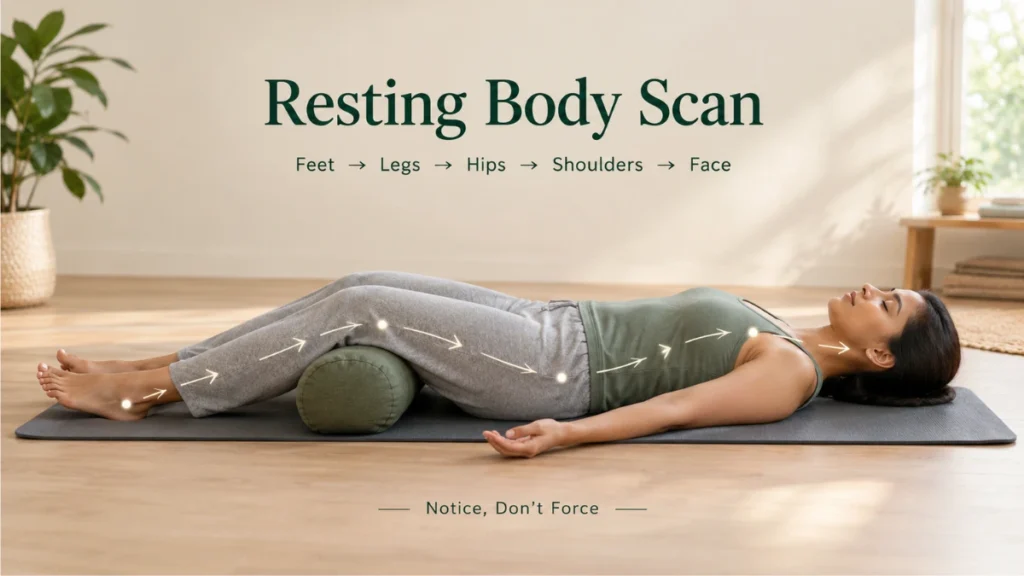
A body scan is a simple starting point because it does not require stretching or balancing. It allows you to notice physical sensations before introducing movement.
How to do it:
- Lie on your back with your arms resting comfortably by your sides. Place a pillow under your knees if needed.
- Let your breathing remain natural.
- Slowly bring your attention to your feet, legs, hips, abdomen, shoulders, and face.
- Notice sensations such as warmth, pressure, or tension without trying to change them.
- If your mind wanders, gently return your attention to your body.
Stay for a minute or two, or as long as feels comfortable.
Focus on: Noticing sensations without judging them or forcing yourself to relax. If lying down feels uncomfortable, sit in a supported chair instead.
2. Gentle Pelvic Tilts
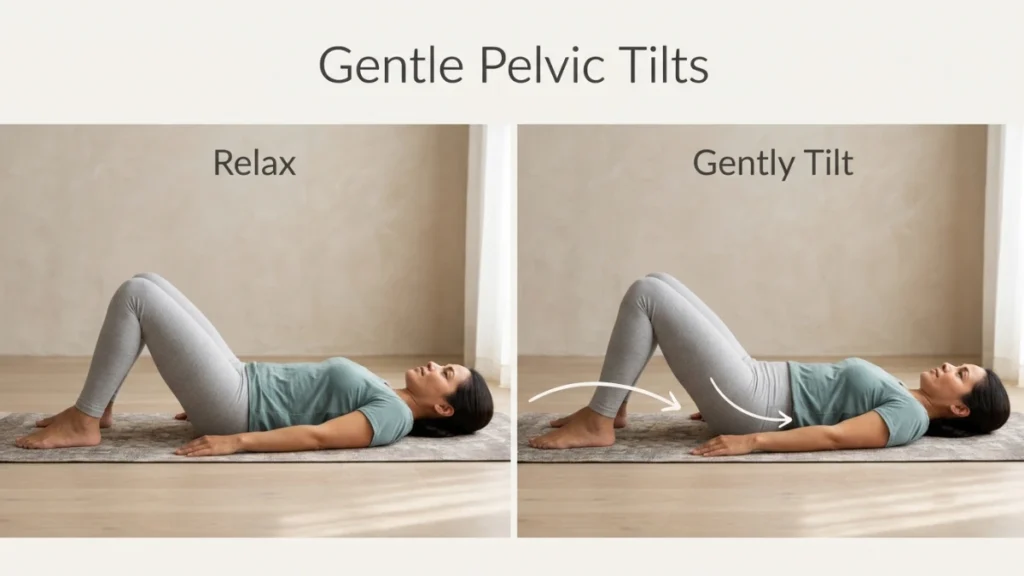
Pelvic tilts involve gently rocking your pelvis while lying on your back. Moving slowly can help you notice how your pelvis and lower back respond.
How to do it:
- Lie on your back with your knees bent and feet flat on the floor, about hip-width apart.
- Gently tilt your pelvis so your lower back moves slightly closer to the mat.
- Slowly return to the starting position, allowing your lower back’s natural curve to return.
- Repeat a few times without rushing or forcing the movement.
Focus on: How your pelvis moves and how your lower back feels against the mat. Keep the movement small rather than pressing your back firmly into the floor.
3. Gentle Lying Knee Sways
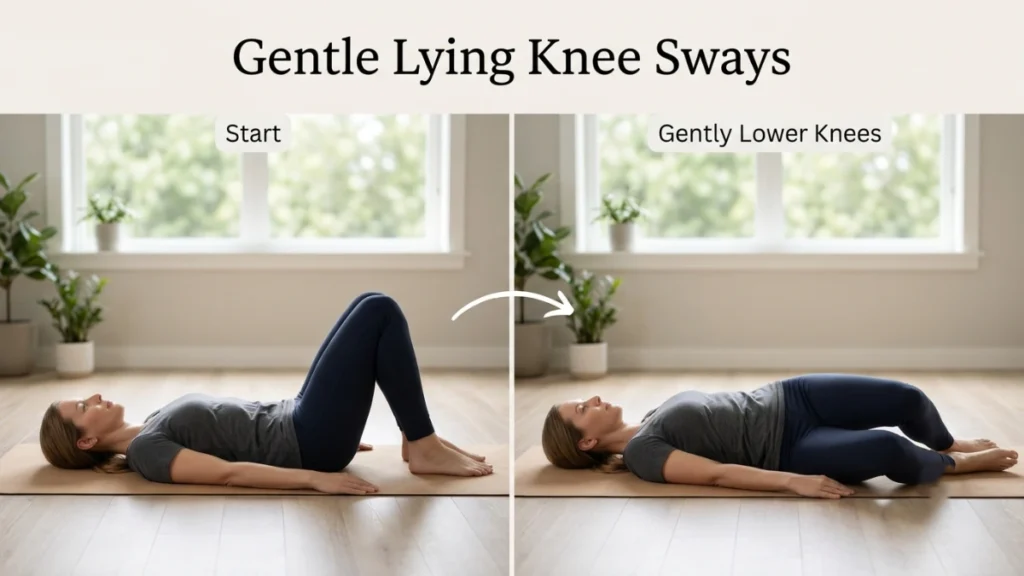
This gentle side-to-side movement lets you explore a small, comfortable rotation without holding a deep twist.
How to do it:
- Lie on your back with your knees bent and feet flat on the mat.
- Keep your shoulders relaxed and your feet comfortably grounded.
- Slowly let both knees move a short distance to the right.
- Return to the centre, then repeat towards the left.
- Continue for a few repetitions, pausing whenever you want to notice how the movement feels.
Focus on: Whether one side feels different from the other. Your knees do not need to reach the floor. Stop if the movement causes pain or aggravates an existing hip, knee, or back problem.
4. Slow Cat–Cow
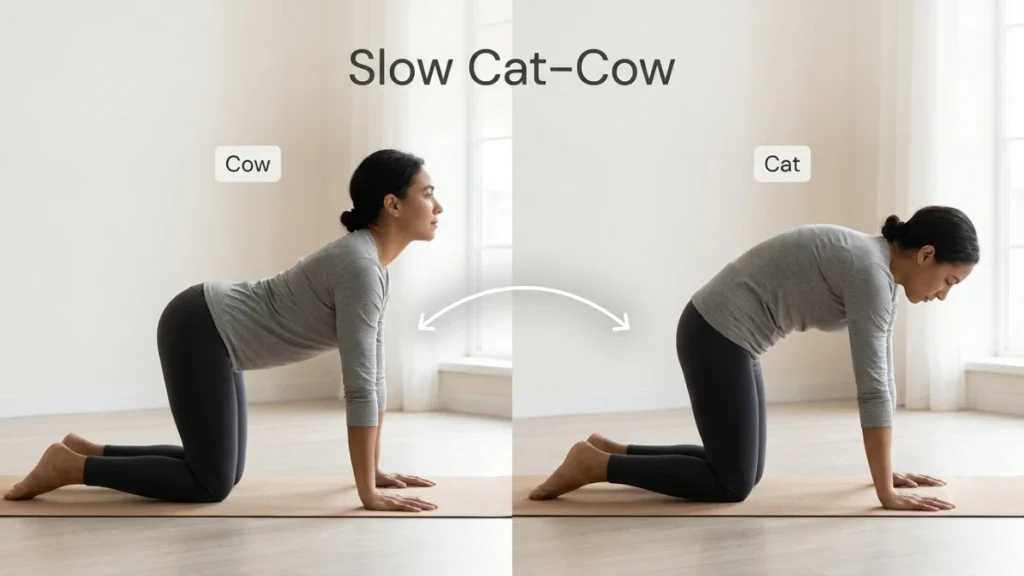
Cat–Cow is a familiar yoga sequence that you can practise with a somatic approach. Move slowly and pay attention to how your spine responds rather than trying to achieve a deep arch or rounded back.
How to do it:
- Start on your hands and knees, with your hands beneath your shoulders and knees beneath your hips.
- Gently lower your abdomen as you lift your chest and tailbone.
- Slowly reverse the movement, rounding your back comfortably and allowing your head to follow.
- Alternate between the two positions at an unhurried pace.
Try three to five repetitions to begin with.
Focus on: The gradual movement through your back. Keep your neck comfortable and avoid forcing your lower back. If kneeling is uncomfortable, try a seated version with your hands on your thighs.
5. Supported Child’s Pose
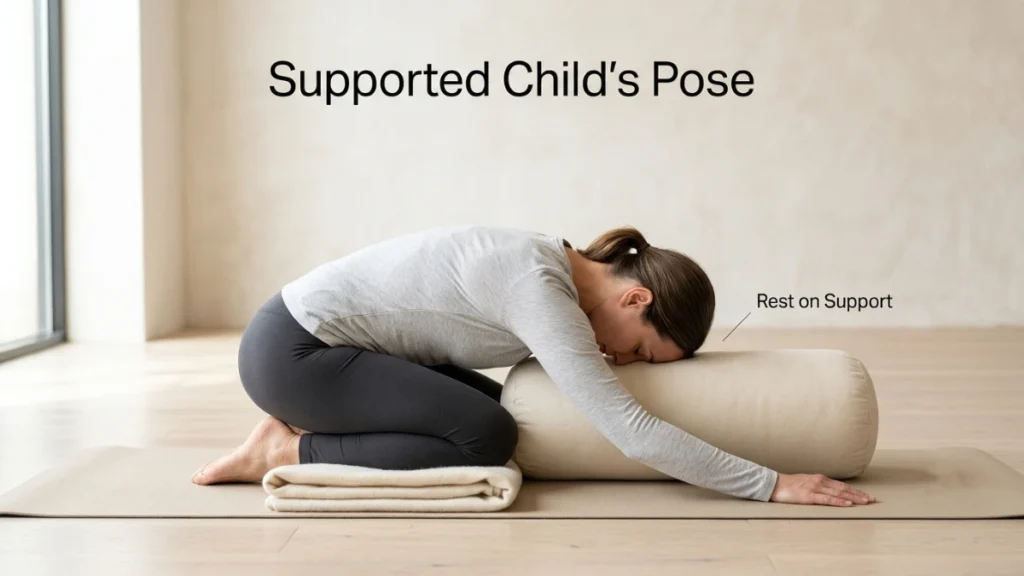
Supported Child’s Pose offers a resting position in which you can notice your breathing and how your body feels when supported. You can adapt this familiar yoga pose to your comfort level.
How to do it:
- Begin on your hands and knees on a comfortable mat.
- Slowly move your hips back only as far as feels comfortable.
- Rest your upper body on a cushion or bolster if reaching the floor feels difficult.
- Let your arms rest naturally and breathe normally.
- Stay briefly, noticing the contact between your body and the support.
Focus on: Whether the position feels comfortable and supported. You do not need to reach your heels or place your forehead on the floor. If kneeling or bending causes discomfort, try resting in a supported chair instead.
6. Seated Windshield-Wiper Movement
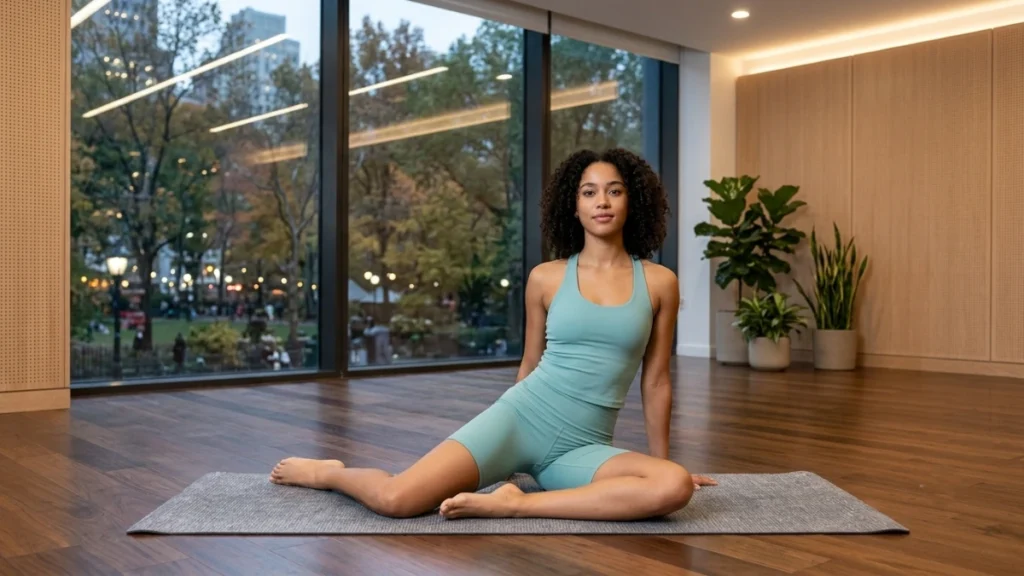
This movement explores gentle hip rotation while sitting. The Cleveland Clinic’s somatic yoga guide includes a seated windshield-wiper variation among its examples.
How to do it:
- Sit on the floor with your knees bent and feet resting comfortably on the mat.
- Place your hands behind you for support.
- Slowly move both knees a short distance to one side.
- Return to the centre, then move them towards the other side.
- Repeat a few times without forcing the movement.
Focus on: How the movement feels around your hips and whether you can breathe comfortably. If sitting on the floor is difficult, or you have hip or knee pain, skip this movement rather than forcing the position.
7. Small, Slow Bridge Movement
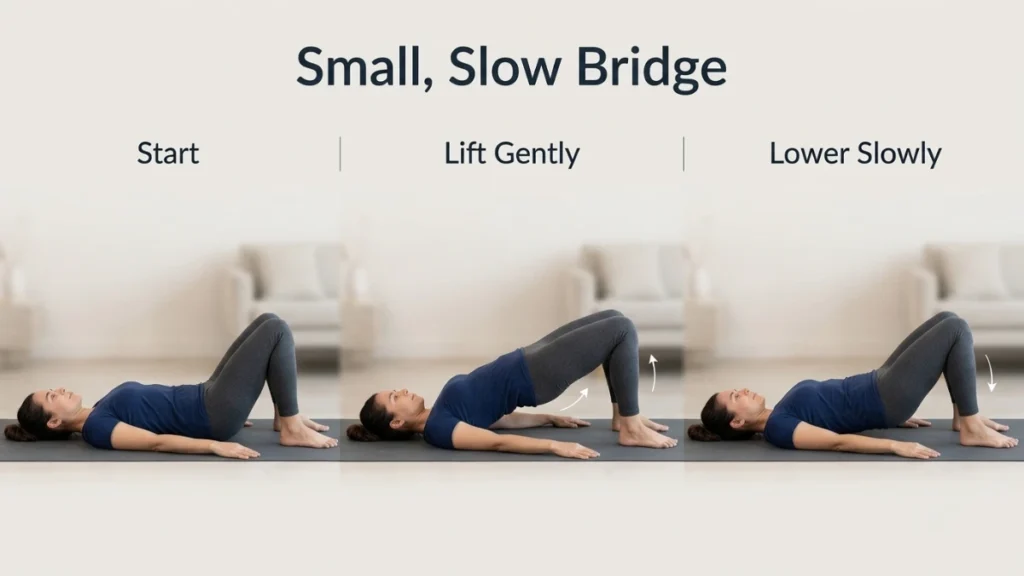
Bridge Pose is another familiar yoga posture that can be explored slowly. For a beginner, a small lift is enough; you do not need to raise your hips high.
How to do it:
- Lie on your back with your knees bent and feet flat on the mat.
- Rest your arms by your sides and find a comfortable starting position.
- Slowly lift your pelvis a small distance from the floor, only if comfortable.
- Pause briefly to notice how your body feels.
- Lower your pelvis slowly and rest before deciding whether to repeat.
Focus on: The transition between lifting and lowering, rather than the height of the movement. Breathe naturally and avoid arching your lower back excessively. Skip the movement if it causes back, hip, or knee discomfort.
A Few Tips Before You Begin
- Start with three or four exercises instead of completing all seven in one session.
- Move slowly, breathe naturally, and use a smaller range of motion whenever needed.
- Stop if you experience pain, dizziness, or unusual discomfort.
- If you have a recent injury, have had surgery, or have a medical condition that may affect movement, seek professional advice before starting. The NCCIH yoga safety guidance notes that yoga is generally safe when practised appropriately, but injuries can occur.
The goal is not to perform every exercise perfectly. It is to explore comfortable movement and notice how your body responds.t while paying attention to how your body responds.
How to Start a Simple Somatic Yoga Routine at Home
You do not need a long session or a complicated sequence to begin practising somatic yoga. Start with a few gentle movements in a comfortable space and give yourself time to notice how your body responds.
Here is a simple routine you can try at home:
- Begin with a body scan. Lie down or sit comfortably and notice how your body feels before moving.
- Try gentle pelvic tilts. Make a few small, slow movements while breathing naturally.
- Add lying knee sways. Move your knees gently from side to side within a comfortable range.
- Practise slow Cat–Cow. If kneeling feels comfortable, move gradually between a gentle arch and a rounded back.
- Finish with a short body scan. Pause and notice whether anything feels different after moving.
Leave out any movement that does not feel suitable for your body. You do not need to complete the entire sequence or achieve a particular result.
How Often Should You Practise?
If you are new to somatic yoga, begin with short sessions and see how you feel. Start with a few minutes at a time and gradually develop a routine that suits your schedule and comfort level.
Consistency matters more than making each session longer or more intense. However, there is no established ideal frequency or session length specifically for somatic yoga, so treat this as a flexible starting point rather than a prescribed programme.
The aim is to make mindful movement a comfortable part of your routine, not another task you need to get perfect.
Safety Tips for Beginners
Somatic yoga generally uses gentle movements, but slow movement does not automatically make every exercise suitable for everyone. Choose positions that feel comfortable and adapt them to your needs.
Keep these precautions in mind:
- Stay within a comfortable range. Do not force a stretch, push through pain, or try to match someone else’s movement.
- Breathe naturally. You do not need to hold your breath or use forceful breathing techniques.
- Modify positions when needed. Use cushions or folded blankets for support, or choose a seated alternative if lying down or kneeling feels uncomfortable.
- Stop if you experience unusual symptoms. Discontinue a movement if you feel pain, dizziness, numbness, or unusual discomfort.
- Consider your health needs. If you have a recent injury, have undergone surgery, or have a condition affecting your joints, balance, or mobility, consult a qualified healthcare professional before starting.
According to the National Center for Complementary and Integrative Health (NCCIH), yoga is generally considered safe when practised appropriately, but strains and other injuries can occur. Beginners should avoid extreme positions and work within their abilities.
Somatic yoga is not about pushing through discomfort or forcing your body to relax. Choose a smaller, comfortable movement rather than one that causes pain.
Frequently Asked Questions
1. Is somatic yoga good for beginners?
Yes. Somatic yoga can be a gentle starting point for people who prefer slow, mindful movement. Beginners can try simple movements, such as a body scan or gentle pelvic tilts, and adapt them to their comfort level. Previous yoga experience or advanced flexibility is not required.
2. What are the benefits of somatic yoga?
Somatic yoga encourages body awareness and mindful movement. It may help you notice movement patterns and physical sensations. Although research on yoga generally suggests potential benefits for stress management and well-being, evidence specifically supporting somatic yoga remains limited.
3. How often should you practise somatic yoga?
There is no established ideal frequency for somatic yoga. Start with short, comfortable sessions and adjust your practice according to your needs and how you feel. You do not need to practise every day to explore this approach.
4. Is somatic yoga the same as somatic therapy?
No. Somatic yoga generally focuses on mindful movement and body awareness, while somatic therapy incorporates bodily sensations and experiences into psychological support. Somatic yoga is not a replacement for professional mental health care.
Final Thoughts
Somatic yoga offers a gentle way to approach movement by slowing down, noticing how your body feels, and letting comfort guide your practice. If you are new to yoga, start with a simple body scan or a few gentle movements at home. Make adjustments when needed and skip anything that does not feel comfortable.
Although research specifically on somatic yoga remains limited, its emphasis on mindful movement offers an approachable way to explore body awareness at your own pace. You do not need to push harder to make every movement count. Sometimes, simply paying attention is a good place to start.
