
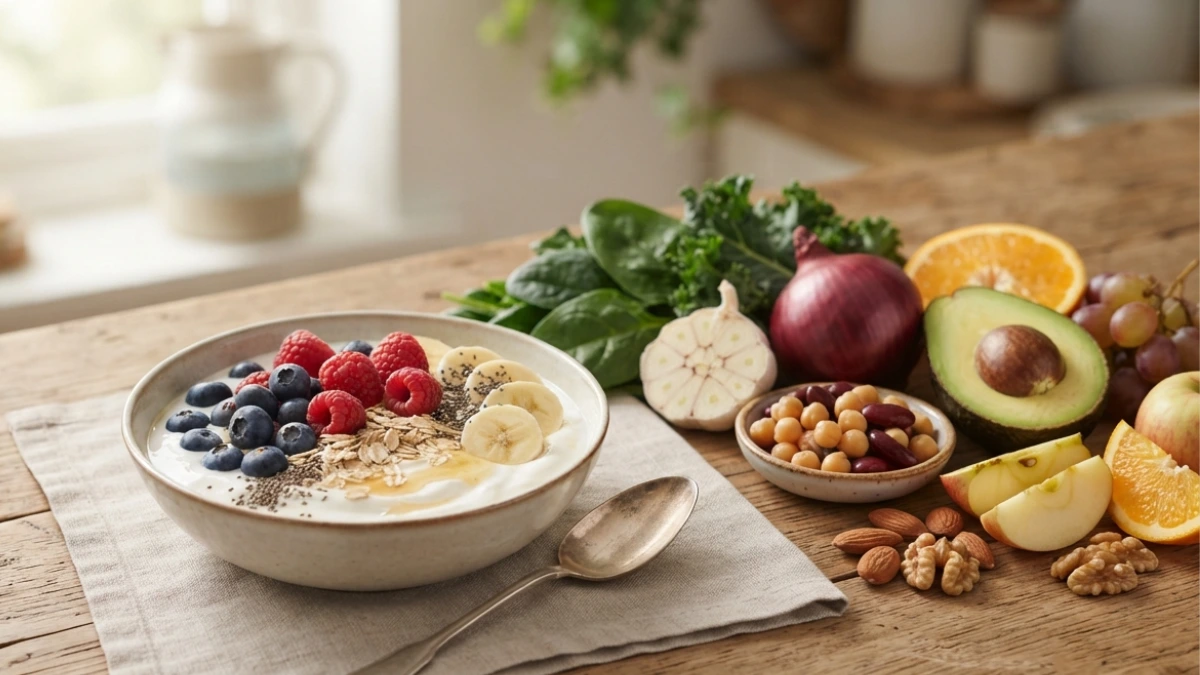
Your gut does much more than digest food. It plays an important role in nutrient absorption, immune function, and even your overall well-being. When your gut is healthy, your body is better able to process the nutrients it needs to function properly.
The good news is that you don’t need expensive supplements or complicated diets to support your gut. Simple everyday foods can help nourish the beneficial bacteria in your digestive system and contribute to better gut health over time.
In this article, you’ll discover 12 best foods to improve gut health naturally and learn how these gut-friendly choices can support digestion and a healthier gut microbiome.
In This Article
Quick Guide
Yes, choosing the right foods to improve gut health can have a significant impact on your digestion and overall well-being.. According to research, a diet rich in fiber, prebiotic foods, and fermented foods helps support a diverse and healthy gut microbiome—the community of beneficial microorganisms that live in your digestive tract. A balanced gut microbiome has been linked to better digestion, immune function, and overall health.
Instead of relying on a single “superfood,” eating a variety of gut-friendly foods regularly is one of the most effective ways to support your digestive health.
Research sources: National Institutes of Health (NIH) and Harvard T.H. Chan School of Public Health.
Why Gut Health Matters
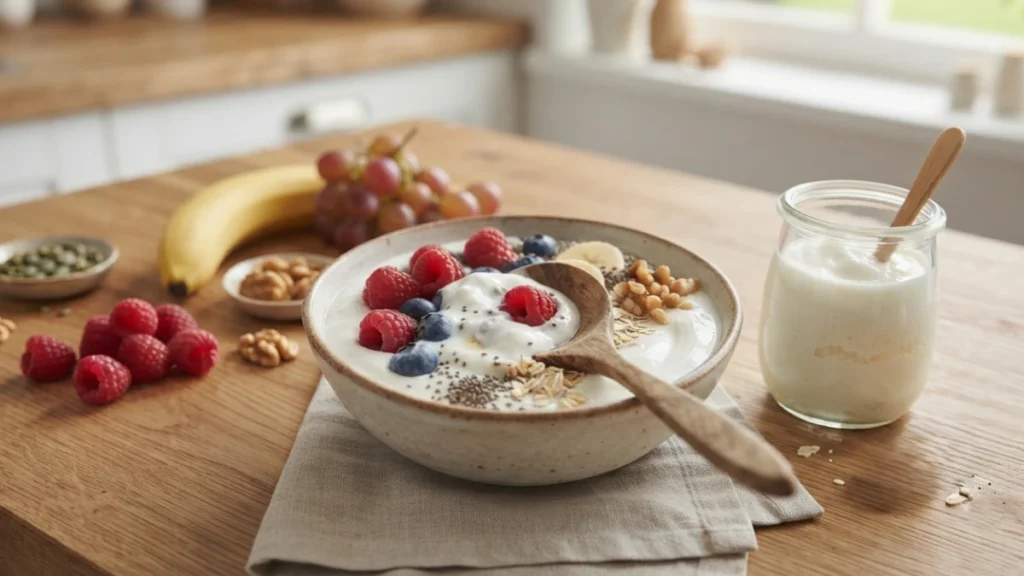
Your gut is home to trillions of microorganisms, including beneficial bacteria that support digestion, nutrient absorption, and immune function. This community of microorganisms is known as the gut microbiome.
According to the National Institutes of Health (NIH), diet is one of the key factors that influences the composition and function of the gut microbiome. Eating a variety of fiber-rich and fermented foods can help support a healthier gut environment.
12 Best Foods to Improve Gut Health Naturally
1. Yogurt
Yogurt is one of the best-known foods for supporting gut health because it contains live and active cultures, which are beneficial bacteria that may help maintain a healthy balance in the gut microbiome. According to the World Gastroenterology Organisation (WGO), probiotic foods like yogurt can support digestive health when consumed regularly as part of a balanced diet.
Best way to eat: Choose plain, unsweetened yogurt with live and active cultures, and add fresh fruit, oats, or nuts for extra fiber.
Quick tip: Check the label for “live and active cultures,” as not all yogurt products contain beneficial probiotics after processing.
2. Kefir
Kefir is a fermented milk drink that contains a wide variety of beneficial bacteria and yeast. Compared with many yogurts, kefir often provides a greater diversity of live microorganisms, which may help support a healthy gut microbiome. Research suggests that fermented foods can contribute to digestive health as part of a balanced diet.
Best way to eat: Enjoy plain kefir as a drink or blend it into a fruit smoothie.
Quick tip: Choose unsweetened kefir to avoid unnecessary added sugar.
3. Kimchi
Kimchi is a traditional Korean fermented vegetable dish made with ingredients such as cabbage, radish, garlic, and spices. During fermentation, beneficial bacteria develop naturally, making kimchi a good source of probiotics. It also provides fiber, which helps nourish beneficial gut bacteria.
Best way to eat: Serve a small portion alongside rice, grilled vegetables, or your favorite meals.
Quick tip: If you’re new to kimchi, start with small servings since its spicy flavor may take time to get used to.
4. Sauerkraut
Sauerkraut is made by fermenting cabbage with salt, creating a tangy food rich in naturally occurring probiotics and fiber. According to the World Gastroenterology Organisation (WGO), fermented foods can support gut health when included regularly in a balanced eating pattern.
Best way to eat: Add fresh, unpasteurized sauerkraut to sandwiches, salads, or grain bowls.
Quick tip: Choose refrigerated, unpasteurized sauerkraut whenever possible, as pasteurization can reduce the amount of live beneficial bacteria.
5. Oats
Oats are rich in beta-glucan and soluble fiber, which act as food for beneficial gut bacteria. A fiber-rich diet supports a more diverse gut microbiome and promotes healthy digestion. According to Harvard T.H. Chan School of Public Health, regularly eating whole grains is associated with better digestive and overall health.
Best way to eat: Prepare oatmeal for breakfast or add rolled oats to smoothies and homemade energy bites.
Quick tip: Choose plain rolled or steel-cut oats instead of flavored instant varieties with added sugar.
6. Bananas
Bananas are a natural source of prebiotic fiber, which helps feed the beneficial bacteria living in your gut. They are also easy to digest, making them a gut-friendly choice for many people. Slightly green bananas contain more resistant starch, while ripe bananas provide more natural sweetness and are gentle on digestion.
Best way to eat: Enjoy bananas as a snack, blend them into smoothies, or slice them over yogurt or oatmeal.
Quick tip: Pair bananas with yogurt for a combination of prebiotics and probiotics.
7. Garlic
Garlic contains inulin, a natural prebiotic fiber that supports the growth of beneficial gut bacteria. Research suggests that prebiotic-rich foods help nourish the gut microbiome and contribute to digestive health. Besides supporting gut health, garlic also adds flavor to meals without the need for excess salt.
Best way to eat: Add fresh garlic to soups, stir-fries, roasted vegetables, or homemade sauces.
Quick tip: Let chopped garlic rest for a few minutes before cooking to help preserve its beneficial natural compounds.
8. Onions
Onions are a great source of prebiotic fibers, including inulin and fructooligosaccharides (FOS), which help nourish beneficial bacteria in the gut. Adding onions regularly to meals can be a simple way to increase your intake of plant-based fibers that support a healthy gut microbiome.
Best way to eat: Add raw or lightly cooked onions to salads, soups, curries, and stir-fries.
Quick tip: If raw onions cause digestive discomfort, try cooking them lightly, as this may make them easier to tolerate.
9. Apples
The saying “an apple a day” may have some truth when it comes to gut-friendly eating. Apples contain fiber, including pectin, a type of soluble fiber that can be used by beneficial gut bacteria. A diet rich in different types of fiber helps support a diverse gut microbiome.
Best way to eat: Eat apples with the skin after washing them properly, as the skin contains additional fiber.
Quick tip: Pair sliced apples with nuts or yogurt for a balanced snack.
10. Beans and Lentils
Beans and lentils are excellent sources of plant-based fiber and resistant starch, which help feed beneficial gut bacteria. They also provide protein and important nutrients, making them a valuable addition to a balanced diet.
Best way to eat: Include lentils in soups, dals, salads, or vegetable-based meals.
Quick tip: If you are not used to eating legumes, increase the portion slowly and drink enough water to help your digestive system adjust.
11. Chia Seeds
Chia seeds are small but nutrient-dense seeds that provide a good amount of soluble fiber, which can support healthy digestion and help nourish beneficial gut bacteria. When soaked in liquid, chia seeds form a gel-like texture due to their fiber content, which makes them a useful addition to a fiber-rich diet.
Best way to eat: Soak chia seeds and add them to yogurt, smoothies, oatmeal, or homemade puddings.
Quick tip: Start with a small amount and drink enough water, especially if your body is not used to high-fiber foods.
12. Leafy Green Vegetables
Leafy greens like spinach, kale, and other green vegetables provide fiber and plant compounds that support overall digestive health. A variety of vegetables in the diet helps provide different types of nutrients and fibers that contribute to a diverse gut microbiome.
According to the Harvard T.H. Chan School of Public Health, eating a variety of plant-based foods is an important part of a healthy eating pattern.
Best way to eat: Add leafy greens to salads, soups, smoothies, or cooked vegetable dishes.
Quick tip: Try rotating different greens throughout the week instead of eating only one type regularly.
Foods That May Affect Gut Health Negatively
While adding gut-friendly foods is important, your overall eating pattern also matters. Frequently consuming highly processed foods, excess added sugar, and low-fiber foods may not provide the nutrients needed to support a diverse gut microbiome.
This does not mean you need to completely avoid these foods. The goal is to make whole, fiber-rich foods the foundation of your diet while enjoying other foods in moderation.
Simple Tips to Improve Gut Health Naturally
Along with adding the best foods to improve gut health, supporting your digestion also requires small, consistent daily habits:
- Add more fiber-rich foods like fruits, vegetables, whole grains, and legumes gradually.
- Include a variety of plant foods to support a diverse gut microbiome.
- Add fermented foods like yogurt, kefir, or kimchi regularly.
- Drink enough water to support healthy digestion.
According to the National Institutes of Health (NIH), diet is one of the key factors that influences the composition of the gut microbiome.
My Personal Experience
I have learned that healthy eating is not about following complicated diets. Simple choices like adding more fruits, vegetables, yogurt, oats, and seeds can make healthy habits easier to maintain.
The biggest lesson is that gut health is built through consistency and variety, not one perfect food.
Frequently Asked Questions
What foods improve gut health naturally?
Foods rich in fiber, probiotics, and prebiotics, such as yogurt, oats, fruits, vegetables, beans, and seeds, can support gut health.
What is the best food for gut bacteria?
There is no single best food. Eating a variety of fiber-rich plant foods and fermented foods helps support a diverse gut microbiome.
Are probiotic foods good for gut health?
Yes, foods like yogurt, kefir, kimchi, and sauerkraut contain beneficial microorganisms that may support digestive health.
How long does it take to improve gut health?
Gut health improves gradually through consistent healthy eating habits and lifestyle choices.
Is fiber good for your gut?
Yes, fiber helps nourish beneficial gut bacteria and supports healthy digestion.
Final Thoughts
Choosing the right foods to improve gut health is one important step toward building better digestive habits, but long-term gut health comes from consistent daily choices. Adding a variety of fiber-rich foods, fermented foods, fruits, vegetables, and whole grains can help create a supportive environment for beneficial gut bacteria.
The goal is not to follow a perfect diet, but to build sustainable habits that fit your lifestyle. Start with small changes—add more variety to your meals, choose whole foods more often, and pay attention to how your body responds.
Remember, a healthier gut begins with the simple choices you make every day.
You May Also Like
Leafy Green Vegetables: Benefits, Nutrition, and 7 Healthy Greens to Add to Your Diet
Greek Yogurt Benefits: Why It’s One of the Healthiest Foods You Can Eat
