
Quick Guide
Homemade peanut butter is made by blending roasted peanuts into a smooth paste. It contains protein, healthy fats, and important nutrients, and can be a simple alternative to many store-bought versions that contain added sugar, oils, or preservatives.
Healthy peanut butter is one of the easiest foods you can make at home, yet many people assume it requires special equipment or complicated ingredients.
When I first looked at the ingredient labels of some store-bought peanut butter brands, I noticed that many contained added sugar, hydrogenated oils, or extra salt. That’s what made homemade peanut butter so appealing—it allows you to control exactly what goes into it.
The best part? You only need peanuts and a good blender or food processor.
In this guide, you’ll learn exactly how to make healthy peanut butter at home, how to get the perfect texture, common mistakes to avoid, and the science-backed benefits of peanuts.
What Is Peanut Butter?
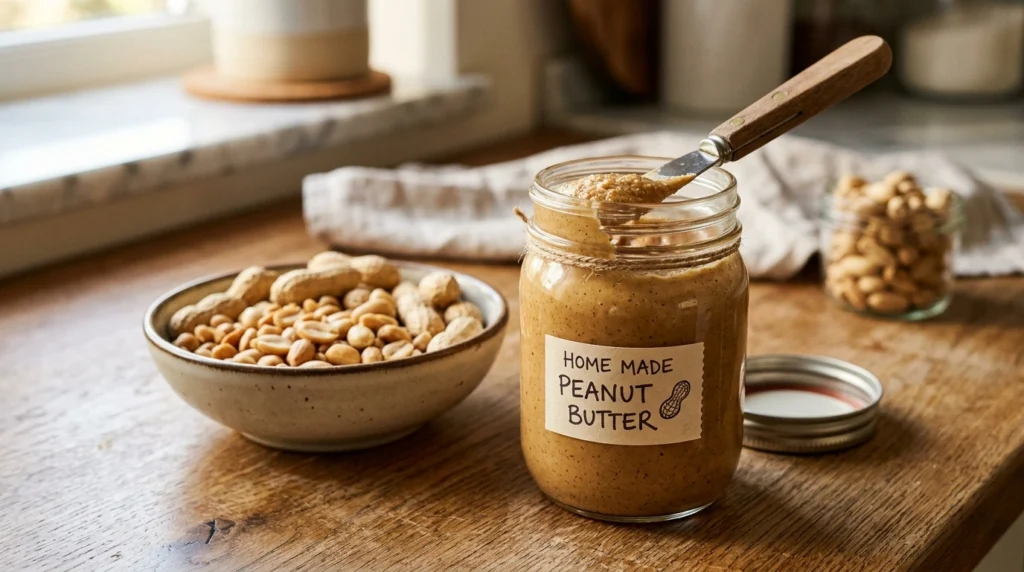
Peanut butter is a spread made primarily from ground peanuts.
Traditional peanut butter contains:
- Peanuts
- Sometimes a small amount of salt
That’s it.
The natural oils in peanuts are released during blending, creating the creamy texture we associate with peanut butter.
Why Make Peanut Butter at Home?
Many people choose homemade peanut butter because:
- It contains fewer ingredients.
- You control the amount of salt.
- No unnecessary preservatives.
- No added refined sugar.
- Fresh taste.
- Often more economical.
A simple homemade version can be just as delicious as commercial products.
Health Benefits of Peanut Butter
“According to the USDA FoodData Central , peanut butter is a nutrient-dense food that provides about 588 calories, 25 g of protein, 50 g of healthy fats, and 20 g of carbohydrates per 100 g, making it a rich source of plant-based protein and energy.”
1. Provides Plant-Based Protein
Peanuts naturally contain protein, which helps support muscle maintenance and overall body function.
Protein also helps make meals and snacks more satisfying.
2. Rich in Healthy Fats
Peanuts contain mostly unsaturated fats, which are considered heart-friendly fats when consumed as part of a balanced diet.
3. Contains Important Nutrients
Peanuts provide several nutrients, including:
- Magnesium
- Niacin (Vitamin B3)
- Vitamin E
- Phosphorus
- Copper
These nutrients play important roles in normal body functions.
4. Convenient and Versatile
Peanut butter can be added to:
- Smoothies
- Oatmeal
- Whole-grain toast
- Yogurt
- Fruit snacks
Its versatility makes healthy eating easier.
5. May Help You Feel Full Longer
The combination of protein and healthy fats can make peanut butter a satisfying food.
Many people find it helps them stay fuller between meals.
Ingredients You’ll Need
Basic Healthy Peanut Butter Recipe
- 2 cups roasted peanuts (unsalted preferred)
- Optional: pinch of salt
That’s enough to create smooth and creamy peanut butter.
Optional Ingredients
If you want extra flavor:
- Cinnamon
- Honey (small amount)
- Cocoa powder
- Chia seeds
- Flax seeds
However, for the healthiest version, peanuts alone are often enough.
How to Make Healthy Peanut Butter at Home
Step 1: Choose Good Quality Peanuts
Use fresh roasted peanuts.
Unsalted peanuts allow you to control the flavor.
Step 2: Add Peanuts to a Food Processor
Place the peanuts into a food processor or a high-powered blender.
Do not add water.
Step 3: Start Blending
At first, the peanuts will break into crumbs.
This is completely normal.
Step 4: Continue Processing
After a few minutes:
- Crumbs become thicker.
- The mixture starts clumping together.
- Natural oils begin releasing.
Be patient.
This stage is where many beginners think something has gone wrong.
Step 5: Watch the Transformation
After continued blending, the mixture suddenly becomes smoother and creamier.
The natural oils from the peanuts create the butter-like consistency.
Step 6: Adjust Texture if Needed
If you prefer:
Creamy Peanut Butter
Blend longer.
Chunky Peanut Butter
Reserve a small handful of peanuts and stir them in at the end.
Step 7: Taste and Store
Taste the peanut butter.
Add a small pinch of salt if desired.
Transfer to a clean airtight jar.
Common Problems and Solutions
Problem: Peanut Butter Looks Dry
Solution
Keep blending.
Most of the time, the natural oils simply haven’t released yet.
Problem: Blender Gets Warm
Solution
Pause for a minute and continue.
High-powered blending generates heat.
Problem: Texture Isn’t Smooth
Solution
Blend longer.
Sometimes it takes 5–10 minutes depending on the machine.
Problem: Too Thick
Solution
Add a very small amount of peanut oil if absolutely necessary.
However, most peanuts release enough oil naturally.
How to Store Homemade Peanut Butter
Store homemade peanut butter:
- In a clean glass jar
- With a tight lid
- In the refrigerator
Storage Guide
| Storage Method | Approximate Duration |
|---|---|
| Refrigerator | 3–4 Weeks |
| Cool Room Temperature | About 1 Week |
Natural oil separation is normal.
Simply stir before use.
Best Ways to Eat Homemade Peanut Butter
Breakfast
Spread on whole-grain toast.
Oatmeal
Add one tablespoon to warm oats.
Smoothies
Blend with banana and milk.
Fruit Snacks
Enjoy with:
- Apple slices
- Banana slices
- Pear slices
Energy Balls
Mix with oats and seeds for homemade snacks.
My Experience Making Peanut Butter
The first time I made peanut butter, I honestly thought I had failed.
After several minutes of blending, all I had was a bowl of peanut crumbs.
But then something interesting happened—the peanuts slowly released their natural oils, and the mixture transformed into smooth peanut butter.
That experience taught me an important lesson: sometimes healthy homemade foods simply require patience.
Now, whenever I make peanut butter, I appreciate knowing exactly what’s in it—just peanuts and nothing unnecessary.
Frequently Asked Questions
Is homemade peanut butter healthier than store-bought?
It can be, especially if the store-bought version contains added sugars, oils, or preservatives.
Can I make peanut butter without oil?
Yes. Peanuts naturally contain oils that create a creamy texture during blending.
How long does homemade peanut butter last?
Usually around 3–4 weeks when refrigerated properly.
Should I use raw or roasted peanuts?
Roasted peanuts generally provide better flavor and blend more easily.
Why does homemade peanut butter separate?
Natural oil separation is normal because homemade peanut butter does not contain stabilizers.
Simply stir before using.
Final Thoughts
Making healthy peanut butter at home is surprisingly simple. With just roasted peanuts and a blender, you can create a fresh, nutritious spread without added sugars or unnecessary ingredients.
The key is patience. Trust the process, keep blending, and allow the peanuts’ natural oils to do the work.
Best Dry Fruits for Health: 9 Nutritious Choices to Add to Your Daily Diet
