
Eating healthy doesn’t have to be expensive. Many popular health foods have affordable alternatives that can provide similar key nutrients, such as protein, fiber, healthy fats, or calcium.
In this guide, we’ll explore 10 healthy food swaps that can help you eat well, save money, and make practical choices without making misleading claims about nutrition.
In This Article
What Are Healthy Food Swaps?
Healthy food swaps are simple changes that replace one food with another to make everyday eating more nutritious, affordable, or both. Health organizations such as the NHS(Healthier Food Swaps) recommend practical food swaps as a way to make healthier choices in everyday meals.
For this guide, the goal isn’t to find nutritionally identical replacements. Instead, we’ll look for affordable alternatives that provide similar key nutrients or serve a similar nutritional purpose, while clearly explaining where they differ.
This approach makes healthy eating more practical without suggesting that one food is an exact nutritional copy of another.
10 Healthy Food Swaps on a Budget
1. Almonds → Peanuts
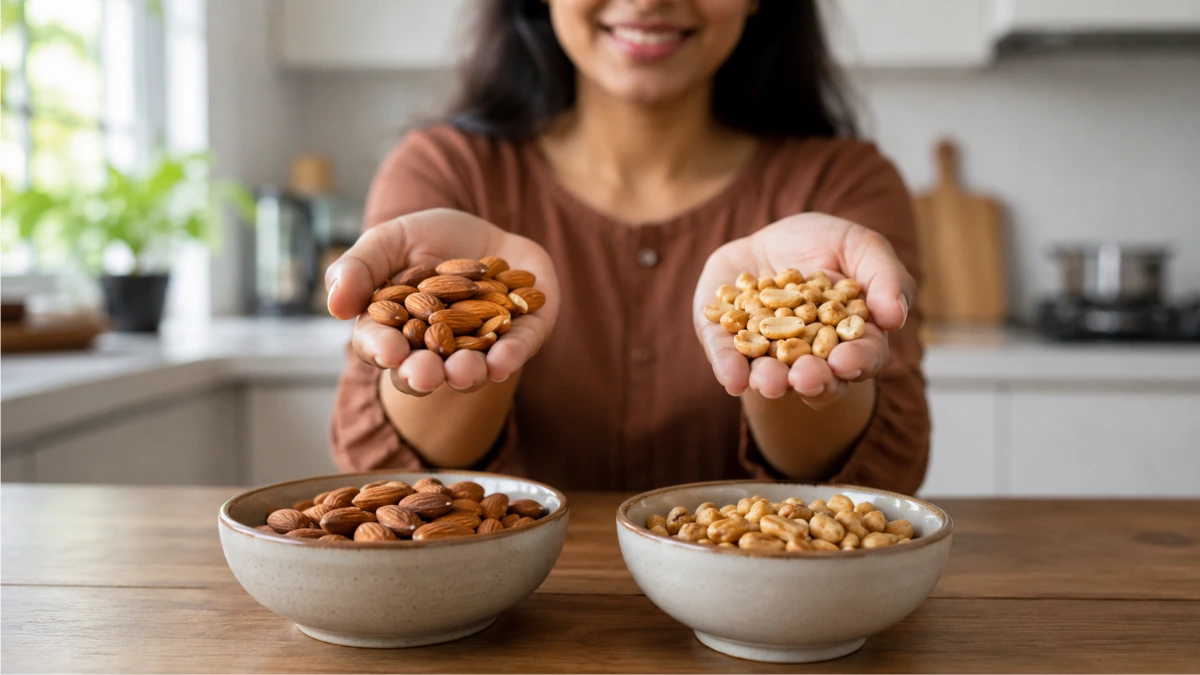
Almonds are nutritious but can be expensive for everyday snacking. Peanuts are a practical, more affordable alternative when your main goal is to add protein, fiber, and unsaturated fats to your diet. Harvard’s Nutrition Source describes almonds as a source of vitamin E, fiber, and mostly monounsaturated fats, while peanuts also provide protein, fiber, and unsaturated fats.
They aren’t nutritionally identical—almonds are particularly notable for vitamin E—so think of peanuts as a budget-friendly alternative, not a nutritional copy.
Easy swap: Choose plain or unsalted peanuts as a snack, add them to salads or poha, or use natural peanut butter instead of almond butter.
2. Chia Seeds → Flaxseeds
Chia seeds are popular, but flaxseeds can be a more affordable alternative when you’re mainly looking for plant-based omega-3 ALA and fiber. The NIH lists both chia and flaxseeds among food sources of ALA, making flaxseeds a sensible swap for this specific nutritional purpose.
They aren’t identical, though. Chia seeds are particularly high in fiber, while flaxseeds also provide ALA, fiber, and other plant compounds.
Easy swap: Use freshly ground flaxseeds in oatmeal, smoothies, yogurt, or homemade roti and baked goods.
3. Greek Yogurt → Plain Curd
Greek yogurt is popular for its high protein content, but plain curd can be a more affordable everyday option when you mainly want a nutritious dairy food that provides protein and calcium. Greek yogurt generally contains more protein than regular yogurt, so plain curd isn’t an exact substitute if maximizing protein is your priority. Harvard Health – Choosing Yogurt
For everyday meals, however, plain unsweetened curd can be a practical and budget-friendly choice.
Easy swap: Use plain curd with fruit and nuts, in raita, or as a base for savory dips.
4. Pumpkin Seeds → Sunflower Seeds
Pumpkin seeds are nutrient-dense, but sunflower seeds can be a more affordable alternative when you want to add protein, fiber, unsaturated fats, and minerals to your diet. Both provide these nutrients, although their amounts differ. Pumpkin seeds are particularly rich in magnesium, while sunflower seeds are especially notable for vitamin E. USDA FoodData Central
So, sunflower seeds aren’t a nutritional copy of pumpkin seeds, but they can be a practical budget-friendly choice for everyday snacks.
Easy swap: Add unsalted sunflower seeds to oatmeal, salads, yogurt, homemade trail mixes, or roasted vegetables.
5. Almond Butter → Peanut Butter
Almond butter is nutritious but can be costly. Natural peanut butter can be a more affordable alternative when you mainly want a spread that provides protein and unsaturated fats. The two aren’t nutritionally identical, so the better choice depends on your dietary needs and preference.
Easy swap: Choose peanut butter made primarily from peanuts, with little or no added sugar and excess salt, and use it on whole-grain toast, oats, fruit, or in smoothies.
For reliable nutrient information, USDA FoodData Central provides nutrition data for individual foods and serving sizes.
6. Cashews → Peanuts
Cashews are nutritious, but peanuts can be a more affordable everyday alternative when you’re mainly looking for protein, unsaturated fats, and a nutrient-dense snack. Both nuts and peanuts provide protein, fiber, and unsaturated fats, although their individual nutrient profiles differ. Harvard Health – Quick-Start Guide to Nuts and Seeds
Peanuts therefore make a practical alternative for snacks and homemade trail mixes, but they shouldn’t be considered nutritionally identical to cashews.
Easy swap: Choose plain or dry-roasted, unsalted peanuts for an everyday snack.
7. Kale → Spinach
Kale may be nutritious, but spinach is a familiar and practical leafy-green alternative. Both provide fiber and several vitamins and minerals, although their nutrient profiles differ. Harvard Health’s comparison shows that both kale and spinach provide vitamin A, vitamin K, folate, vitamin C, calcium, magnesium, and potassium.
If kale isn’t readily available or costs more where you live, spinach can be an easy everyday substitute.
Easy swap: Use spinach in dals, sabzis, soups, omelets, sandwiches, or smoothies.
8. Packaged Protein Snacks → Roasted Chickpeas(Chana)
Many packaged protein snacks can be expensive, while roasted chickpeas is a simple, affordable option for adding plant-based protein and fiber to your diet. Chickpeas and other legumes provide protein, fiber, vitamins, and minerals and can be an inexpensive part of a healthy diet.
This isn’t a one-for-one replacement for every protein snack because packaged products vary widely. But when you simply want a convenient, minimally processed snack, roasted chana can be a practical budget-friendly choice.
Easy swap: Keep plain or lightly seasoned roasted chana handy as a snack or add it to homemade trail mixes.
9. Meat-Based Meal → Lentils (Dal)
Meat can be an important source of protein, but lentils are an affordable way to add plant-based protein and fiber to everyday meals. Harvard’s Nutrition Source notes that cooked lentils provide protein, fiber, folate, iron, and potassium.
Lentils aren’t nutritionally identical to meat—they don’t provide vitamin B12 and have a different amino-acid profile. So this is best viewed as an affordable plant-based protein option, rather than a one-for-one replacement.
Easy swap: Use dal, lentil soup, or lentil-based curries in place of meat in some meals.
10. Packaged Granola → Plain Oats
Granola can be a convenient breakfast option, but many packaged varieties contain added sugar and can be relatively expensive. Plain oats are a simple, affordable alternative that provide fiber and other nutrients. Harvard’s Nutrition Source lists oats as a whole grain and a source of soluble and insoluble fiber, magnesium, zinc, and other nutrients.
The two aren’t nutritionally identical because granola recipes vary widely. Choosing plain oats also gives you more control over what you add, such as fruit, nuts, seeds, or yogurt.
Easy swap: Use rolled oats for oatmeal or overnight oats, then add fruit and a small amount of nuts or seeds.
Healthy Food Swaps Chart
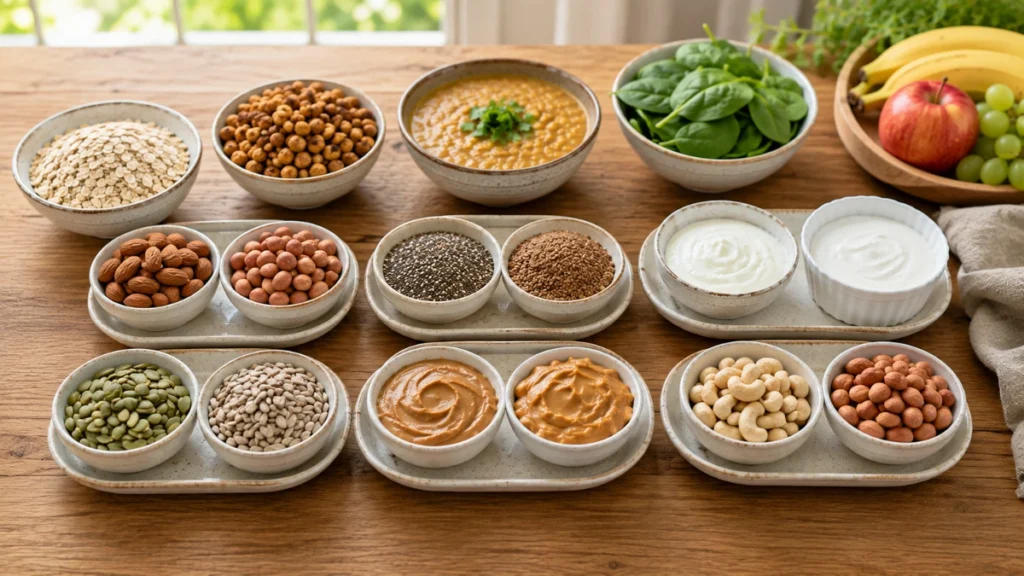
| Instead of | Try | Main nutritional reason |
|---|---|---|
| Almonds | Peanuts | Protein, fiber and unsaturated fats |
| Chia seeds | Flaxseeds | ALA omega-3 and fiber |
| Greek yogurt | Plain curd | Protein and calcium |
| Pumpkin seeds | Sunflower seeds | Protein, healthy fats and minerals |
| Almond butter | Peanut butter | Protein and unsaturated fats |
| Cashews | Peanuts | Protein, healthy fats and minerals |
| Blueberries | Guava | Vitamin C and fiber |
| Kale | Spinach | Vitamins, minerals and fiber |
| Packaged protein snacks | Roasted chana | Plant protein and fiber |
| Packaged granola | Plain oats | Fiber and greater control over added ingredients |
These swaps are not nutritionally identical replacements. Instead, each alternative can provide similar key nutrients or serve a similar role in an everyday diet. Comparing nutrition labels and choosing minimally processed options can help you make better choices while staying within your food budget.
How to Choose Healthy Food Swaps Without Losing Nutrition
A good food swap isn’t simply about choosing the cheaper option. Look at what you want from the original food—such as protein, fiber, healthy fats, calcium, or omega-3s—and choose an alternative that provides a similar nutritional role.
Also check the ingredient list and nutrition label when buying packaged foods. For example, granola can contain added sugars and fats that vary considerably between products. Choosing plain oats gives you more control over what goes into your breakfast. USDA FoodData Central can also help you compare nutrient information for individual foods.
Finally, don’t expect an affordable alternative to be nutritionally identical. A good swap simply helps you meet a similar dietary goal at a lower cost, while keeping the differences in mind.
Frequently Asked Questions About Healthy Food Swaps
What are some healthy food swaps?
Healthy food swaps are simple alternatives that can make your diet more nutritious or affordable. Examples include almonds → peanuts, chia seeds → flaxseeds, and Greek yogurt → plain curd.
Can healthy food swaps save money?
Yes. Choosing affordable staples such as oats, lentils, peanuts, and other legumes can make healthy eating more budget-friendly. Planning meals and comparing prices can also help you stay within your food budget. (Nutrition.gov
Are affordable food alternatives nutritionally identical?
No. A good swap provides similar key nutrients or serves a similar purpose, but its overall nutrient profile may differ.
What should I check when making a healthy food swap?
Check the key nutrients, serving size, ingredients, added sugar, and salt, especially for packaged foods. Comparing nutrition information per 100 g can also help you make better choices. (NHS)
Final Takeaway
Healthy eating doesn’t have to depend on expensive foods. The best healthy food swaps are practical alternatives that fit your budget while still helping you meet your nutritional needs. Focus on the nutrients that matter most, compare products and portions, and choose affordable whole foods whenever possible. Small, realistic swaps can make healthy eating easier to maintain.
You May Also Like
Best Sprouts to Eat: 10 Nutrient-Rich Choices for a Healthy Diet
Overnight Oats Recipe: An Easy, Healthy Breakfast Ready in Minutes
No Added Sugar Sweets: A Nutritious Date & Dry Fruit Recipe
