
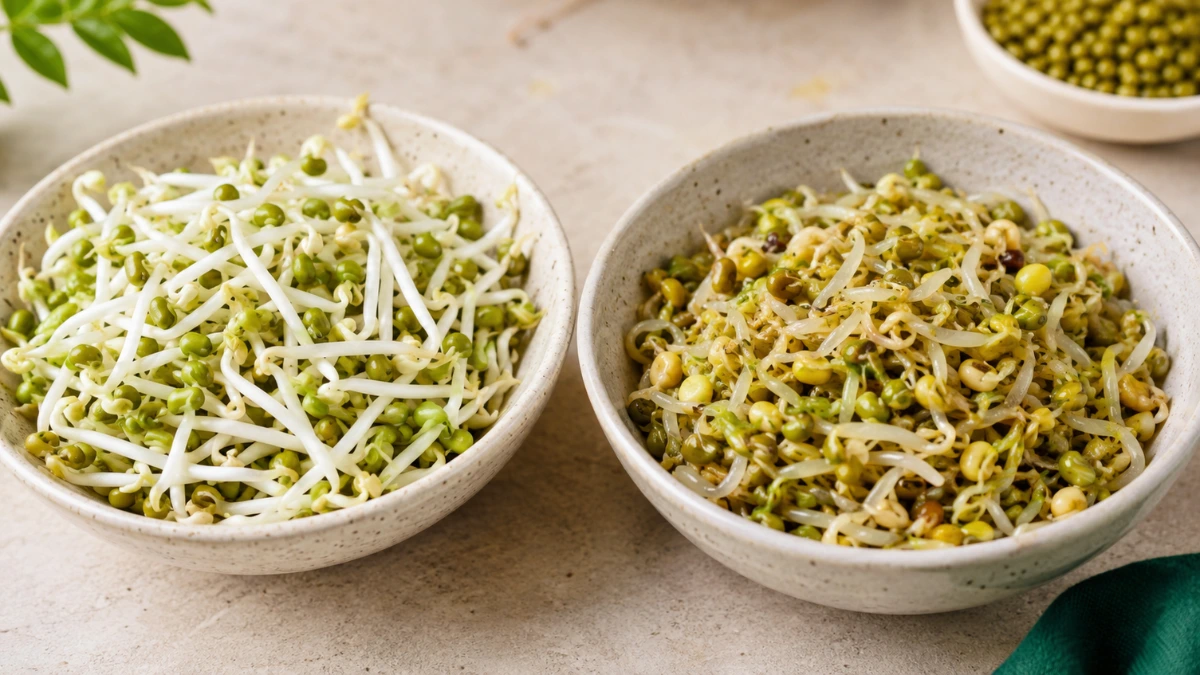
Sprouts are often eaten raw for their fresh crunch and nutrient content, but cooking them can change their texture, digestibility, and some nutritional compounds. So, is raw or cooked sprouts the healthier choice? The answer isn’t as simple as choosing one over the other. Research shows that cooking can affect different nutrients and plant compounds in different ways, while thorough cooking also offers an important food-safety advantage.
In this guide, we’ll compare raw, boiled, steamed, and roasted sprouts to see how preparation affects nutrition, digestion, weight loss, and safety—and help you choose the option that fits you best.
In This Article
Raw vs Cooked Sprouts at a Glance
Raw and cooked sprouts can both be part of a nutritious diet, but they have different advantages. Raw sprouts retain nutrients without heat exposure, while thoroughly cooked sprouts have a clear food-safety advantage. The better choice can therefore depend on what matters most to you—nutrition, digestion, taste, or safety. (CDC)
| Raw Sprouts | Cooked Sprouts | |
|---|---|---|
| Texture | Crisp and crunchy | Softer and tender |
| Heat exposure | None | Yes |
| Nutrients | No cooking-related changes | Some nutrients and plant compounds may change |
| Digestion | May not suit everyone | Often easier for some people |
| Food safety | Higher concern | Safer when thoroughly cooked |
| Best for | Fresh salads and crunchy meals | Warm meals and people who prefer cooked foods |
The key takeaway: cooking doesn’t automatically make sprouts “less healthy.” What changes depends on the type of sprout, nutrient, cooking method, and cooking time. But when it comes to food safety, the CDC considers raw or undercooked sprouts a riskier choice and recommends cooked sprouts until steaming hot.
What Happens to Sprout Nutrition When You Cook Them?
Cooking doesn’t automatically make sprouts less nutritious. The effect of heat depends on the type of sprout, cooking method, temperature, and the nutrient or plant compound being measured. Some heat-sensitive nutrients and bioactive compounds may decrease during cooking, while other changes can make certain components easier to digest.
For example, research on germinated mung beans found that cooking can improve starch digestibility, showing that cooking isn’t simply a process of “losing nutrients.” (Journal of Food Science)
This is why it’s more accurate to say that cooking changes the nutritional profile of sprouts rather than simply making them healthier or less healthy.
So, raw sprouts aren’t automatically more nutritious, and cooked sprouts aren’t automatically less nutritious—the best preparation depends on the type of sprout and what you’re looking for from your meal.
Raw, Boiled, Steamed or Roasted: Does the Cooking Method Matter?
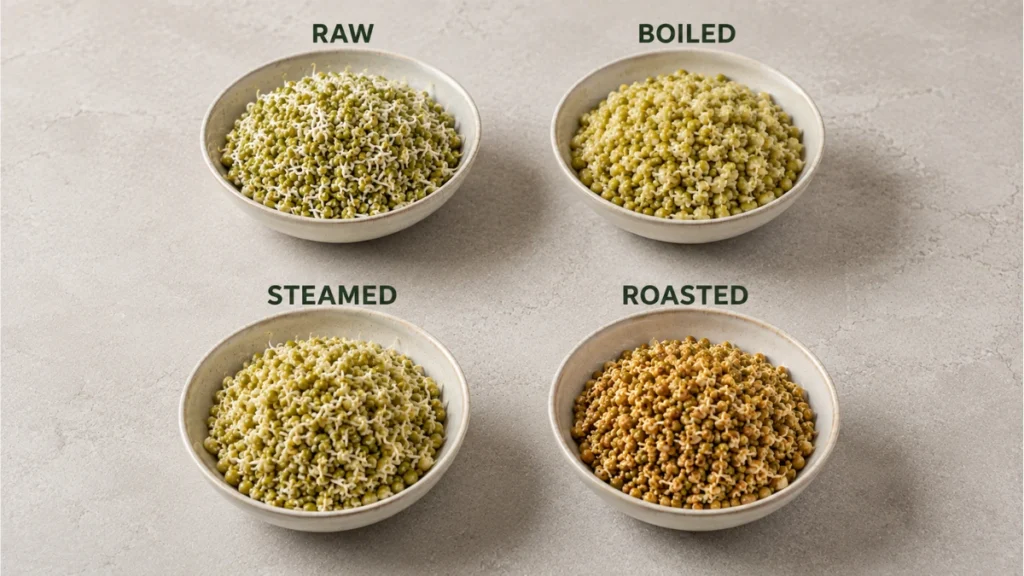
Yes. How you cook sprouts matters because heat, water, and cooking time can affect different nutrients and plant compounds differently. There isn’t one cooking method that preserves every beneficial compound best.
- Raw: keeps the sprouts fresh and crunchy, with no heat-related changes.
- Boiled: provides thorough cooking, but some water-soluble compounds may move into the cooking water.
- Steamed: uses less direct water contact, which can help retain some compounds compared with boiling.
- Roasted or sautéed: gives sprouts a nuttier flavor and firmer texture, but higher heat and added oil can change the nutritional profile.
For sprouts in particular, food safety also matters. The CDC lists raw or undercooked sprouts as a riskier choice and recommends cooked sprouts, ideally until steaming hot, as the safer option.
Which Is Healthier: Raw or Cooked Sprouts?
There isn’t one universal winner between raw and cooked sprouts. Raw sprouts may retain certain heat-sensitive nutrients and plant compounds, while cooking can improve digestibility and, most importantly, reduce the risk of foodborne illness when sprouts are thoroughly cooked.
For a healthy adult who enjoys raw sprouts, they can be included in the diet, but raw sprouts carry a higher food-safety risk than thoroughly cooked sprouts. The CDC recommends cooking sprouts until steaming hot, particularly because harmful bacteria such as Salmonella and E. coli can grow under the warm, humid conditions used for sprouting.
So, if we’re asking “Which is healthier overall?”, thoroughly cooked sprouts have the practical advantage because they combine their nutritional benefits with better food safety. Raw sprouts may still have a place in a healthy diet, but they shouldn’t automatically be considered healthier simply because they aren’t cooked.
What About Digestion and Gas?
If raw sprouts leave you feeling bloated or gassy, you don’t necessarily need to avoid sprouts altogether. Their fiber and other fermentable carbohydrates can be difficult for some people to tolerate, especially when they suddenly increase their intake.
A simple approach is to start with a smaller portion, chew well, and see how your body responds. If raw sprouts consistently cause discomfort, lightly cooked or thoroughly cooked sprouts may be easier for you to tolerate.
There is no need to force yourself to eat sprouts raw just because they are often described as more “natural” or nutritious. The healthiest preparation is one you can digest comfortably while also preparing the sprouts safely.
The Food-Safety Question: Are Raw Sprouts Safe?
Raw sprouts can look fresh and healthy, but they come with a food-safety consideration that cooked sprouts largely avoid. The warm, humid conditions needed for sprouting can also allow harmful bacteria to grow. The CDC lists raw or undercooked sprouts as a riskier choice and cooked sprouts as the safer option.
This doesn’t mean every serving of raw sprouts will make you sick, but washing them isn’t a substitute for thorough cooking. Outbreaks of illnesses linked to raw sprouts have been associated with bacteria such as Salmonella and E. coli.
For people at higher risk of severe foodborne illness—such as young children, older adults, pregnant people, and those with weakened immune systems—avoiding raw or lightly cooked sprouts is especially important.
If food safety is your priority, thoroughly cooked sprouts are the safer choice.
Are Raw or Cooked Sprouts Better for Weight Loss?
If you’re eating sprouts for weight loss, the difference between raw and cooked sprouts is less important than how you prepare and portion them. Both can provide fiber and plant-based protein, which can help make a meal more filling.
What matters more is what you add to them. A bowl of lightly cooked sprouts with vegetables is very different from sprouts loaded with oil, sugary sauces, or calorie-dense toppings.
So, choose the preparation you enjoy and tolerate well. If cooking helps you eat sprouts more comfortably and safely, there’s no reason to choose raw sprouts just for weight loss.
Who Should Be More Careful With Raw Sprouts?
Raw sprouts deserve extra caution for people who are more vulnerable to foodborne illness. The CDC recommends avoiding raw or undercooked sprouts for young children, older adults, pregnant people, and people with weakened immune systems, and choosing sprouts cooked until steaming hot instead.
For everyone else, this doesn’t mean raw sprouts are automatically unhealthy. It simply means that raw and lightly cooked sprouts carry a greater food-safety concern than thoroughly cooked ones. If you want to reduce that risk, cooking sprouts thoroughly is the safer choice.
This is also why “healthier” isn’t only about how many nutrients a food contains. Food safety is part of the overall picture too.
Frequently Asked Questions
Is it better to eat sprouts raw or cooked?
For food safety, thoroughly cooked sprouts are the safer choice. Raw sprouts may retain some heat-sensitive nutrients, but they carry a higher risk of foodborne illness. CDC — Safer Food Choices
Do cooked sprouts lose nutrients?
Cooking can change some nutrients and plant compounds, but it doesn’t make sprouts nutritionally useless. The effect depends on the type of sprout and how it is cooked.
Do cooked sprouts lose protein?
Cooking can change the nutritional profile of sprouts, but it doesn’t simply remove their protein. The effect depends on the type of sprout and cooking conditions.
How can I reduce gas after eating sprouts?
Start with a smaller serving, increase fiber gradually, chew them well, and try cooked sprouts if raw sprouts cause bloating or discomfort.
Who should avoid raw sprouts?
Young children, older adults, pregnant people, and people with weakened immune systems should avoid raw or undercooked sprouts because they are more vulnerable to foodborne illness. CDC — Safer Food Choices
Are steamed sprouts healthier than boiled sprouts?
Neither method is universally healthier. Steaming uses less water, while boiling provides thorough cooking. The most important consideration for sprouts is adequate cooking for food safety. CDC — Safer Food Choices
Final Conclusion
Raw and cooked sprouts can both be nutritious, but cooked sprouts have the overall practical advantage when food safety is considered. Raw sprouts may retain some heat-sensitive nutrients and plant compounds, while cooking can change their nutritional profile and may make them easier for some people to tolerate.
The bigger difference, however, is safety. The CDC lists raw or undercooked sprouts as a riskier choice and recommends cooked sprouts until steaming hot.
So, if you’re choosing between the two for everyday eating, thoroughly cooked sprouts are the safer choice. Raw sprouts aren’t automatically unhealthy, but they do come with a higher food-safety concern.
In the end, the healthiest choice is one that provides good nutrition, suits your digestion, and is prepared safely.
