
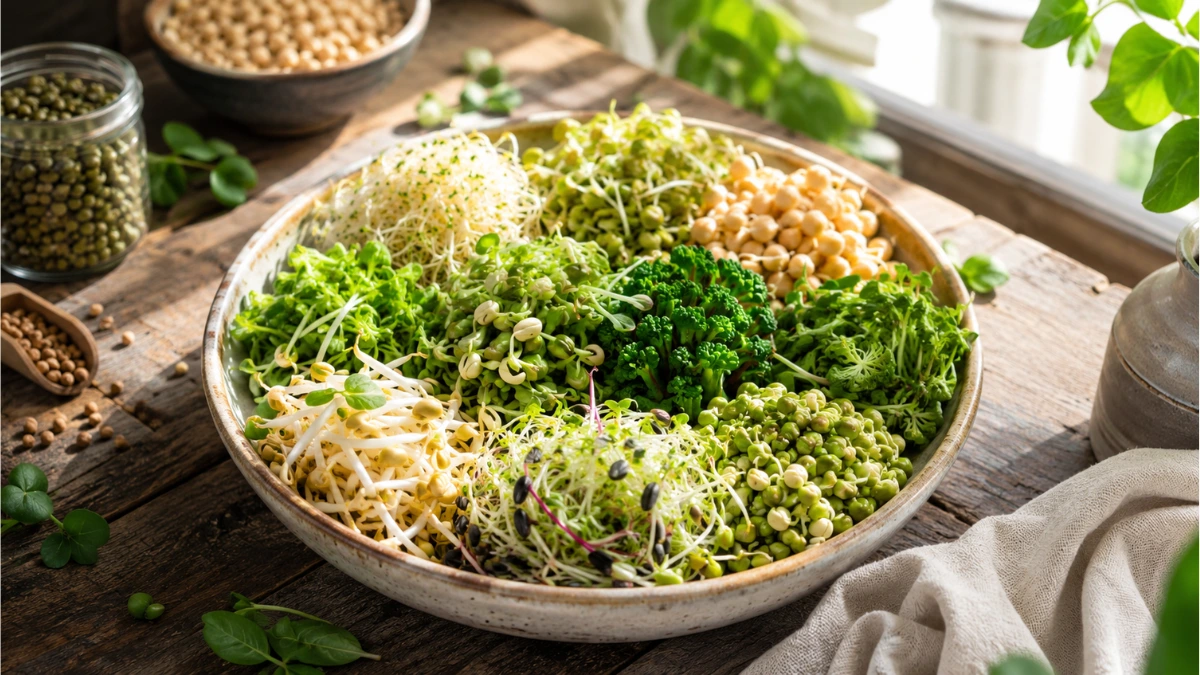
Looking for the best sprouts to eat? Not all sprouts are the same—some are richer in protein and fiber, while others stand out for their unique plant compounds and nutrients.
From mung bean and lentil sprouts to broccoli and alfalfa, each type has something different to offer. But which ones are actually worth adding to your diet?
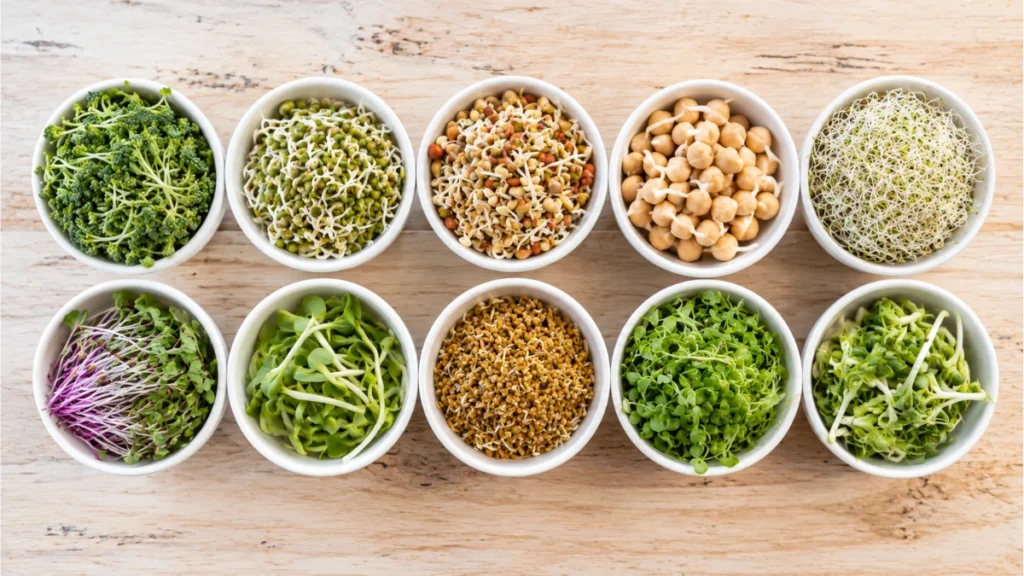
In this guide, we’ll explore 10 nutritious sprouts, what makes each one different, and the best ways to enjoy them. You’ll also find out which sprouts may suit different health goals and how to eat them safely.
In This Article
What Are Sprouts?
Sprouts are young shoots that develop when seeds, legumes, or grains begin to germinate, usually after being soaked in water. During germination, natural biochemical changes can alter the food’s nutritional profile, including the availability of some nutrients, plant compounds, and antinutritional factors.
Different sprouts have different nutritional characteristics. Mung and lentil sprouts can contribute protein and fiber, while broccoli and radish sprouts contain distinctive plant compounds. Other varieties, including chickpea, alfalfa, fenugreek, and sunflower sprouts, offer additional options for adding variety to meals.
You can use sprouts in salads, wraps, sandwiches, stir-fries, and grain bowls. But before choosing your favorites, let’s look at what makes each type different—and which ones may be the best fit for your diet.
10 Best Sprouts to Eat
1. Broccoli Sprouts
Broccoli sprouts stand out for their glucoraphanin, a glucosinolate that can be converted into sulforaphane. This combination is one reason broccoli sprouts have received considerable scientific interest, including research examining sulforaphane absorption in humans.
Best for: Adding glucosinolate-rich cruciferous sprouts to your diet.
How to eat: Add them to salads, sandwiches, wraps, or grain bowls. However, raw or lightly cooked sprouts can carry harmful bacteria, so thorough cooking is the safer choice, especially for people at higher risk of foodborne illness.
2. Mung Bean Sprouts
Mung bean sprouts are a versatile food that can contribute plant protein, fiber, vitamins, and minerals to a balanced diet. Their mild flavor and crisp texture also make them easy to incorporate into everyday meals.
Best for: An easy, versatile addition to meals.
How to eat: Add them to stir-fries, soups, wraps, grain bowls, or other cooked dishes. Cook sprouts thoroughly for food safety.
3. Lentil Sprouts
Lentil sprouts can contribute plant protein, fiber, folate, and minerals such as iron to a varied diet. Sprouting can also change the nutritional composition and availability of some compounds in legumes, with the effects depending on the food and sprouting conditions.
Best for: Adding plant protein and fiber to meals.
How to eat: Add them to grain bowls, wraps, soups, or other cooked dishes. Cook sprouts thoroughly for food safety.
4. Chickpea Sprouts
Chickpea sprouts can provide plant protein, fiber, folate, and minerals, while sprouting can alter the nutritional composition of chickpeas. They have a mild flavor and can work well in both salads and cooked dishes.
Best for: Plant-based meals that need more protein and fiber.
How to eat: Add them to grain bowls, wraps, soups, curries, or stir-fries, preferably after thorough cooking.
5. Alfalfa Sprouts
Alfalfa sprouts are a light, crunchy option that provides vitamin K, vitamin C, folate, and other nutrients. Their mild flavor makes them easy to combine with a variety of foods.
Best for: Adding variety and texture to meals.
How to eat: Add them to sandwiches, salads, wraps, or cooked dishes. Because raw sprouts can carry harmful bacteria, cooking is the safer choice.
6. Radish Sprouts
Radish sprouts have a peppery flavor and belong to the cruciferous vegetable family. They contain glucosinolates and other plant compounds, making them an interesting option for people who enjoy stronger flavors.
Best for: Adding a peppery flavor and variety to meals.
How to eat: Use them in salads, wraps, sandwiches, or grain bowls. For food safety, cook sprouts thoroughly rather than relying on raw consumption.
7. Sunflower Sprouts
Sunflower sprouts are tender and slightly nutty, and they can contribute protein, fiber, folate, and other nutrients to the diet. Their texture also makes them useful in salads and cooked dishes.
Best for: Adding variety, texture, and plant-based nutrients to meals.
How to eat: Add them to salads, sandwiches, wraps, grain bowls, or cooked dishes.
8. Fenugreek Sprouts
Fenugreek sprouts have a distinctive slightly bitter flavor and can contribute fiber, minerals, and other plant compounds to the diet. Sprouting may also alter the nutritional composition of fenugreek seeds.
Best for: Adding fenugreek to a varied diet.
How to eat: Add them to cooked dishes, curries, wraps, or grain bowls. Cooking can also soften their texture and flavor.
9. Clover Sprouts
Clover sprouts are mild and tender and provide vitamins, minerals, and plant compounds. They can add variety to meals without overpowering other ingredients.
Best for: Adding variety to salads, wraps, and other meals.
How to eat: Use them in cooked dishes or as part of a meal after appropriate preparation. Raw sprouts, including clover sprouts, can carry foodborne pathogens.
10. Pea Sprouts
Pea sprouts are tender and slightly sweet and can provide vitamins C and K, folate, fiber, and plant-based nutrients. Their fresh flavor and tender texture make them versatile in salads and cooked dishes, although cooking is the safer option for sprouts.
Best for: Adding variety, texture, and plant-based nutrients to meals.
How to eat: Add them to stir-fries, soups, grain bowls, or other cooked dishes.
Why Are Sprouts Good for You?
Sprouts can be a nutritious addition to a balanced diet, but their nutritional value varies depending on the type. During germination, natural changes can alter the amounts and availability of certain nutrients, plant compounds, and antinutritional factors. Nutrients review on sprouting
Depending on the variety, sprouts can contribute plant protein, dietary fiber, vitamins, minerals, and other bioactive compounds to your diet. Their fiber content can also contribute to normal digestive health as part of an overall balanced eating pattern.
Some potential benefits of including sprouts in your diet:
Contain naturally occurring plant compounds: Some sprouts, particularly cruciferous varieties such as broccoli and radish sprouts, contain glucosinolates and related compounds that have been studied for their biological activity.
Provide a variety of nutrients: Different sprouts offer different combinations of protein, fiber, vitamins, minerals, and plant compounds.
Add plant-based protein and fiber: Lentil, chickpea, mung bean, and other legume sprouts can contribute to daily protein and fiber intake.
Add variety to meals: Their different flavors and textures work well in salads, wraps, grain bowls, stir-fries, and other dishes.
Sprouts Nutrition Comparison
Different sprouts have different nutritional profiles, so there isn’t one universally “best” sprout. This quick comparison highlights what makes each variety different and how you might use it in your diet.
| Sprout | Notable Nutrients & Compounds | Why Choose It? |
|---|---|---|
| Broccoli Sprouts | Glucoraphanin and other glucosinolates | For a cruciferous sprout rich in glucosinolate compounds |
| Mung Bean Sprouts | Protein, fiber, folate and other nutrients | Mild flavor and versatile everyday use |
| Lentil Sprouts | Protein, fiber, folate and minerals | A plant-based source of protein and fiber |
| Chickpea Sprouts | Protein, fiber, folate and minerals | Useful in protein- and fiber-rich meals |
| Alfalfa Sprouts | Vitamin K, vitamin C, folate and other nutrients | Mild flavor and light, crunchy texture |
| Radish Sprouts | Glucosinolates and other plant compounds | Peppery flavor and cruciferous variety |
| Sunflower Sprouts | Protein, fiber and other nutrients | Nutty flavor and tender texture |
| Fenugreek Sprouts | Fiber, minerals and plant compounds | Distinctive flavor and variety |
| Clover Sprouts | Vitamins, minerals and plant compounds | Mild flavor and tender texture |
| Pea Sprouts | Vitamins, folate, fiber and plant-based nutrients | Fresh flavor and versatile texture |
Which Sprouts Are Best to Eat?
There isn’t one best sprout to eat for everyone. The right choice depends on what you’re looking for in your diet.
- Broccoli sprouts: A good choice if you want a cruciferous sprout rich in glucoraphanin and other glucosinolates.
- Lentil and chickpea sprouts: Useful options for adding plant-based protein and fiber to meals.
- Mung bean sprouts: A versatile choice with a mild flavor and crisp texture.
- Radish sprouts: A good option if you prefer a peppery flavor and cruciferous plant compounds.
- Alfalfa, clover, sunflower, fenugreek, and pea sprouts: Useful for adding variety, different textures, and a range of nutrients to meals.
Rather than choosing just one type, rotating different sprouts can be a simple way to add variety to your diet. The most nutritious choice for you is ultimately the one that fits your dietary needs, preferences, and the way you prepare it.
Raw vs. Cooked Sprouts: Which Is Better?
Raw and cooked sprouts differ mainly in texture, nutrient exposure to heat, and food-safety risk. Raw sprouts remain crisp and fresh, and avoiding heat may help preserve some heat-sensitive nutrients. However, sprouts are grown in warm, humid conditions that can also allow harmful bacteria to multiply.
Cooking sprouts thoroughly can reduce the risk of foodborne illness, making cooked sprouts the safer choice. This is particularly important for pregnant people, older adults, young children, and anyone with a weakened immune system. FDA — Sprouts: What You Should Know
If you enjoy sprouts, consider adding them to stir-fries, soups, curries, grain bowls, or other cooked meals. For people at higher risk of foodborne illness, cooked sprouts are the safer option.
Food-safety note: Washing raw sprouts does not reliably eliminate harmful bacteria, so simply buying fresh sprouts or washing them thoroughly should not be treated as a substitute for cooking. FDA — Selecting and Serving Produce Safely
Safety Tips for Eating Sprouts
Sprouts require extra care because the warm, humid conditions used for sprouting can also allow harmful bacteria such as Salmonella, Listeria, and E. coli to grow. Proper handling and thorough cooking can help reduce the risk of foodborne illness.
- Choose fresh, properly refrigerated sprouts and check the package date when buying packaged sprouts.
- Keep sprouts refrigerated and follow the storage instructions on the package.
- Wash your hands and preparation surfaces before handling sprouts to reduce cross-contamination.
- Cook sprouts thoroughly rather than relying on washing to make raw sprouts safe. Washing can reduce bacteria but does not eliminate them.
- If you are pregnant, an older adult, a young child, or have a weakened immune system, avoid raw or lightly cooked sprouts.
- Discard sprouts that look spoiled, such as those with an unpleasant smell, slimy texture, or visible spoilage.
Important: Growing sprouts at home does not eliminate the food-safety risk. Harmful bacteria can already be present on the seed and may multiply during sprouting.
Frequently Asked Questions (FAQs)
1. Which sprouts are the healthiest to eat?
There isn’t one healthiest sprout for everyone. Different varieties provide different nutrients and plant compounds. Broccoli sprouts are notable for glucoraphanin and other glucosinolates, while lentil, chickpea, and mung bean sprouts can contribute plant protein and fiber. Eating a variety of sprouts can add nutritional diversity to a balanced diet.
2. Can you eat sprouts every day?
Yes, sprouts can be included regularly in a balanced diet. Different types provide different nutrients, so rotating sprouts can add variety to your meals. However, proper storage, handling, and cooking are important because raw sprouts can carry harmful bacteria. FDA — Selecting and Serving Produce Safely
3. Are sprouts better raw or cooked?
Raw sprouts have a fresh, crunchy texture, while cooked sprouts are the safer choice from a food-safety perspective. Sprouts can carry harmful bacteria, and washing does not reliably eliminate the risk. The FDA recommends cooking sprouts thoroughly, especially for people at higher risk of foodborne illness. FDA — Sprouts: What You Should Know
4. Which sprouts are best for protein?
Lentil, chickpea, mung bean, and pea sprouts can contribute plant-based protein to your diet. Among these, legume sprouts such as lentil, chickpea, and mung bean are particularly useful when you’re looking to add more plant-based protein and fiber to meals.
5. What is the best way to eat sprouts?
The best way to eat sprouts depends on the variety and your food-safety needs. You can add them to stir-fries, soups, grain bowls, wraps, and other cooked dishes. Because raw sprouts can carry harmful bacteria, thoroughly cooking them is the safer option. FDA — Sprouts: What You Should Know
Final Thoughts
There isn’t one best sprout to eat for everyone. Broccoli, mung bean, lentil, chickpea, alfalfa, and other sprouts each offer different nutrients, flavors, and textures, so choosing a variety can be a simple way to add more diversity to your diet.
Whether you prefer them in grain bowls, wraps, salads, or cooked dishes, choose the varieties that fit your meals and preferences. Most importantly, handle and prepare sprouts safely, as raw sprouts can carry harmful bacteria.
Start with one or two varieties you enjoy, then experiment with others to find your favorites.
