
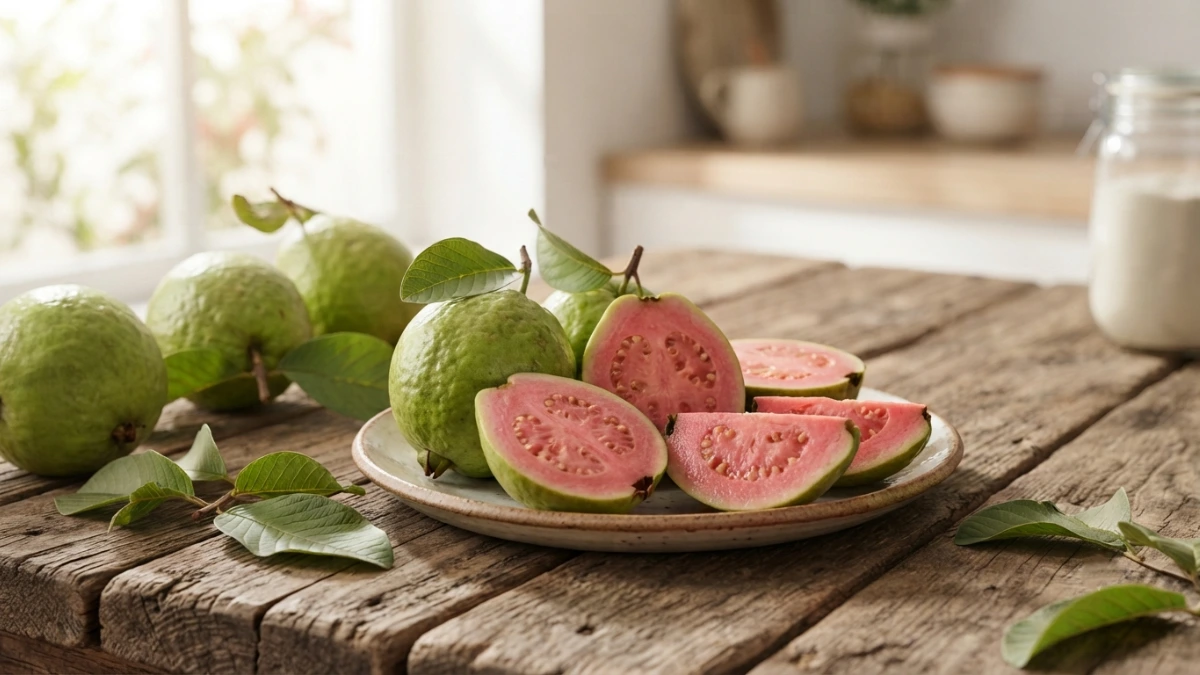
Guava may not be as trendy as avocados or dragon fruit, but it’s one of the most nutrient-dense fruits you can easily include in your diet. Naturally rich in vitamin C, fiber, antioxidants, and other essential nutrients, this tropical fruit offers much more than its sweet, refreshing taste.
Whether you enjoy it fresh, sliced as a snack, or blended into a smoothie, guava can be a simple way to increase your intake of important vitamins and minerals. While no single fruit can transform your health, regularly choosing nutrient-rich foods like guava can support a balanced and healthy eating pattern.
In this article, you’ll discover the science-backed benefits of guava, its nutritional value, the best ways to eat it, and who should be mindful before adding it to their diet.
In This Article
Quick Guide: Guava Benefits at a Glance
Best known for: High vitamin C content, fiber, and antioxidants
Key nutrients: Vitamin C, dietary fiber, potassium, folate, and carotenoids
May support:
- Healthy digestion
- Immune function
- Heart health
- Healthy skin
- Overall nutrition
Best way to enjoy: Eat fresh guava with or without the peel, add it to fruit salads, smoothies, or enjoy it as a healthy snack.
Remember: Guava is a nutritious fruit that supports a balanced diet, but it is not a substitute for medical treatment or healthy lifestyle habits.
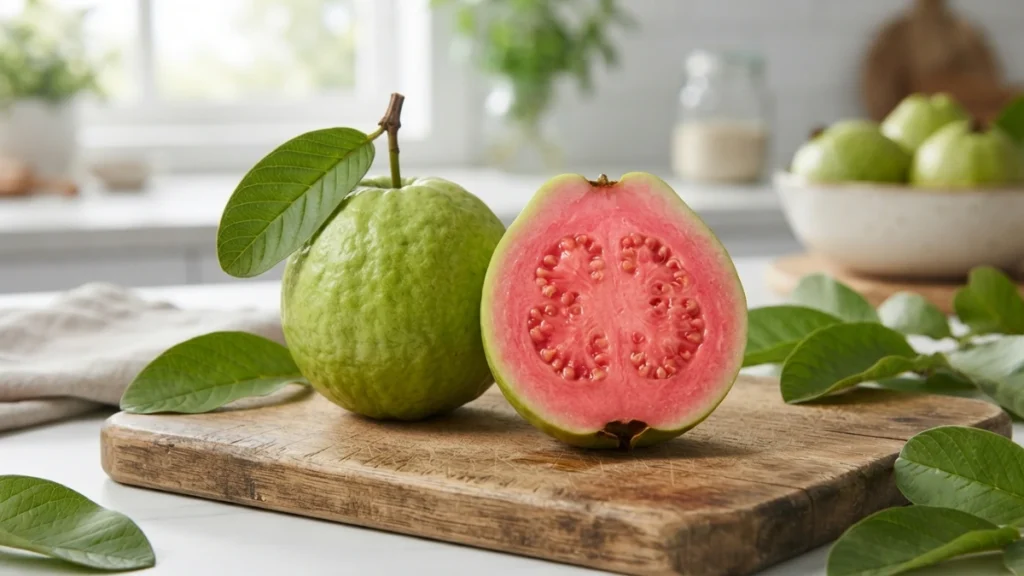
Guava Nutrition Facts: What Makes This Fruit So Healthy?
Guava is a low-calorie fruit packed with vitamin C, dietary fiber, antioxidants, and several essential vitamins and minerals. One of its biggest nutritional strengths is its exceptionally high vitamin C content, which is even higher than many commonly eaten citrus fruits.
According to USDA FoodData Central, one cup (about 165 g) of raw guava provides approximately:
| Nutrient | Amount |
|---|---|
| Calories | 112 kcal |
| Carbohydrates | 24 g |
| Dietary Fiber | 9 g |
| Protein | 4.2 g |
| Fat | 1.6 g |
| Vitamin C | 377 mg |
| Folate | 81 mcg |
| Potassium | 688 mg |
Guava also contains beneficial plant compounds, including carotenoids and polyphenols, which contribute to its antioxidant properties. Together, these nutrients make guava a wholesome addition to a balanced eating pattern.
7 Science-Backed Guava Benefits
Guava is more than just a refreshing tropical fruit. Its combination of vitamin C, fiber, antioxidants, and essential nutrients makes it a healthy addition to a balanced diet. According to USDA FoodData Central and the Harvard T.H. Chan School of Public Health, regularly eating a variety of nutrient-rich fruits supports overall health and well-being.
Here are eight science-backed guava benefits you should know.
1. Supports Healthy Digestion
One of the biggest guava benefits is its high fiber content. Dietary fiber helps support regular bowel movements, promotes a healthy digestive system, and contributes to better gut health. Eating fiber-rich fruits like guava as part of a balanced diet may also help you feel fuller for longer. For the best nutritional value, many people choose to eat ripe guava with its edible peel, which contains additional fiber.
2. Exceptionally Rich in Vitamin C
Guava is one of the richest natural sources of vitamin C, an essential nutrient that supports normal immune function and helps protect cells from oxidative stress. Vitamin C also plays an important role in collagen production, which supports healthy skin, blood vessels, and connective tissues. Including vitamin C-rich fruits like guava in your diet is a simple way to help meet your daily nutritional needs.
3. Rich in Antioxidants That Help Protect Your Cells
Guava contains beneficial plant compounds, including carotenoids, lycopene (especially in pink guava), and polyphenols. These antioxidants help protect cells from oxidative stress caused by free radicals. While no single food can prevent disease, eating antioxidant-rich fruits like guava as part of a balanced diet is a simple way to support overall health.
4. May Support Heart Health
Guava provides fiber, potassium, and antioxidants that support overall heart health as part of a balanced diet. Potassium helps maintain normal blood pressure, while fiber is an important nutrient for heart-friendly eating patterns. Replacing processed snacks with fresh fruits like guava is a simple step toward better cardiovascular wellness.
5. May Help Support Healthy Blood Sugar Levels
Despite its naturally sweet taste, guava contains fiber, which slows the digestion of carbohydrates and supports normal blood sugar responses after meals. For people managing diabetes or other medical conditions, guava can be enjoyed as part of a balanced diet, but it should not replace medical advice or prescribed treatment.
6. May Support Healthy Skin
Healthy skin starts with good nutrition. Guava provides vitamin C and antioxidants that support normal collagen production and help protect cells from oxidative stress. Combined with proper hydration and a balanced diet, these nutrients contribute to healthy-looking skin.
7. A Nutrient-Dense Fruit That Fits a Healthy Diet
Guava is naturally low in calories while providing fiber, vitamins, and minerals, making it a satisfying snack or addition to meals. Whether eaten fresh, in fruit salads, or blended into smoothies, it offers a simple way to increase your daily fruit intake and add more variety to a healthy eating pattern.
Is It Good to Eat Guava Every Day?
Guava is nutritious enough to be enjoyed regularly, especially when you’re looking for a fiber-rich and vitamin C-rich snack. One medium guava can easily fit into a balanced diet without adding many calories.
That said, healthy eating isn’t about relying on a single “superfruit.” You’ll get the greatest nutritional benefits by enjoying guava alongside a variety of seasonal fruits, vegetables, whole grains, and other wholesome foods.
Best Time to Eat Guava & Easy Ways to Enjoy It
Guava can be enjoyed at any time of the day, but many people prefer it as a mid-morning or evening snack because it’s naturally filling and refreshing. Its combination of fiber and water also makes it a satisfying alternative to processed snacks.
Here are a few simple ways to enjoy guava:
- Eat fresh guava as a healthy snack.
- Slice it into fruit salads.
- Blend it into smoothies.
- Add it to yogurt or oatmeal.
- Sprinkle a little black salt or chili powder for a flavorful twist.
If you eat guava with the peel, wash it thoroughly before eating, as the peel contains extra fiber and beneficial nutrients.
Who Should Be Careful?
Guava is safe for most people, but a few situations call for extra care.
- If you’re increasing your fiber intake, start with small portions, as eating too much guava at once may cause bloating or digestive discomfort.
- If you have diabetes or another medical condition, enjoy guava as part of your meal plan and follow the advice of your healthcare provider.
- If you have a fruit allergy, stop eating guava and seek medical advice if you notice symptoms such as itching, swelling, or difficulty breathing.
For most healthy adults, fresh guava is a nutritious fruit that can be enjoyed as part of a balanced diet.
My Personal Experience
I have always found guava to be one of those simple fruits that often gets overlooked despite being highly nutritious. Its refreshing taste, crunchy texture, and natural sweetness make it an easy addition to everyday meals.
What I like most about fruits like guava is that healthy eating doesn’t always need complicated recipes. Sometimes, choosing simple whole foods and enjoying them regularly can be a practical step toward a healthier lifestyle.
Frequently Asked Questions
Is guava high in vitamin C?
Yes, guava is one of the richest fruit sources of vitamin C. It also provides fiber, antioxidants, and other important nutrients.
Can I eat guava every day?
Yes, guava can be enjoyed regularly as part of a balanced diet. However, eating a variety of fruits is the best way to get different nutrients.
Is guava good for digestion?
Yes, guava is rich in dietary fiber, which supports healthy digestion and helps maintain regular bowel movements.
Which is healthier: guava or apple?
Both fruits have their own nutritional benefits. Guava generally provides more vitamin C and fiber, while apples also offer fiber and beneficial plant compounds.
Should you eat guava with the peel?
Yes, the peel is edible and contains additional fiber and nutrients. Just wash the fruit properly before eating.
Final Thoughts
Guava is a simple fruit with an impressive nutritional profile. From its high vitamin C content to its fiber and antioxidant properties, it can be a valuable addition to a balanced eating pattern.
While no single food can create perfect health, choosing nutrient-rich fruits like guava is one small habit that can support better nutrition over time.
Whether you enjoy it fresh, in a fruit bowl, or as a quick snack, guava is an easy and affordable way to add more goodness to your everyday diet.
You May Also Like
Dragon Fruit Benefits: Is This Colorful Fruit Really Good for You?
8 Science-Backed Papaya Benefits: What Happens When You Eat This Fruit Regularly?
