
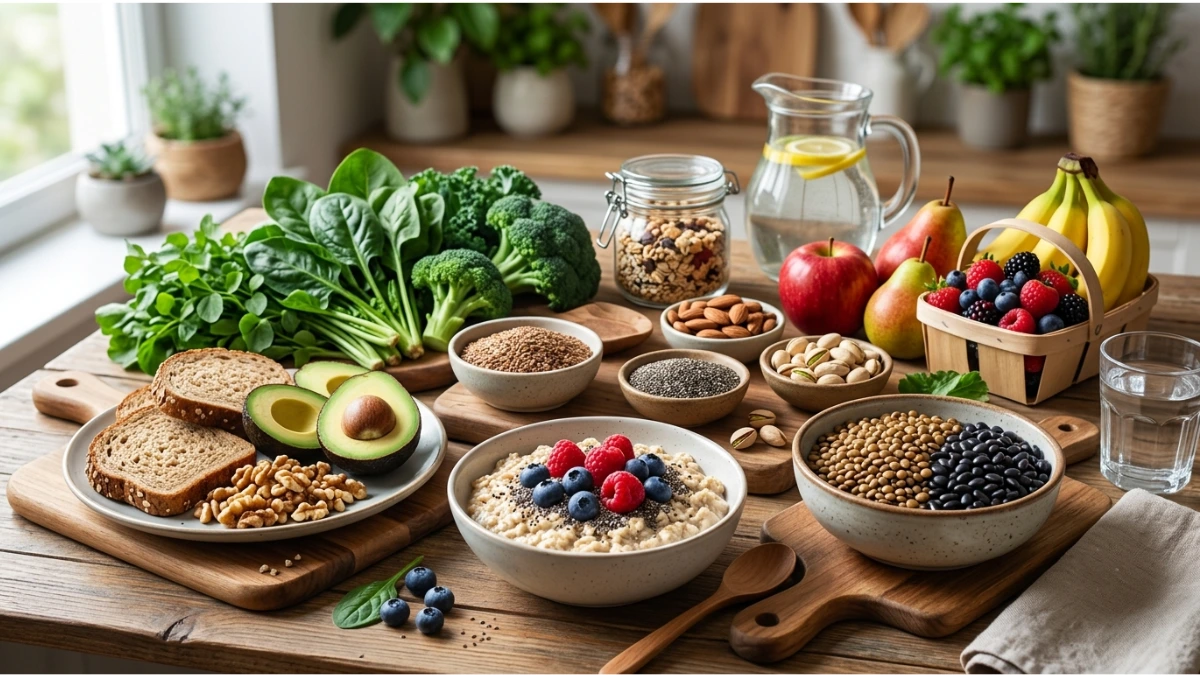
High-fiber foods are an important part of a healthy diet, yet many people don’t get enough fiber each day. Found naturally in foods like beans, lentils, oats, apples, pears, berries, chia seeds, flaxseeds, and leafy green vegetables, fiber supports healthy digestion and plays an important role in overall well-being.
Adding more fiber to your meals doesn’t have to be difficult. Simple choices, such as swapping refined grains for whole grains or including more fruits, vegetables, legumes, and seeds, can make a big difference over time.
In this article, you’ll learn what dietary fiber is, why it’s important for your health, the best high-fiber foods to eat, and easy ways to increase your daily fiber intake.
In This Article
Quick Guide
Quick Facts Details What Is Fiber? A type of carbohydrate that your body cannot fully digest. Rich In Whole grains, legumes, fruits, vegetables, nuts, and seeds Good Sources Oats, beans, lentils, chia seeds, flaxseeds, apples, pears, berries, broccoli, leafy greens Why It Matters Supports healthy digestion, helps you feel full, and contributes to overall health Easy Ways to Eat More Add fruit to breakfast, choose whole grains, snack on nuts, and include beans or vegetables in meals Best For People looking to improve their overall diet, digestive health, and daily nutrient intake
What Are High-Fiber Foods?
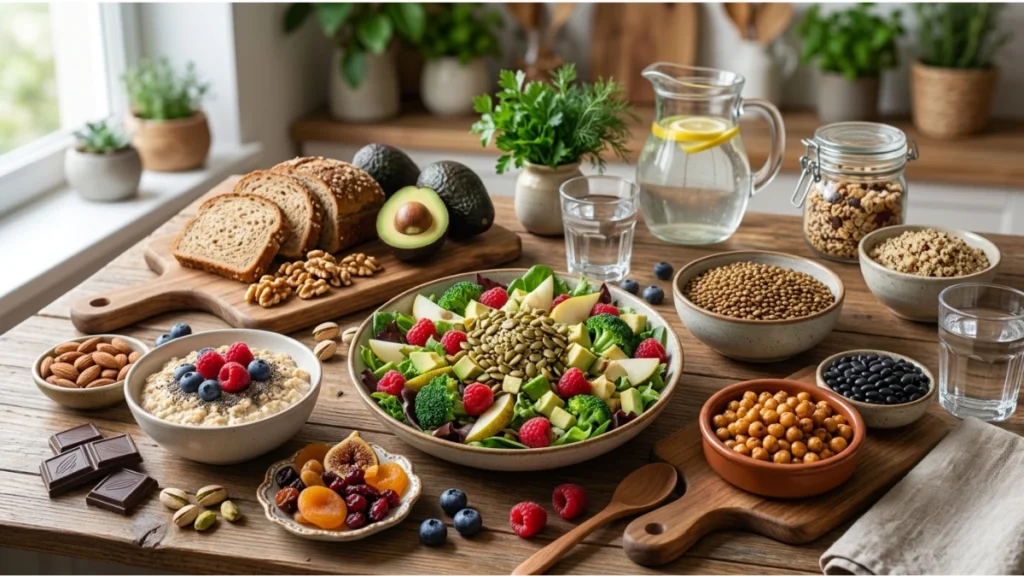
High-fiber foods are foods that naturally contain dietary fiber, a type of carbohydrate that your body cannot fully digest. Unlike other carbohydrates, fiber passes through the digestive system mostly intact, where it helps support normal digestion and overall health.
There are two main types of dietary fiber, and both are important:
- Soluble fiber dissolves in water to form a gel-like substance. It’s found in foods such as oats, beans, lentils, apples, citrus fruits, and chia seeds.
- Insoluble fiber does not dissolve in water and helps add bulk to stool. Good sources include whole grains, leafy green vegetables, nuts, seeds, and many vegetables.
Most plant-based foods contain a combination of both types of fiber. Instead of focusing on just one type, aim to eat a variety of fruits, vegetables, whole grains, legumes, nuts, and seeds to get the full range of nutritional benefits.
Why Is Fiber Important?
Although your body doesn’t digest fiber the way it digests other carbohydrates, it still plays an important role in a healthy diet. Fiber supports normal digestion, helps you feel satisfied after meals, and contributes to overall health when eaten as part of a balanced eating pattern.
According to the USDA FoodData Central, many naturally high-fiber foods—such as beans, lentils, oats, fruits, vegetables, nuts, and seeds—also provide essential nutrients like vitamins, minerals, antioxidants, and other beneficial plant compounds. This makes them some of the most nutrient-dense foods you can include in your daily meals.
Rather than relying on a single “superfood,” eating a variety of fiber-rich foods throughout the week is one of the simplest ways to improve the overall quality of your diet.
8 Health Benefits of High-Fiber Foods
A diet rich in fiber offers much more than healthy digestion. According to the Harvard T.H. Chan School of Public Health, eating plenty of fiber from whole plant foods is associated with better overall health and is an important part of a balanced dietary pattern.
1. Supports Healthy Digestion
Fiber helps food move through the digestive system and supports regular bowel movements. Including a variety of high-fiber foods in your meals can help maintain normal digestive function and support a healthy gut.
2. Helps You Feel Full for Longer
High-fiber foods take longer to digest than many refined foods, which can help you stay satisfied after meals. Pairing fiber-rich foods with protein and healthy fats can make meals even more filling and may reduce the urge to snack between meals.
3. Supports Heart Health
Many fiber-rich foods, including oats, beans, lentils, fruits, and vegetables, are naturally low in saturated fat and rich in beneficial nutrients. As part of a balanced diet, these foods can support long-term heart health.
4. May Help Support Healthy Blood Sugar Levels
Foods that are naturally high in fiber are digested more slowly than many refined carbohydrates. As part of a balanced diet, choosing fiber-rich foods may help support healthy blood sugar levels already within the normal range and provide more steady energy throughout the day.
5. May Support Healthy Weight Management
High-fiber foods can make meals more satisfying without adding many extra calories. Filling your plate with fruits, vegetables, legumes, and whole grains may help you manage hunger and make it easier to maintain healthy eating habits over time.
6. Supports a Healthy Gut Microbiome
Fiber acts as a food source for many of the beneficial bacteria that naturally live in your digestive system. A diverse gut microbiome plays an important role in digestion and overall health, making fiber an essential part of a balanced diet.
7. Helps Increase Your Nutrient Intake
Many high-fiber foods are also rich in important nutrients such as vitamins, minerals, antioxidants, and beneficial plant compounds. By eating more fiber-rich foods, you naturally increase the nutritional quality of your meals while reducing your reliance on highly processed foods.
8. Easy to Include in Everyday Meals
Getting more fiber doesn’t require a major change to your diet. Simple habits—such as choosing whole-grain bread instead of white bread, adding beans to soups and salads, eating fruit as a snack, or sprinkling chia or flaxseeds over yogurt or oatmeal—can help you increase your daily fiber intake in a practical and sustainable way.
12 Best High-Fiber Foods to Add to Your Diet
The best way to increase your fiber intake is to eat a variety of whole plant foods. Each food provides a different mix of fiber, vitamins, minerals, and beneficial plant compounds, so including a range of options in your diet is the healthiest approach.
1. Oats
Oats are one of the best sources of soluble fiber, especially beta-glucan. They make a filling breakfast and pair well with fruit, nuts, and yogurt.
2. Lentils
Lentils are packed with fiber and plant-based protein. They can be added to soups, curries, salads, and rice dishes for a nutritious, satisfying meal.
3. Beans
Beans, including black beans, kidney beans, and chickpeas, are naturally high in fiber and protein. They’re a great addition to soups, wraps, grain bowls, and salads.
4. Chia Seeds
Chia seeds are small but incredibly nutrient-dense. They provide fiber, healthy fats, and minerals, making them an easy topping for yogurt, smoothies, and oatmeal.
5. Flaxseeds
Ground flaxseeds are another excellent source of fiber. Sprinkle them over breakfast cereals, smoothies, or salads to boost both fiber and healthy fats.
6. Avocados
Avocados provide healthy fats along with a good amount of dietary fiber. They work well in salads, sandwiches, wraps, or simply spread on whole-grain toast.
7. Apples
Apples are a convenient, fiber-rich fruit that can be enjoyed as a snack or added to oatmeal, salads, and yogurt. For the most fiber, eat them with the skin whenever possible.
8. Pears
Pears are naturally sweet and one of the highest-fiber fruits. They’re a delicious snack and pair well with yogurt, nuts, or whole-grain breakfasts.
9. Berries
Blueberries, raspberries, strawberries, and blackberries all provide fiber along with antioxidants and vitamin C. They’re perfect for smoothies, breakfast bowls, or healthy desserts.
10. Broccoli
Broccoli is a nutritious vegetable that offers fiber, vitamin C, and several important plant compounds. It can be steamed, roasted, or added to stir-fries and soups.
11. Leafy Green Vegetables
Leafy greens such as spinach (palak), kale, fenugreek leaves (methi), and mustard greens (sarson) provide fiber along with vitamins, minerals, and antioxidants. Including different leafy greens throughout the week helps increase both variety and nutrient intake.
12. Nuts
Almonds, pistachios, walnuts, and other nuts provide fiber, healthy fats, and plant-based protein. A small handful makes a satisfying snack or topping for salads and yogurt.
Easy Ways to Eat More Fiber
Increasing your fiber intake doesn’t have to happen overnight. Small, consistent changes are often the easiest to maintain.
Here are a few simple tips:
- Start your day with oatmeal or a whole-grain breakfast.
- Add beans or lentils to soups, salads, and curries.
- Snack on fresh fruits like apples, pears, or berries instead of processed snacks.
- Include leafy green vegetables with lunch or dinner.
- Sprinkle chia seeds or ground flaxseeds over yogurt, oatmeal, or smoothies.
- Choose whole-grain bread, brown rice, or whole-wheat pasta more often.
- Drink enough water, especially as you gradually increase your fiber intake.
Things to Keep in Mind
High-fiber foods are beneficial for most people, but increasing your fiber intake too quickly may cause temporary bloating or gas. It’s usually best to add fiber gradually and drink plenty of water to help your digestive system adjust.
If you have a digestive condition such as inflammatory bowel disease (IBD), irritable bowel syndrome (IBS), or have been advised to follow a low-fiber diet, talk to your healthcare provider or a registered dietitian before making significant dietary changes.
Frequently Asked Questions
How much fiber do adults need each day?
Daily fiber needs vary by age and sex, but most adults benefit from eating a variety of fiber-rich foods regularly. If you’re unsure about your individual needs, check your country’s dietary guidelines or speak with a healthcare professional.
What are the best high-fiber foods?
Some of the best sources include oats, beans, lentils, chia seeds, flaxseeds, apples, pears, berries, broccoli, nuts, and leafy green vegetables.
Can I get enough fiber without supplements?
Yes. Most healthy people can meet their fiber needs through a balanced diet that includes plenty of fruits, vegetables, whole grains, legumes, nuts, and seeds.
Can eating too much fiber be a problem?
Increasing fiber very quickly or eating large amounts without enough fluids may lead to bloating, gas, or stomach discomfort. A gradual increase with adequate water is usually the most comfortable approach.
Final Thoughts
High-fiber foods are one of the simplest ways to improve the quality of your diet. Foods such as oats, beans, lentils, fruits, vegetables, nuts, seeds, and whole grains provide dietary fiber along with vitamins, minerals, and other beneficial plant compounds that support overall health.
Rather than relying on a single “superfood,” focus on eating a wide variety of fiber-rich foods every day. Small changes—like choosing whole grains, adding more vegetables to meals, or enjoying fruit as a snack—can make a meaningful difference over time and help you build healthy eating habits that last.
You May Also Like
Leafy Green Vegetables: Benefits, Nutrition, and 7 Healthy Greens to Add to Your Diet
Avocado Benefits: 8 Science-Backed Reasons This Nutrient-Rich Fruit Is So Popular
