
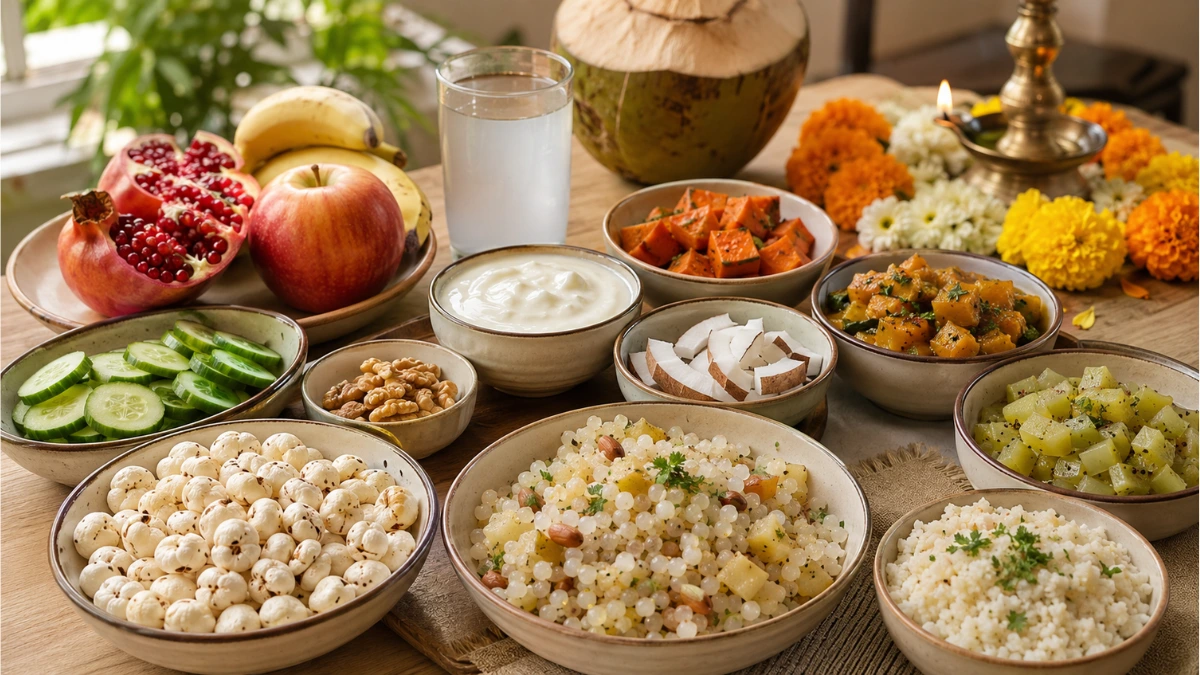
What to eat during Hindu fasting depends on the type of vrat and the traditions followed by your family or community. Fasting is an important part of many Hindu traditions, including Navratri, Shravan, Ekadashi, Mahashivratri, and Janmashtami. Since fasting rules vary, the foods allowed during a vrat can also differ.
So, what can you eat during a Hindu fast? Fruits, certain vegetables, nuts, dairy, and vrat-friendly grains are common choices that can provide energy and help you stay hydrated.
In this guide, you’ll discover 25 healthy fasting foods to eat during Hindu vrats, along with simple serving ideas, foods to avoid, and practical tips for staying comfortable and energized while fasting.
In This Article
What Are Healthy Fasting Foods?
Healthy fasting foods are nutrient-rich, satvik foods that provide steady energy while supporting your body during a fast. These foods are generally light, easy to digest, and commonly eaten during Hindu vrats such as Navratri, Shravan, Ekadashi, Mahashivratri, and Janmashtami. However, the exact foods allowed can vary depending on regional traditions, family customs, and the type of vrat being observed.
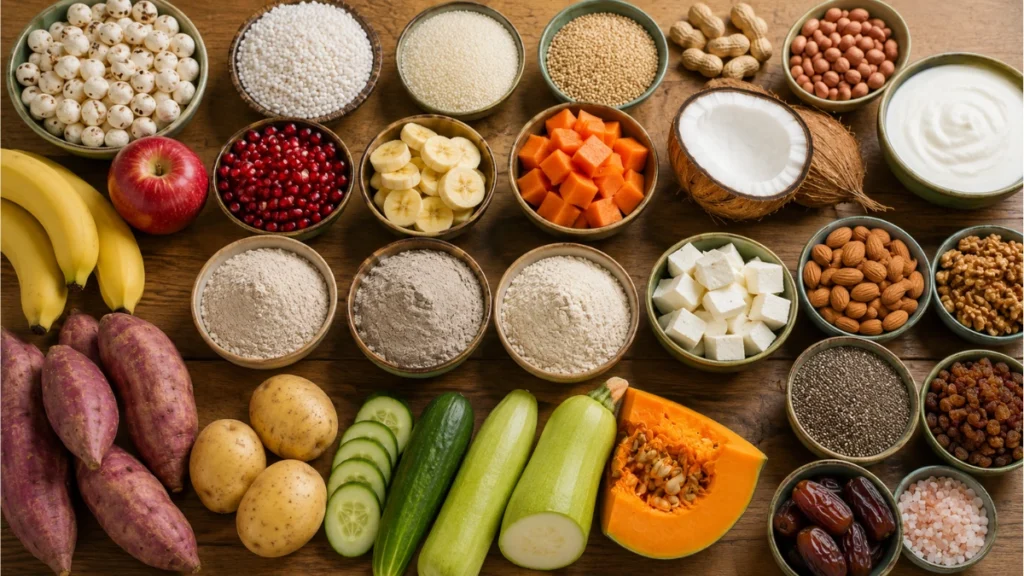
Common fasting foods include fresh fruits, milk and yogurt, makhana (fox nuts), nuts, seeds, coconut, sabudana (tapioca pearls), sama rice (barnyard millet), kuttu (buckwheat) flour, singhara (water chestnut) flour, and vegetables like potatoes, sweet potatoes, pumpkin, and bottle gourd. These foods provide carbohydrates for energy, protein for satiety, healthy fats, fiber, vitamins, and minerals to help you feel nourished throughout the day.
Rather than simply eating less, a healthy fast is about choosing wholesome foods that align with your fasting tradition while helping you maintain your energy and overall well-being.
Why Choosing the Right Foods During a Fast Matters
During Hindu vrats, certain grains, spices, and ingredients may be avoided depending on the fasting tradition. This makes it important to choose foods that provide energy, protein, healthy fats, fiber, and fluids throughout the day.
Fruits and vegetables can provide hydration and nutrients, while dairy, nuts, seeds, and vrat-friendly grains such as sama rice, rajgira, and kuttu can help make meals more satisfying. According to the Harvard T.H. Chan School of Public Health, choosing a variety of nutritious foods is an important part of a balanced eating pattern.
Rather than relying mainly on fried snacks or sugary foods, choosing a variety of wholesome fasting foods can help you feel nourished and comfortable throughout your vrat.
25 Healthy Fasting Foods to Eat During Hindu Vrats
Whether you’re observing Navratri, Shravan, Ekadashi, Mahashivratri, Janmashtami, or another Hindu vrat, choosing wholesome satvik foods can help you stay energized throughout the day. The foods below are commonly enjoyed during fasting, though permitted ingredients may vary by tradition and region.
1. Makhana (Fox Nuts)
Makhana is one of the most popular fasting foods because it’s light, crunchy, and naturally satisfying. It provides protein, fiber, magnesium, and antioxidants, making it a nutritious snack that helps keep hunger under control. Enjoy it roasted with a little sendha namak and ghee.
2. Fresh Fruits
Fresh fruits such as bananas, apples, papayas, pomegranates, and pears are naturally rich in vitamins, minerals, fiber, and water. They provide quick energy while helping you stay hydrated, making them an excellent choice during long fasting hours.
3. Sweet Potatoes (Shakarkandi)
Sweet potatoes are naturally sweet, filling, and packed with fiber, vitamin A, and potassium. Their complex carbohydrates release energy gradually, helping you feel satisfied for longer compared to highly processed fasting snacks.
4. Potatoes
Potatoes are a staple during many Hindu vrats because they’re versatile and easy to prepare. Pairing boiled or lightly roasted potatoes with yogurt or peanuts creates a more balanced meal than eating potatoes alone.
5. Sama Rice (Barnyard Millet)
Sama rice is a popular vrat-friendly grain that can be prepared similarly to regular rice. It pairs well with vegetables, yogurt, or peanut-based curries for a wholesome fasting meal.
6. Rajgira (Amaranth)
Rajgira is a nutritious vrat-friendly grain that’s naturally rich in protein, fiber, iron, and calcium. Whether enjoyed as flour for rotis or in the form of laddoos, it provides lasting energy and helps make fasting meals more filling.
7. Sabudana (Tapioca Pearls)
Sabudana is a traditional fasting food that provides quick energy because it’s rich in carbohydrates. To create a more balanced meal, pair it with peanuts, potatoes, or yogurt instead of eating it on its own.
8. Kuttu (Buckwheat) Flour
Despite its name, buckwheat isn’t related to wheat and is commonly used during many Hindu vrats. Kuttu flour contains fiber, protein, and important minerals, making it a wholesome option for rotis, pancakes, or puris prepared with minimal oil.
9. Singhara (Water Chestnut) Flour
Singhara flour is another popular fasting flour used to prepare rotis, pancakes, and other vrat dishes. It provides carbohydrates for energy and is naturally gluten-free, making it a suitable choice for many people during fasting.
10. Yogurt (Curd)
Plain yogurt is rich in protein, calcium, and probiotics that support gut health. It also adds a refreshing element to fasting meals and pairs well with fruits, roasted cumin, or sama rice. Choose unsweetened yogurt for the healthiest option.
11. Milk
Milk is a nourishing fasting beverage that provides high-quality protein, calcium, and vitamin B12. Enjoy it plain or flavored with cardamom or saffron for a comforting drink that helps keep you feeling satisfied between meals.
12. Paneer (Cottage Cheese)
Paneer is an excellent source of protein and calcium, making it one of the most filling foods for a vrat. You can lightly sauté it with sendha namak and mild spices or pair it with vrat-friendly vegetables for a balanced meal.
13. Almonds
Almonds are packed with healthy fats, protein, fiber, vitamin E, and magnesium. A small handful can provide lasting energy and help control hunger during fasting. For easier digestion, many people prefer soaking almonds overnight before eating them.
14. Walnuts
Walnuts are rich in heart-healthy omega-3 fats, antioxidants, and essential minerals. Their healthy fat content promotes satiety, making them a smart snack during fasting. Pair them with fresh fruits or yogurt for a nutritious combination.
15. Peanuts
Peanuts are commonly used in vrat recipes because they’re affordable, filling, and naturally rich in protein and healthy fats. They’re often added to sabudana khichdi, roasted as a snack, or ground into chutneys to enhance both flavor and nutrition.
16. Coconut
Fresh coconut is a popular satvik food that’s naturally rich in healthy fats, fiber, and minerals. It provides healthy fats and can add energy and flavor to fasting meals.
17. Cucumber
Cucumber has a high water content, making it an excellent choice for staying hydrated during a fast. It’s also low in calories and provides small amounts of vitamin K and potassium. Enjoy it as a simple salad or with plain yogurt.
18. Bottle Gourd (Lauki)
Bottle gourd is a light, easy-to-digest vegetable commonly included in fasting meals. Its high water content helps support hydration, while its mild flavor pairs well with yogurt, peanuts, or vrat-friendly spices in soups and curries.
19. Pumpkin (Kaddu)
Pumpkin is naturally sweet, rich in vitamin A, and a good source of fiber. Whether prepared as a dry vegetable dish or a light curry, it adds both nutrition and flavor to a balanced fasting meal.
20. Coconut Water
Coconut water provides fluids and naturally occurring electrolytes, making it a refreshing choice during fasting. It’s an excellent option for staying hydrated during fasting, especially in warm weather, but choose plain coconut water without added sugar.
21. Chia Seeds
Although not traditionally associated with every vrat, chia seeds are widely enjoyed today as a nutritious addition to fasting meals. They provide fiber, plant-based omega-3 fatty acids, and absorb water to form a gel-like texture, helping you feel full for longer. Add them to milk, yogurt, or smoothies if they fit your fasting tradition.
22. Sendha Namak (Rock Salt)
Sendha namak is commonly used instead of regular table salt during many Hindu vrats. It adds flavor to fruits, vegetables, yogurt, and other vrat recipes. Like other forms of salt, it should be used in moderation.
23. Raisins (Kishmish)
Raisins are naturally sweet and provide quick energy from natural sugars, along with small amounts of iron, potassium, and fiber. They’re a convenient snack during fasting and pair well with nuts for a balanced mix of carbohydrates and healthy fats.
24. Dates (Khajoor)
Dates are rich in natural sugars, fiber, potassium, and antioxidants, making them an convenient source of carbohydrates. Eating a few dates can help satisfy sweet cravings while providing nutrients that support your body during long fasting hours.
25. Herbal Tea
Unsweetened herbal teas, such as ginger, tulsi, or chamomile tea, can be a soothing addition to your fasting routine if permitted by your vrat tradition. They help you stay hydrated and offer a warm, comforting beverage without added sugar.
Foods to Avoid During Hindu Fasting
The foods allowed during a vrat can vary depending on your family traditions and the specific fast you’re observing. Many fasting traditions restrict foods such as wheat, rice, regular table salt, onion, garlic, and some processed or heavily fried foods. Sugary drinks and highly processed snacks may also be less suitable when you’re trying to make your fasting meals more nutritious.
Instead, choose fresh, minimally processed satvik foods that fit your fasting tradition. If you’re unsure what is permitted, follow the customs observed by your family or community.
Tips to Stay Energized During a Fast
A few simple habits can make fasting more comfortable:
- Drink enough water whenever your fasting tradition allows.
- Include protein-rich foods like yogurt, paneer, nuts, or peanuts to help you stay satisfied.
- Pair carbohydrate-rich foods with protein or healthy fats to make meals more balanced.
- Avoid overeating fried or sugary fasting foods.
- Listen to your body and rest if you feel tired or unwell.
If you have diabetes, are pregnant, or have a medical condition, consult your healthcare provider before making significant dietary changes or observing a fast.
Frequently Asked Questions
1. How can I stay energized while fasting?
Eat balanced meals with protein, healthy fats, fiber, and vrat-friendly carbohydrates. Stay hydrated whenever your fasting tradition allows, avoid overeating fried foods, and choose wholesome satvik ingredients to maintain steady energy throughout the day.
2. Are dry fruits good for fasting?
Yes. Almonds, walnuts, raisins, and dates can be convenient fasting snacks. They provide nutrients such as healthy fats, fiber, vitamins, and minerals and can help make meals or snacks more satisfying during a vrat.
3. Can I drink tea or coffee while fasting?
This depends on the type of vrat you’re observing. Some people avoid tea and coffee completely, while others may consume milk tea or herbal tea. Always follow the dietary rules of your specific fasting tradition.
4. What are the best fasting foods to eat during Hindu vrats?
Some popular fasting foods include makhana, fruits, sweet potatoes, sama rice, rajgira, sabudana, yogurt, paneer, nuts, coconut, pumpkin, and bottle gourd. The foods permitted during a vrat vary by tradition, so choose options that fit your specific fasting practices.
5. What foods can you eat during Navratri fasting?
During Navratri, many people eat satvik foods such as fruits, milk, yogurt, makhana, sabudana, sama rice, kuttu flour, singhara flour, potatoes, sweet potatoes, peanuts, and sendha namak. The exact food choices may vary depending on family traditions and regional customs.
6. What foods should you avoid during Hindu fasting?
Many Hindu fasting traditions restrict foods such as wheat, rice, regular table salt, onion, garlic, processed snacks, sugary drinks, and heavily fried foods. Since fasting rules differ by vrat and tradition, always follow your family’s customs.
7. Is coconut water good during fasting?
Yes. Plain coconut water provides fluids and naturally occurring electrolytes, making it a refreshing option during fasting if permitted by your vrat tradition.
What can I eat during a Friday Hindu fast?
Foods allowed during a Friday fast depend on the specific vrat and family tradition. Common options may include fruits, milk, yogurt, makhana, nuts, potatoes, sweet potatoes, and other vrat-friendly foods. Check the customs followed for your particular Friday vrat before choosing what to eat.
Final Thoughts
Choosing wholesome foods during a Hindu fast can help you stay nourished while following your vrat traditions. Fruits, makhana, vrat-friendly grains, dairy, nuts, seeds, and vegetables can all be part of a balanced fasting diet.
Since fasting rules vary across families, regions, and different vrats, always follow the traditions that apply to your fast and choose foods that support your overall well-being.
